
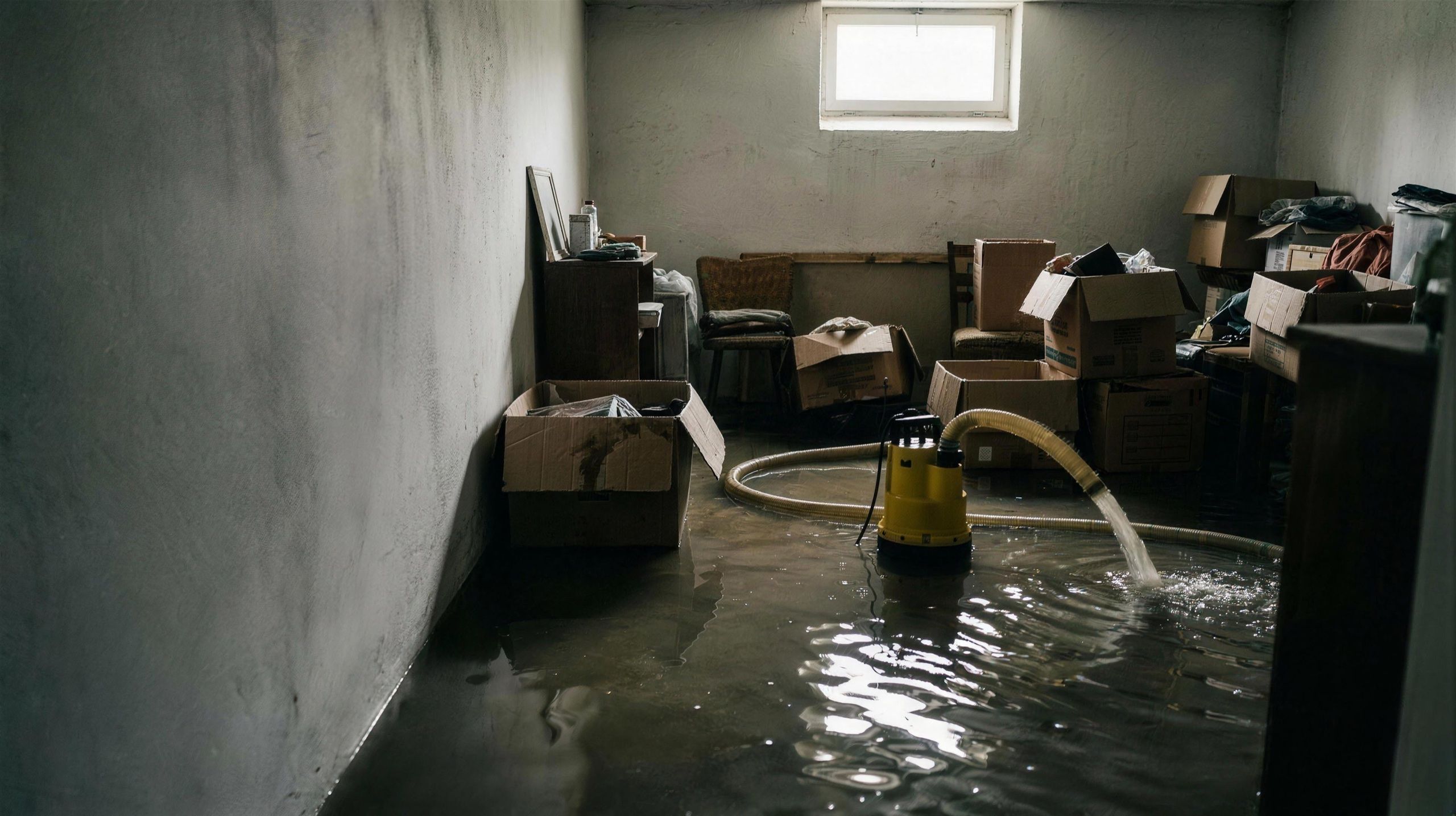
🚨 24/7 Basement Flood Help — Fort Mill
Who to Call When Your Basement Floods
Call a water damage restoration company first — before your insurer, and alongside a plumber if a pipe is still leaking. The water has to come out and the structure has to dry before anything else matters. In Fort Mill and York County, that's Carolina Pro Restoration at (980) 277-3700, 24/7.
- 40+ 5-Star Google Reviews
- SC Licensed & Fully Insured
- IICRC Certified Technicians
- Direct Insurance Billing
Who to Call, by Situation
1. Water is still coming in from a pipe
Shut off the main water valve, then call us. We extract the water, dry the structure, and repair the damage — see burst pipe repair. If the source needs a plumber, we'll tell you on site.
2. Sewage or a floor drain backed up
Call a restoration company, not a plumber alone. A plumber can clear the line, but sewage is Category 3 black water — a biohazard that needs protective gear, removal of everything porous it touched, and disinfection. Keep people out, don't flush or run water, and see sewage cleanup.
3. Standing water after rain, a failed sump pump, or groundwater
Call a restoration company. The water needs pumping and dehumidifiers before mold starts in 24 to 48 hours. Once it's dry, basement waterproofing deals with how it got in.
4. Water near the electrical panel, or you smell gas
Don't go down the stairs. If you smell gas, leave the house and call 911 or your gas company from outside. If water is near the panel or outlets and you can't cut power without standing in it, call your power company. Once it's safe, call us.
5. When to call your insurance company
After the water is stopped and documented, not before you act — waiting on a claim number while water sits makes the loss bigger. We photograph everything as found, log daily moisture readings, write the estimate in Xactimate, and bill your carrier directly.
What to Do in the First Hour
- Cut power to the basement at the breaker — only if you can reach the panel without standing in water.
- Stop the source if it's safe to reach: the main shutoff for a supply line, or the breaker for a failed sump pump.
- Stay out of water that is discolored, smells, or could be sewage.
- Lift what you can off the floor — cardboard wicks water up within minutes.
- Photograph the damage before moving much — your adjuster wants to see it as found.
- Call us at (980) 277-3700. We answer 24 hours a day, and our rates are the same at 2am, on a Sunday, or on a holiday.
We serve Fort Mill, Tega Cay, Rock Hill, and Indian Land. If your home sits on a crawl space rather than a basement, see crawl space water damage instead.
How We Clean Up a Flooded Basement
The same five steps on every job, each one documented for your insurance claim.
- 1
Make It Safe and Stop the Water
We cut power to the wet area and stop the source — a broken line, or a backup pump if the sump failed.
- 2
Map Every Wet Spot
Thermal cameras and moisture meters show where water went inside walls and under flooring — the drying plan and your adjuster's proof.
- 3
Pump Out and Dry
Truck-mounted extractors clear the water, then commercial dehumidifiers and air movers dry the slab and framing. Antimicrobial treatment helps stop mold.
- 4
Check Daily Until It's Dry
We log moisture readings and photos daily. Most basements dry in three to five days, and nothing is closed up until the readings say dry.
- 5
Rebuild What Came Out
Our own crew replaces the drywall, trim, and flooring that came out, with one project manager start to finish.
Every step is documented, so your claim stays on track from day one.
Call Now: (980) 277-3700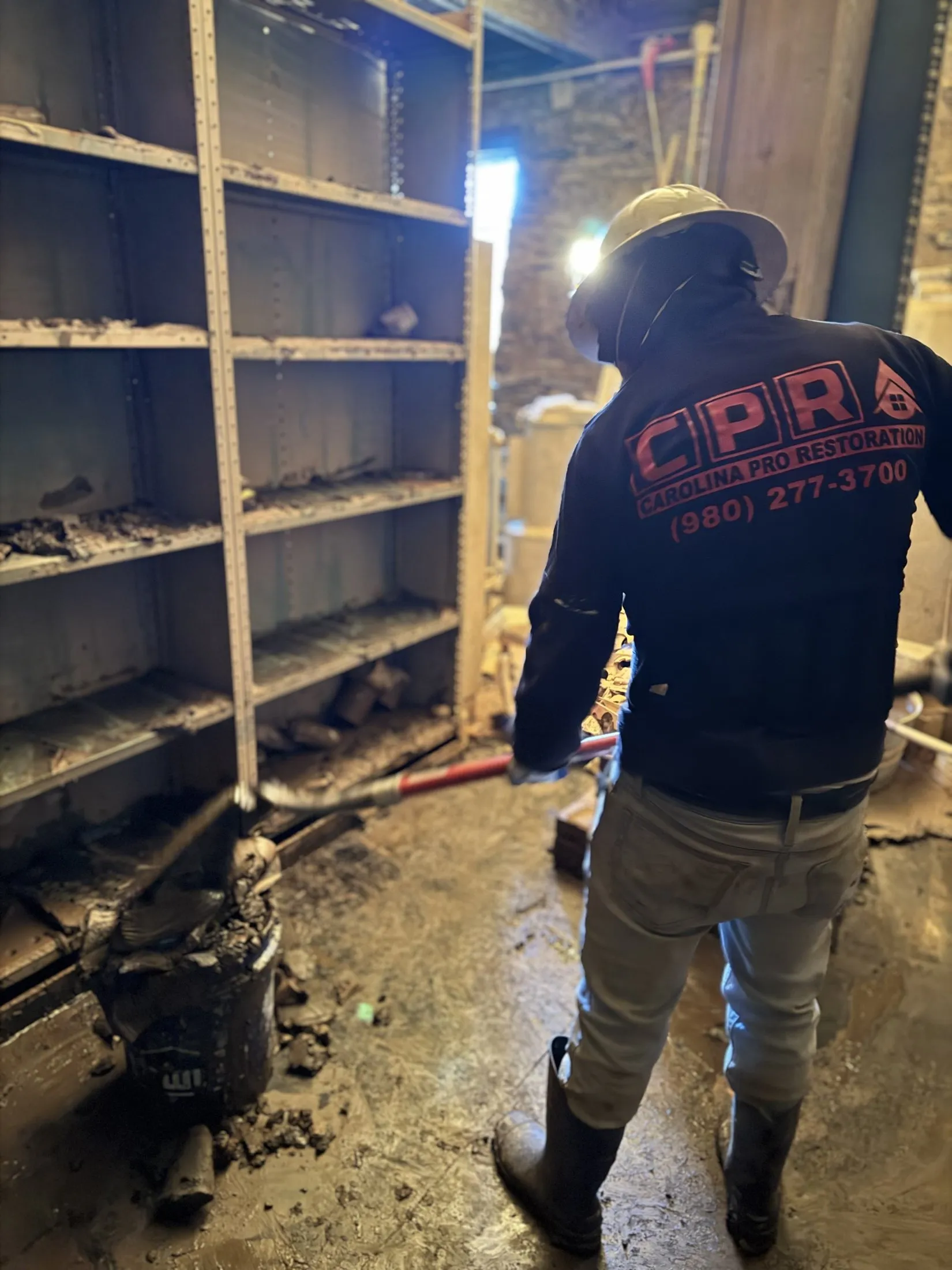
Pumped out, dried, and rebuilt
Submersible pumps, full structural drying, and mold-prevention treatment for flooded basements and lower levels.
What a Flooded Basement Costs to Fix
Typical Carolinas ranges to help you plan — not a quote. Your exact price comes after the free inspection, in writing, before any work starts.
| Emergency assessment with moisture mapping | Free |
|---|---|
| Water extraction and structural drying — unfinished basement, clean water, caught early | $2,000–$5,000 |
| Reconstruction after drying — drywall, insulation, trim, paint, flooring | $1,500–$4,000 |
| Finished basement, multiple rooms, or Category 2 water — cleanup and rebuild together | $5,000–$15,000 |
| Whole-basement loss, sewage (Category 3), or water that sat for days | $15,000–$30,000 and up |
| Mold remediation where growth has already started | $6,000–$15,000 |
| Sump pump replacement with battery backup | $1,200–$3,500 |
| Interior perimeter drainage so it does not happen again | $4,000–$12,000 |
| Foundation crack repair | $400–$1,500 per crack |
Typical ranges, not a quote. What moves the number is below. Financing is available.
What moves the number
Finished or unfinished. A finished basement adds drywall, insulation, trim, and flooring that absorb water and come out, so the same flood costs two to three times more — nearly all of it rebuild.
The water category. Clean supply-line water (Category 1) can often be dried in place. Contaminated water (Category 2) means porous materials come out; with sewage (Category 3), everything porous it touched goes.
How high the flood cut goes. We cut drywall to the height moisture reached — commonly two feet, sometimes four.
What doesn't move it: the hour you call. Waiting until Monday does, because Monday is on the far side of the mold window.
Common Causes of Basement Flooding in York County
Basements are less common around Fort Mill than crawl spaces and slab foundations, so the ones we see are often finished lower levels — which is why a flood here tends to mean a rebuild, not just a dry-out. The causes come down to four things.
Clay soil that holds water against the walls
York County's red clay drains slowly. After heavy rain it stays saturated for days and pushes water through foundation cracks and the seam where wall meets slab — often a damp corner and a musty smell before it's standing water.
Sump pumps that fail when the storm hits
Summer thunderstorms and the tropical systems that reach the Carolinas in late summer and fall bring the heaviest rain — and the power outages that stop a sump pump right when it's needed. A battery backup is the fix.
Water heaters and supply lines
A failed water heater or a split washer hose can dump hundreds of gallons before anyone goes downstairs. Fort Mill homes built in the early 2000s with Dura-PEX plumbing are now in their fitting-failure years.
Sewer and drain backups
Heavy rain can overload sewer lines and push water back up through a basement floor drain, and roots or a clog in the main line do the same in dry weather. Either way it's Category 3 water — call before you clean.
Your Basement Flooding Insurance Claim
Coverage depends on where the water came from. A sudden failure inside the house — a burst supply line, a failed water heater, a washer hose — is usually covered. Groundwater and surface flooding from outside generally need a separate flood policy, and sump pump failure or sewer backup is often covered only with that endorsement. We tell you which applies before work starts.
- Damage photos taken when we arrive and every day after
- Moisture readings logged daily on walls, floors, and framing
- Xactimate estimate written to match your adjuster
- We talk to your adjuster directly — you stay out of the middle
- We bill your insurance directly — you pay your deductible, not the balance
Basement Flooding FAQs
Straight answers for Fort Mill and York County homeowners.
-
Who do I call when my basement floods?
Call a water damage restoration company first. The water has to be out and the structure drying within 24 to 48 hours to keep mold from starting. If a pipe is still leaking, shut off the main and call a plumber alongside us. In Fort Mill and York County, call Carolina Pro Restoration at (980) 277-3700, 24/7. -
Should I call a plumber or a restoration company for a flooded basement?
Usually both, for different jobs. A plumber fixes the source, like a broken pipe or a clogged sewer line. A restoration company removes the water, dries the basement, and repairs the damage. If you only call one, call the restoration company — we'll tell you on site whether you also need a plumber. -
Who do I call for a flooded basement at night or on a weekend?
The same 24/7 line: (980) 277-3700. We answer around the clock, including holidays, and our rates are the same at 2am as they are on a Tuesday afternoon. -
Should I call my insurance company before a restoration company?
No. Stop the water and get it out first — your policy expects you to prevent further damage. Take photos, call us, and then open the claim. We document the loss and bill your insurance directly, so on covered work you pay your deductible and nothing beyond it. -
What does it cost to clean up a flooded basement?
An unfinished basement with clean water caught early usually runs $2,000 to $5,000 for extraction and drying. A finished basement with multiple rooms affected typically runs $5,000 to $15,000 for cleanup and rebuild together. Sewage, or water that sat for days, starts around $15,000. The inspection that produces your firm number is free. -
Does homeowners insurance cover a flooded basement?
It depends on the cause. A sudden burst pipe or failed appliance is usually covered. Groundwater, heavy rain coming in from outside, or a rising creek usually needs a separate flood policy. Sump pump failure and sewer backup are often covered only if you added that endorsement.
Have a question we did not cover? Call us — we are available 24/7.
Call Now: (980) 277-3700Basement Flood Cleanup Across York & Lancaster Counties
Based in Fort Mill, SC, with crews across York and Lancaster counties.
Fast Help When Your Basement Floods
Our trucks reach Fort Mill and the surrounding towns in under 35 minutes, and the rest of York County in under an hour, day or night.
We Proudly Serve
- Fort Mill, SC
- Tega Cay, SC
- Rock Hill, SC
- Indian Land, SC
- Lake Wylie, SC
- Clover, SC
- York, SC
- Lancaster, SC
Carolina Pro Restoration LLC
3650 Centre Cir Ste I, Fort Mill, SC 29715 (980) 277-3700Water in Your Basement? Call Our Team Now.
Get Basement Flooding Help Now
A flooded basement only gets worse the longer it sits. Call or text for a fast response, or send us the details and we'll get right back to you.
24/7 Emergency Response (980) 277-3700- We answer 24/7 and respond fast
- Free on-site assessment
- We bill your insurance directly
- IICRC certified, SC licensed & insured
- One crew from cleanup to rebuild
Request a Free Assessment
No cost, no pressure. We'll get right back to you.
Related Services
Other ways the Carolina Pro Restoration team can protect your home.
-
Waterproofing
Stop water from getting into the basement in the first place.
Learn more -
Crawl Space Encapsulation
Seal out the moisture under your home for good.
Learn more -
Water Damage Restoration
Full dry-out and rebuild after a basement flood.
Learn more -
Mold Removal
Remove the mold that standing water leaves behind.
Learn more