
Spores Germinate
Mold spores are already in every home. Once a surface stays wet for 24 to 48 hours, spores attach and begin germinating on drywall, wood framing, carpet backing, and insulation — often in areas you cannot see.
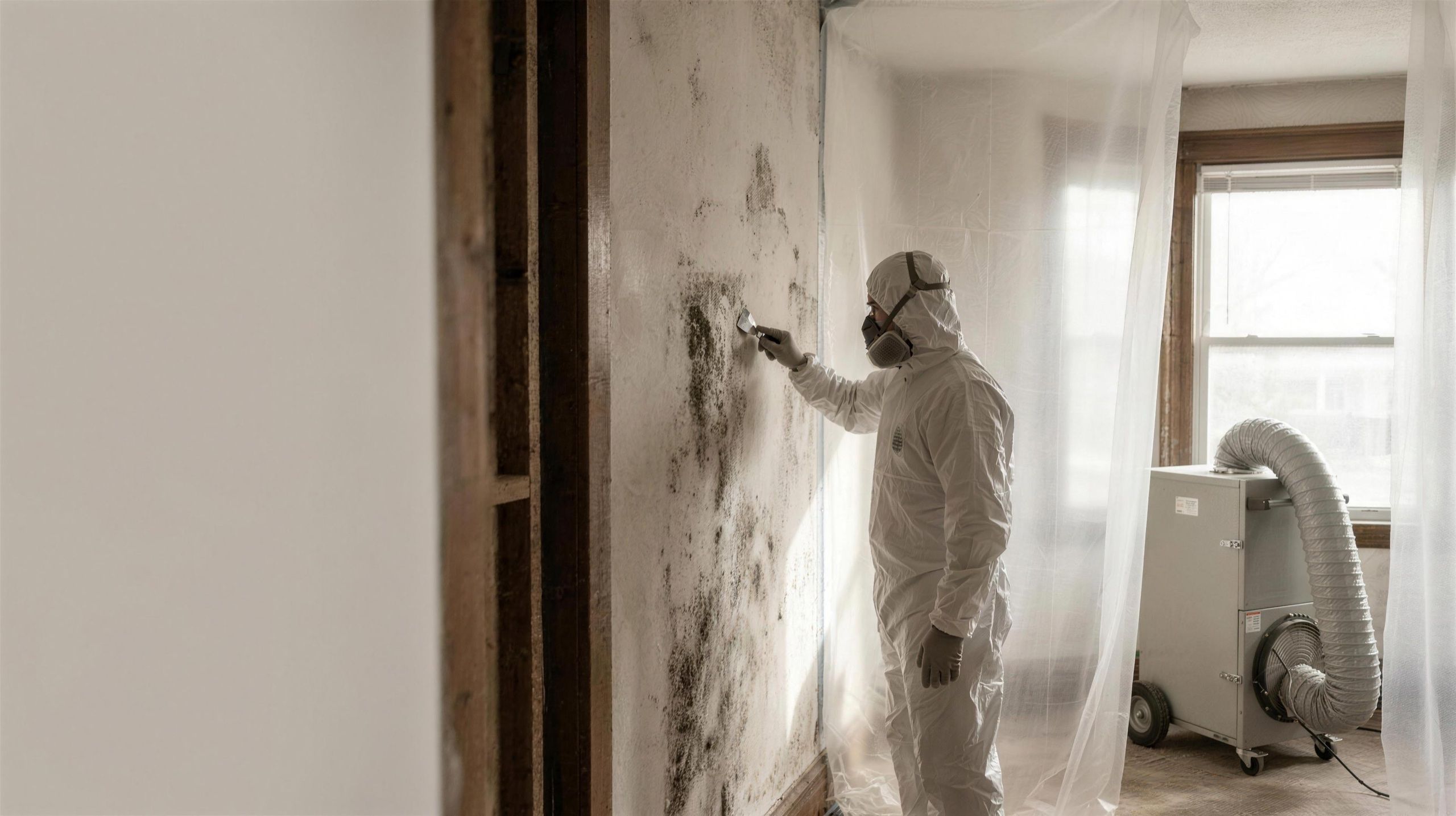
Visible mold patches appear. Hyphae (root structures) penetrate into porous materials like drywall and wood. The musty smell intensifies as colonies release microbial volatile organic compounds (MVOCs) into the air.
Mature colonies produce and release millions of spores into the air. HVAC systems spread contamination to unaffected rooms. Occupants may develop respiratory symptoms, headaches, or allergic reactions.
Negative air containment isolates the affected area. HEPA air scrubbers capture airborne spores. We remove contaminated materials, treat framing with antimicrobial solution, and verify results with post-remediation air testing.
Chronic moisture from showers, tub surrounds, and sink cabinets creates ideal conditions for mold behind tile, under vanities, and inside wall cavities. We remove contaminated drywall and caulk, treat framing with antimicrobial solution, and rebuild the finished surfaces.
Get help now →High humidity and poor ventilation make crawlspaces and basements the most common mold sites we see. Mold colonizes floor joists, subfloor sheathing, and insulation. We set containment, remove affected materials, treat with antimicrobial, and dry the space with commercial dehumidifiers.
Learn more →A slow roof leak can feed mold growth on sheathing and rafters for months before anyone notices. We find the full extent with moisture meters, remove contaminated insulation and decking, treat the wood framing, and replace what was removed.
Get help now →Mold inside air handlers, evaporator coils, and ductwork spreads spores to every room in the house every time the system runs. We isolate the HVAC system, clean contaminated components, HEPA-vacuum the duct interiors, and verify air quality with post-remediation testing.
Learn more →If water damage was not dried properly — or not dried fast enough — mold can appear within 48 hours behind walls, under flooring, and in insulation. We remove all mold-affected materials, dry the structure to verified levels, and rebuild everything we tear out.
Learn more →Black mold thrives on materials with high cellulose content — drywall paper, ceiling tiles, and wood — that have been wet for extended periods. It produces mycotoxins that pose serious health risks. We follow full containment protocols, remove all affected materials, and confirm clearance with independent air sampling.
Get help now →We start by finding what is feeding the mold. Every mold problem has a moisture source — a slow leak, condensation, poor ventilation, or residual water damage. We use moisture meters and thermal imaging to locate it. If the source is not fixed first, mold will return after remediation.
We seal the affected area with 6-mil polyethylene sheeting and set up negative air machines with HEPA filtration. This creates negative pressure inside the containment zone so that mold spores cannot escape into clean areas of your home during removal. The HVAC system is shut down or isolated to prevent cross-contamination through ductwork.
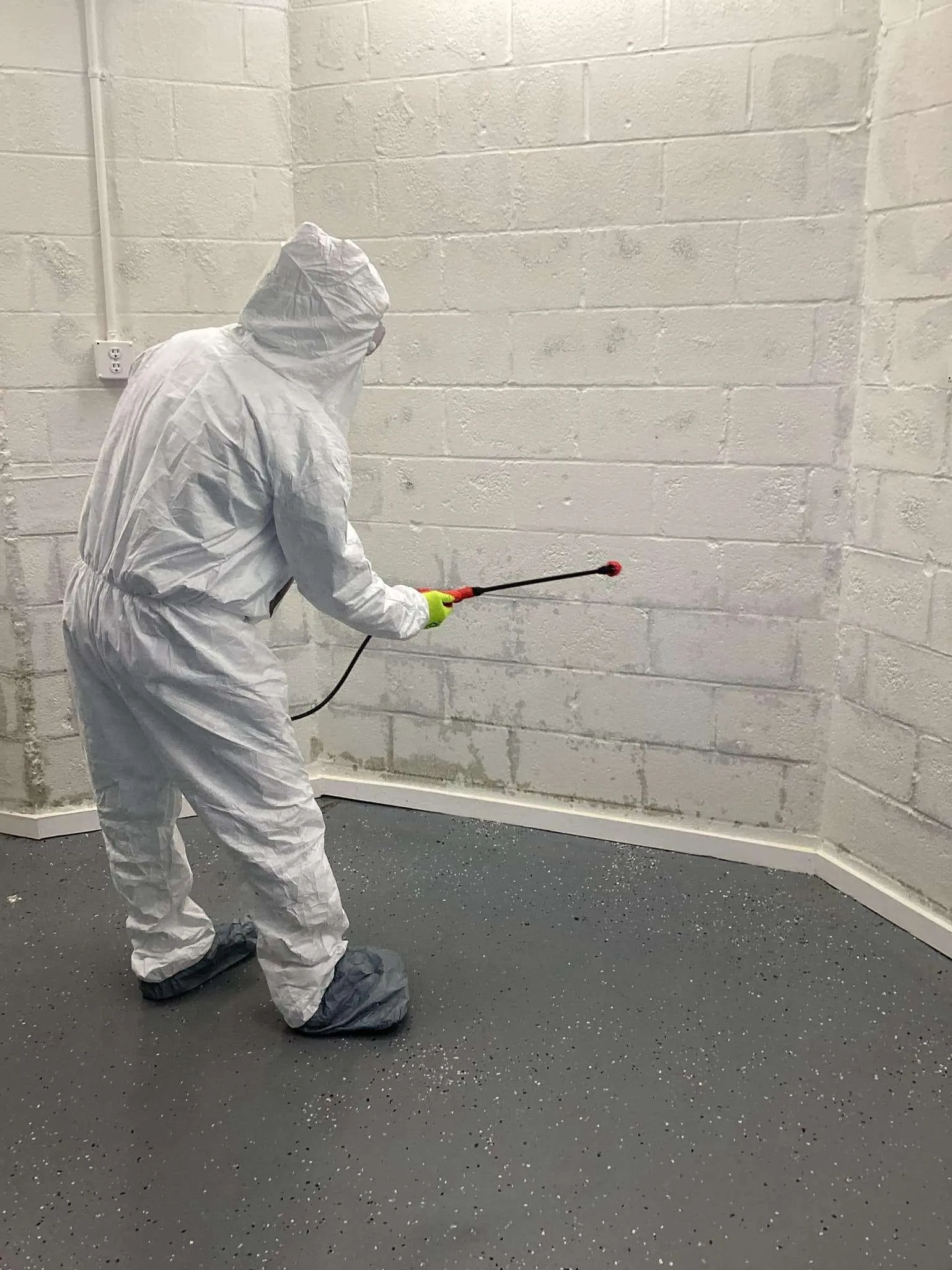
We remove all contaminated porous materials — drywall, insulation, carpet, ceiling tiles — and bag them for disposal inside the containment zone. Non-porous surfaces and exposed wood framing are wire-brushed to remove hyphae (mold roots), then treated with EPA-registered antimicrobial solution. HEPA vacuuming captures any remaining spore debris from every surface.
Commercial HEPA air scrubbers run continuously to filter airborne spores down to 0.3 microns. We set dehumidifiers to hold relative humidity below 50 percent — the threshold below which mold cannot grow. Moisture readings are taken daily until every surface reaches target dry standard.
Before we rebuild, an independent air quality test confirms spore counts have returned to normal levels. Once clearance is verified, our crew installs new drywall, insulation, paint, trim, and flooring. One project manager stays with your job from containment through final walkthrough.
Allergenic molds are the most common in homes. They trigger sneezing, congestion, itchy eyes, and skin irritation — especially in people with asthma or allergies. While not immediately dangerous to healthy adults, they still require professional removal once colonies establish.
Pathogenic molds can cause infections in people with weakened immune systems, the elderly, and young children. Aspergillus is one of the most common indoor molds and can colonize HVAC systems, spreading spores throughout the home. Professional containment and HEPA filtration are required for safe removal.
Stachybotrys chartarum — commonly called black mold — produces mycotoxins that pose serious health risks including respiratory damage, chronic headaches, fatigue, and neurological symptoms. It thrives on materials with high cellulose content that have been wet for extended periods. Full containment, PPE, and post-remediation air testing are mandatory.
Why this matters: The type of mold determines the safety protocols, containment level, and disposal requirements for your job. We identify the mold on arrival, follow IICRC S520 remediation standards, and verify clearance with post-remediation air testing so your home — and your insurance claim — are handled correctly.
| Others | CPR | |
|---|---|---|
| Full containment with negative air | Sometimes | |
| HEPA air scrubbing during removal | Sometimes | |
| Antimicrobial treatment on framing | ||
| Post-remediation air testing | ||
| Drywall, paint, trim, and flooring rebuild | ||
| Moisture source identification and repair | ||
| Xactimate estimates for insurance | Sometimes | |
| One dedicated project manager |
This team was very professional and did a thorough job with water removal from our house. Got the job done and done well. They are the very best!
Zach came over to my house to repair all damage better than new. He was prompt, clean, and professional. I highly recommend them!
The crew was professional and on top of everything. I was really happy that they worked with my insurance company, and everything was handled with ease.
Straight answers to the questions homeowners ask most about mold inspection, remediation, air testing, and insurance.
Mold removal refers to physically eliminating visible mold from surfaces, while mold remediation is the full process: identifying the moisture source, containing the affected area, removing contaminated materials, treating surfaces with antimicrobial solution, scrubbing the air with HEPA filtration, and verifying the space is clean with post-remediation air testing. Removal without remediation almost always leads to regrowth because the underlying moisture problem was never solved. We perform the complete remediation process on every job and rebuild anything we tear out.
The most common signs are a persistent musty smell that does not go away with cleaning, discoloration or bubbling on painted surfaces, warped baseboards, and allergy symptoms that improve when you leave the house. A professional mold inspection uses moisture meters and thermal imaging cameras to detect elevated moisture behind drywall, ceilings, and flooring without cutting anything open. If moisture readings are abnormal, we take targeted air samples and — only when necessary — small exploratory openings to confirm the presence and extent of growth before writing a scope of work.
The term black mold usually refers to Stachybotrys chartarum, which produces mycotoxins that can cause respiratory distress, headaches, fatigue, and more severe reactions in children, the elderly, and immunocompromised individuals. However, mold color alone is not a reliable indicator of species or toxicity — many common molds appear dark green or black. The only way to confirm the species is laboratory analysis of an air or surface sample. Regardless of type, any active mold colony should be professionally removed because all molds release spores and volatile organic compounds that degrade indoor air quality.
Most residential mold remediation jobs take 3 to 7 days from containment setup through post-remediation air testing. A single-room bathroom or closet job may be completed in 2 to 3 days. Larger projects involving multiple rooms, crawlspaces, or full attics can take 7 to 10 days. The timeline depends on the square footage affected, the materials involved (drywall versus framing versus concrete), and whether structural drying is needed before remediation begins. We provide a day-by-day schedule during the initial inspection so you know exactly what to expect.
In most cases, no. We build full containment barriers using 6-mil poly sheeting and run negative air machines with HEPA filtration to ensure spores cannot travel from the work area to the rest of your home. Air pressure inside the containment stays lower than the surrounding rooms, so airflow always moves inward. If the affected area is extensive — for example, an entire HVAC system or multiple rooms on the same floor — we may recommend temporary relocation for 24 to 48 hours. We will tell you during the inspection whether relocation is necessary.
It depends on the cause. If mold resulted from a sudden and accidental covered event — a burst pipe, an appliance failure, storm damage — your homeowners policy typically covers the remediation and rebuild. If the mold is caused by long-term neglect, deferred maintenance, or chronic humidity, most policies exclude it. Some policies also carry a mold-specific sub-limit, often between 5,000 and 10,000 dollars. We inspect the damage, identify the moisture source, and write the estimate in Xactimate so your adjuster can see exactly what happened and why. If coverage applies, we bill your insurance directly.
Post-remediation air testing is an independent laboratory analysis that compares mold spore counts inside the remediated area to spore counts in outdoor air and unaffected rooms. The goal is to confirm that indoor levels are at or below normal background levels. We collect air samples using calibrated spore traps, send them to an accredited lab, and share the full report with you and your insurance adjuster. Without this step, there is no objective proof that the remediation was successful — which is why insurers, real estate agents, and home inspectors look for it.
Bleach can kill surface mold on non-porous materials like tile and glass, but it does not penetrate porous materials like drywall, wood framing, or carpet backing where mold roots (hyphae) grow. Wiping visible mold without containment also releases millions of spores into the air, which can spread contamination to other rooms through your HVAC system. Store-bought sprays have the same limitation. Professional remediation uses full containment, HEPA-filtered negative air, removal of contaminated porous materials, and EPA-registered antimicrobial treatment — followed by air testing to verify the job is done. For anything beyond a small patch on a hard surface, professional removal is the safer and more effective option.
Our crews carry containment materials, HEPA scrubbers, and air-sampling equipment on every truck — so inspection and remediation can start the same visit.
We proudly serve communities across the region with expert restoration services
All Rights Reserved | Carolina Pro Restoration LLC. Privacy Policy | Terms & Conditions