
Water Finds a Way In
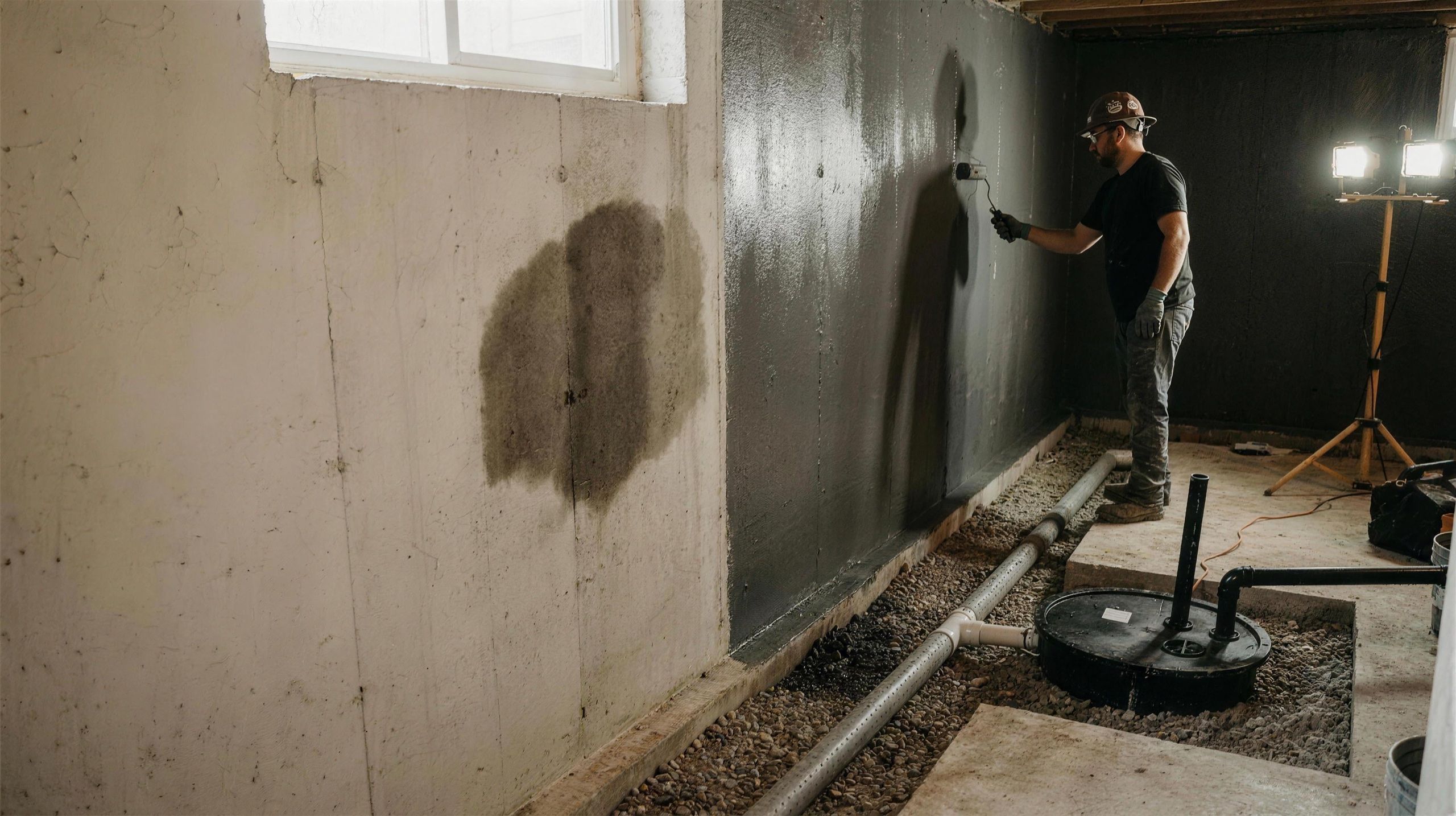
Water in the ground pushes through cracks and block faster than it can dry. Puddles form, the walls turn dark, and the air under your home gets damp.

Water in the ground pushes through cracks and block faster than it can dry. Puddles form, the walls turn dark, and the air under your home gets damp.
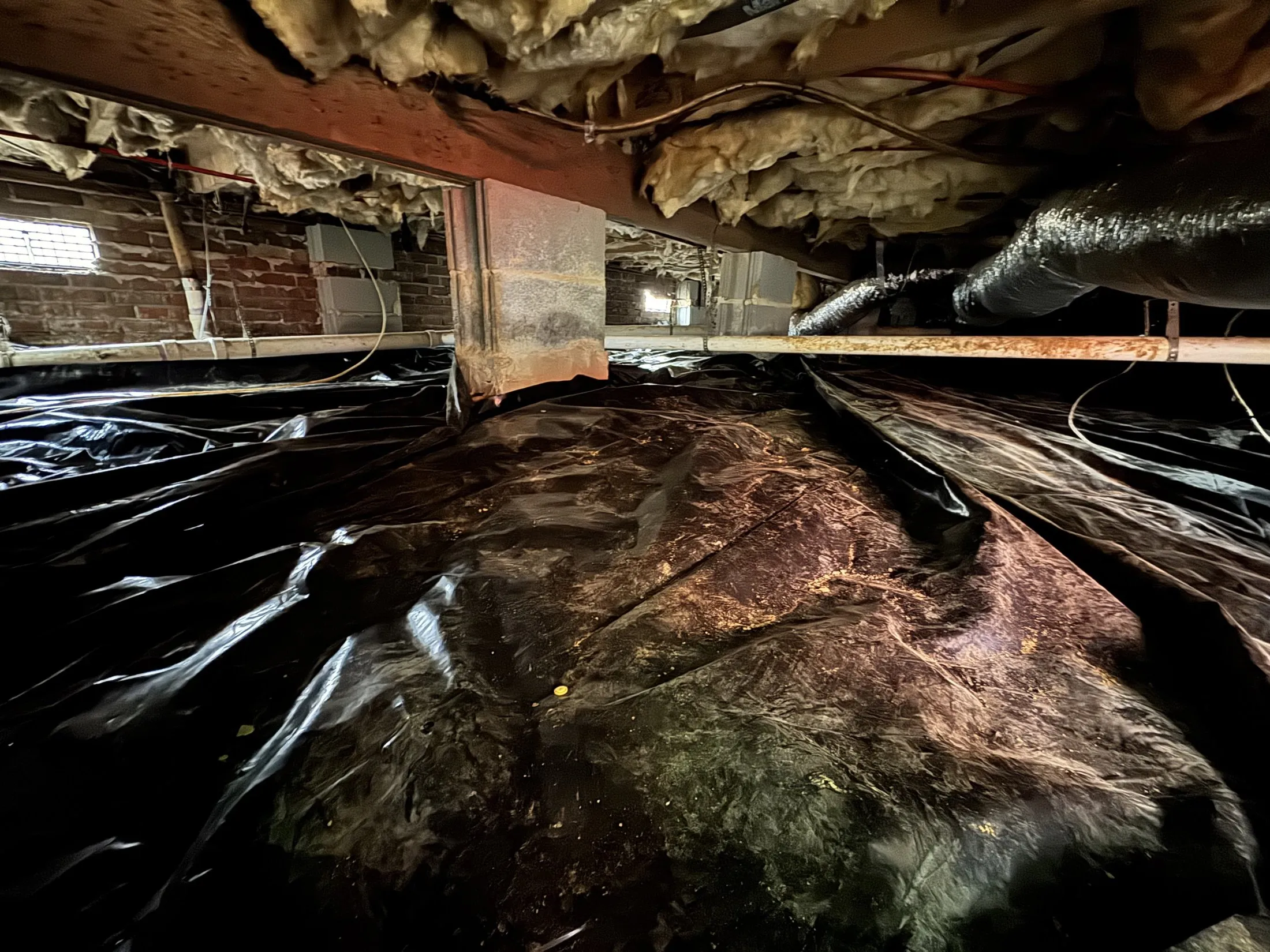
Damp soaks into the wood, subfloor, and insulation. The wood swells, white stains show up on the walls, and a musty smell drifts upstairs.
Mold spreads on the wood beams. The floor above starts to sag and feel soft. Cracks get wider — and now you need costly structural repairs, not just waterproofing.
We find every spot water gets in, add drains to take the pressure off, send the water to a sump pump, and seal the space. It stays dry for good — not just until the next storm.
Water on the floor after a storm, damp walls, or puddles in the corners all point to one thing: water pushing in. We add interior drains and a sump pump that keep the floor dry for good.
Basement flooding help →Open crawl spaces pull in ground moisture and damp air. That rots the wood and pushes musty air upstairs. We seal it with a heavy liner, add drainage, and run a dehumidifier.
Crawl space encapsulation →Cracks in concrete and block walls let water push in. We seal them from the inside. When needed, we dig down and waterproof the wall from outside too.
Get a free inspection →When groundwater rises, it pushes up through the slab and where the wall meets the floor. Interior drains and a sump pump take that pressure off before water reaches your floor.
Get a free inspection →Downspouts that dump by the house, ground that slopes the wrong way, and clogged drains send water right to your walls. We fix the drainage so water flows away from your home.
Get a free inspection →Basement windows and window wells fill with water and leak at the frame. We add well drains, liners, and sealing so they stop letting water in.
Get a free inspection →Before we quote a price, we find the source. We check the foundation walls, slab, and crawl space inside, plus the slope and downspouts outside. Moisture meters show us exactly where water gets in. A good fix starts here.
For most wet basements and crawl spaces, we put a drain along the base of the wall. It catches water before it reaches the floor and sends it to one spot. That takes the pressure off your walls.
The water flows to a sealed sump pit and gets pumped out, away from the house. We size the pump to your home and add a battery backup, so it keeps working when a storm knocks out the power.
In crawl spaces, we seal the floor and walls with a heavy liner, add insulation where needed, and run a dehumidifier. The space stays clean and dry — so no more damp air feeds the home above.
When water has to be stopped from outside, we dig down to the base of the wall, fix the cracks, and add a waterproof layer and drain board. Then we test the system and walk the finished work with you.
A drain along the base of the wall catches water and sends it to a sump pump. It is the most reliable, least messy fix for a wet basement — no digging, and it works with the water pressure instead of against it.
We dig down to the base of the wall, fix cracks, and add a waterproof layer and drain board on the outside. This stops water before it ever touches the wall — the strongest fix for leaking or bowing walls.
We seal the crawl space floor and walls with a heavy liner, add drainage and a sump pump where needed, and run a dehumidifier. The space stays dry — which protects the wood above, clears the musty air, and lowers energy bills.
Why this matters: Most water problems need more than one system working together — a drain to take the pressure off, a sump pump to remove the water, and sealing to keep it out. We look at the whole picture so you fix it once, not every spring.
| Others | CPR | |
|---|---|---|
| Free on-site diagnosis & moisture mapping | Sometimes | |
| Interior drainage installed to the footing | ||
| Sump pump with battery backup | Sometimes | |
| Full crawlspace encapsulation | ||
| Exterior excavation & membrane | ||
| BBB-accredited business | Sometimes | |
| One crew — no subcontractors | ||
| Licensed in SC and NC | Sometimes | |
| Written workmanship guarantee | Sometimes |
This team was very professional and did a thorough job. Got the job done and done well. They are the very best!
Zach came over to my house and repaired all the damage better than new. He was prompt, clean, and professional. I highly recommend them!
The crew was professional and on top of everything. Everything was handled with ease and I couldn't be happier with the result.
Straight answers to the questions homeowners ask most about drainage, encapsulation, cost, and financing.
It depends on the size of the job, the method, and where the water is getting in. Most projects run from a few hundred dollars for a single crack to the low five figures for a full drainage system or crawl space encapsulation. These are ballparks, not a quote. You get an exact written price after a free inspection, and financing is available.
Interior waterproofing handles water after it reaches the wall. We put a drain along the inside base of the wall and send the water to a sump pump that takes the pressure off. It is reliable, less messy, and works for most wet basements. Exterior waterproofing stops water before it touches the wall. We dig down to the base and add a waterproof layer and drain board on the outside. It is the strongest fix for leaking or bowing walls, but it costs more. Many homes do best with both.
For most homes with a dirt or vented crawl space, yes. An open crawl space pulls in ground moisture and damp air. That rots the wood, feeds mold, and pushes musty air upstairs. About half the air you breathe up top comes from below. Our crawl space encapsulation seals the floor and walls with a heavy liner, adds drainage and a dehumidifier, and turns it into a clean, dry space. Most homeowners see less humidity, fewer pests, cleaner air, and lower energy bills.
If you have an interior drain, yes. The drain catches the water and the pump sends it away from your house. We strongly suggest a battery backup too. The heaviest storms often knock out the power, which is exactly when you need the pump most. Without a backup, a storm can flood the basement even with a system in place. We size the pump to your home and add a backup so it keeps running when the power goes out.
Mold and musty smells come from too much moisture, so the only real fix is removing the water. Waterproofing does that. It drains the water, takes the pressure off, seals the space, and keeps the air dry enough that mold cannot grow. In a crawl space, sealing it and adding a dehumidifier works really well on the musty smell that drifts upstairs. If mold is already growing, we handle the mold cleanup as part of the job, so you are not sealing a problem in.
Usually not. Most policies cover sudden accidents, like a burst pipe. They treat groundwater, a high water table, and ongoing leaks as upkeep, which is on the homeowner. That is the main difference between waterproofing and emergency water damage cleanup. Since insurance rarely pays for it, we give you a clear written price up front and offer financing on larger jobs. And fixing the water now is almost always cheaper than the mold and structural repairs it causes later.
Most interior drain and sump jobs take one to three days. It depends on how long the wall is and whether we have to cut and re-pour concrete. Crawl space sealing usually takes two to four days, based on the size and how much cleanup is needed first. Digging and sealing from outside takes the longest, and weather can affect it. After the inspection, you get a firm start date with your written price.
Yes. Since insurance rarely covers waterproofing, we offer financing on larger jobs. You can fix the problem now and pay over time, instead of letting it get worse. We go over your options during the free inspection, along with a written, itemized price so you know exactly what you are paying for. Carolina Pro Restoration is a BBB-accredited business, licensed in both South Carolina and North Carolina.
Our crews cover most of York County and south Charlotte for basement, crawl space, and foundation waterproofing.
Seal and dry out the space under your home.
Learn more →Already flooding? We clean it up, then keep it dry.
Learn more →Damp basements grow mold. We remove it and treat the cause.
Learn more →If water already got in, we handle the full restoration.
Learn more →Locally owned and Fort Mill based. 24/7 emergency response across the Carolinas metro.