
🛡️ Free Mold Inspection — Indian Land, SC
Mold Removal in Indian Land, SC
New house, new mold? It happens more than people expect. We inspect for free, find the moisture a tight modern build is trapping, remove the mold safely, and rebuild what we take out — one crew, one project manager, start to finish.
- Free Mold Inspection
- IICRC Certified
- We Rebuild What We Remove
- BBB Accredited
24/7 Mold Removal in Indian Land, SC
If you are searching for mold removal in Indian Land, SC, there is a good chance your house is younger than the problem in it. We are Carolina Pro Restoration, based minutes away in Fort Mill, and our IICRC-certified crews work the Panhandle every week. The inspection is free, the scope is written, and — the part most companies leave out — we rebuild the drywall, paint, and flooring ourselves once the mold is gone. Call 980-277-3700 any hour.
Indian Land has grown faster than almost anywhere in Lancaster County, and thousands of homes went up on compressed schedules with tight, well-sealed building envelopes. A tight house is efficient. It is also unforgiving: when moisture gets in, it has nowhere to go. Add 47 inches of rain a year onto clay soil and you get mold in six-year-old homes that look immaculate. We handle the full job — containment, HEPA air scrubbing, safe removal, antimicrobial treatment, and the moisture repair that ends it. See the full mold removal process, or read about the root cause in water damage restoration in Indian Land.
Why Indian Land Homes Get Mold
New Construction Does Not Mean No Mold
This is the call we take most often in Indian Land, and homeowners are genuinely surprised by it. Homes built fast during the Lancaster County growth boom in Bridgemill, Cheswick, Lancaster Crossings, and along the Panhandle corridor carry construction-phase moisture that never fully dried — framing lumber rained on before the roof went on, drywall hung over a damp slab, a shower pan that was not quite right. None of that shows for a few years. Then a closet on an exterior wall starts to smell, and the growth behind it has been there since the house was built.
Tight Envelopes With Nowhere for Moisture to Go
Modern Indian Land builds are sealed tight for energy efficiency, which is a real benefit right up until moisture gets into the assembly. An older, leakier house dries itself out through constant air exchange. A tight one does not — the moisture stays in the wall cavity, and mold takes hold within 24 to 48 hours. Bathroom fans that vent into the attic instead of outside, undersized ventilation, and closed interior doors that block return airflow all make it worse. We look at ventilation as part of the inspection, because in these homes it is often the whole cause.
HVAC Condensation in New Builds
A significant share of Indian Land mold starts at the air handler and the ductwork. Oversized systems short-cycle: they hit the thermostat setpoint quickly, shut down before they have pulled humidity out of the air, and leave a cold clammy house at 65% relative humidity. Meanwhile, poorly insulated duct runs in a hot attic sweat, and that condensation drips into the ceiling assembly. We find growth around supply registers, on the return plenum, and in the ceiling below attic ductwork. When the system has been circulating spores, duct cleaning is part of the fix.
Sun City Slab Leaks and Water Heater Failures
Sun City Carolina Lakes and the surrounding slab-built neighborhoods have a different profile. A slab leak under a post-tension or conventional slab wicks up into the flooring and the bottom plate of the wall, and it will run for months before anyone notices anything more than a slightly warm patch of floor or a water bill that crept up. Water heaters in these homes are also reaching their 10-to-12-year replacement age, and a slow tank weep into a closet or garage wall does the same quiet damage. Both produce mold in the wall cavity before they produce a visible symptom.
How Professional Mold Remediation Works
The same five steps on every Indian Land job — and unlike most remediation companies, step five includes putting your house back together.
- 1
Inspect and Test the Mold
In newer Indian Land homes the mold is rarely where the smell is. We check closets on exterior walls, around supply registers and the air handler, bathroom walls, ceilings under attic ductwork, and any slab area with a history of a warm spot. When health concerns or a claim call for it, we arrange lab air or surface sampling. The inspection is free and produces a written scope.
- 2
Find the Moisture Source
Mold needs water. Moisture meters and FLIR thermal imaging trace it to the actual cause — a slab leak, a sweating duct run, a bath fan venting into the attic, or an oversized HVAC system leaving the house at 65% humidity. In a tight modern build this step matters more than anywhere, because the assembly cannot dry itself once moisture is in it.
- 3
Seal Off the Area
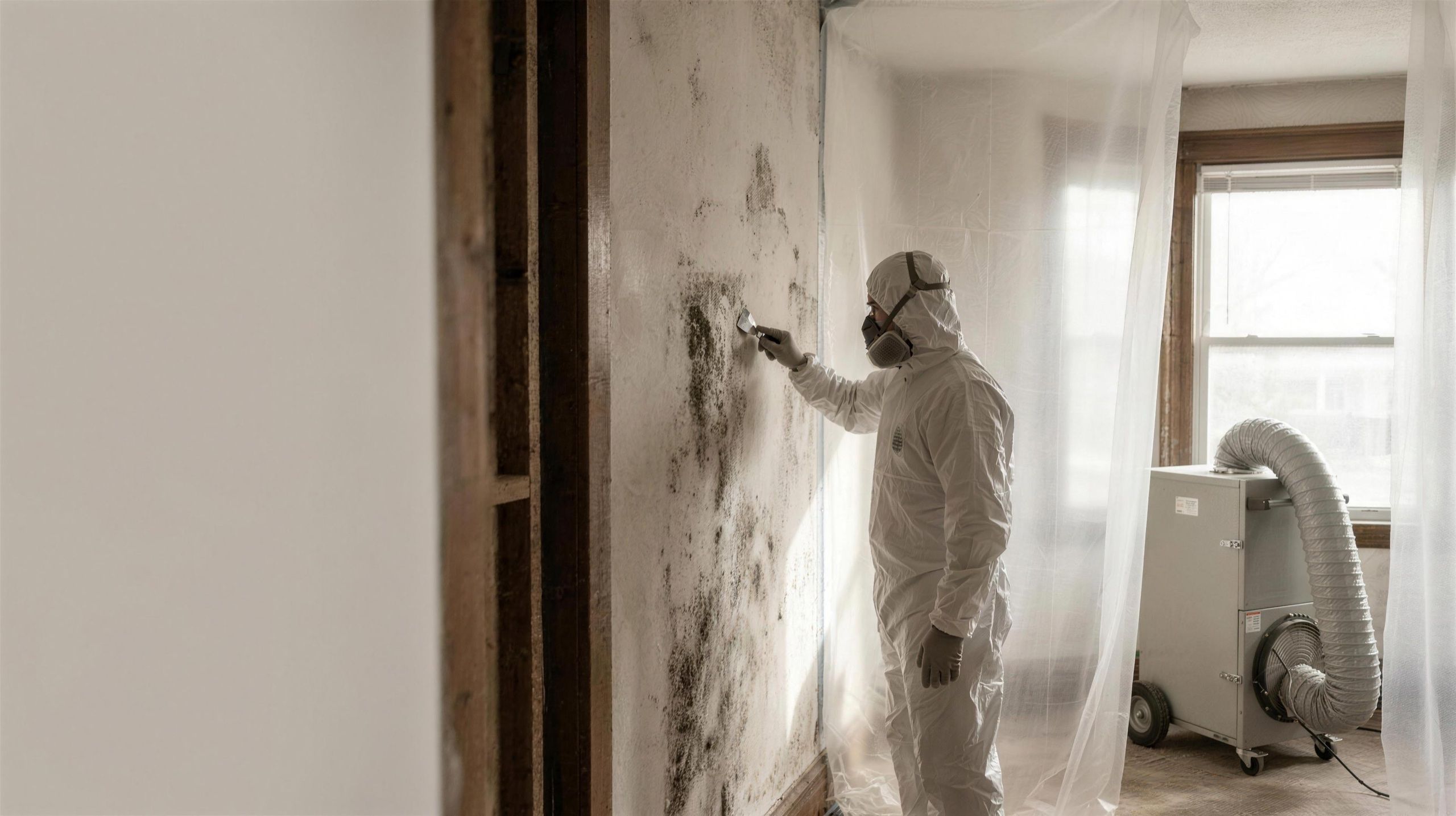
We build containment with plastic sheeting and run negative air machines so spores stay in the work area. HEPA air scrubbers run the whole time we are on site. In an airtight house with a central return, uncontained removal will distribute spores through every room in the building within hours.
- 4
Remove Mold and Treat Surfaces
Drywall, insulation, and subfloor too contaminated to save comes out and gets bagged inside containment. Everything that stays gets HEPA vacuumed and the framing gets an antimicrobial treatment. Bleach cannot reach mold inside porous material like drywall and wood — it lifts the color and leaves the colony behind.
- 5
Repair the Source and Verify
We fix the cause — the slab leak, the duct insulation, the bath fan that needs to actually reach outside — then rebuild the drywall, trim, paint, and flooring with our own crew. You do not hire a second contractor to close the wall. A final moisture and visual check confirms it is dry and clean before we close the job.
One crew from the first inspection to the final coat of paint. Call anytime — the inspection is free.
Call Now: (980) 277-3700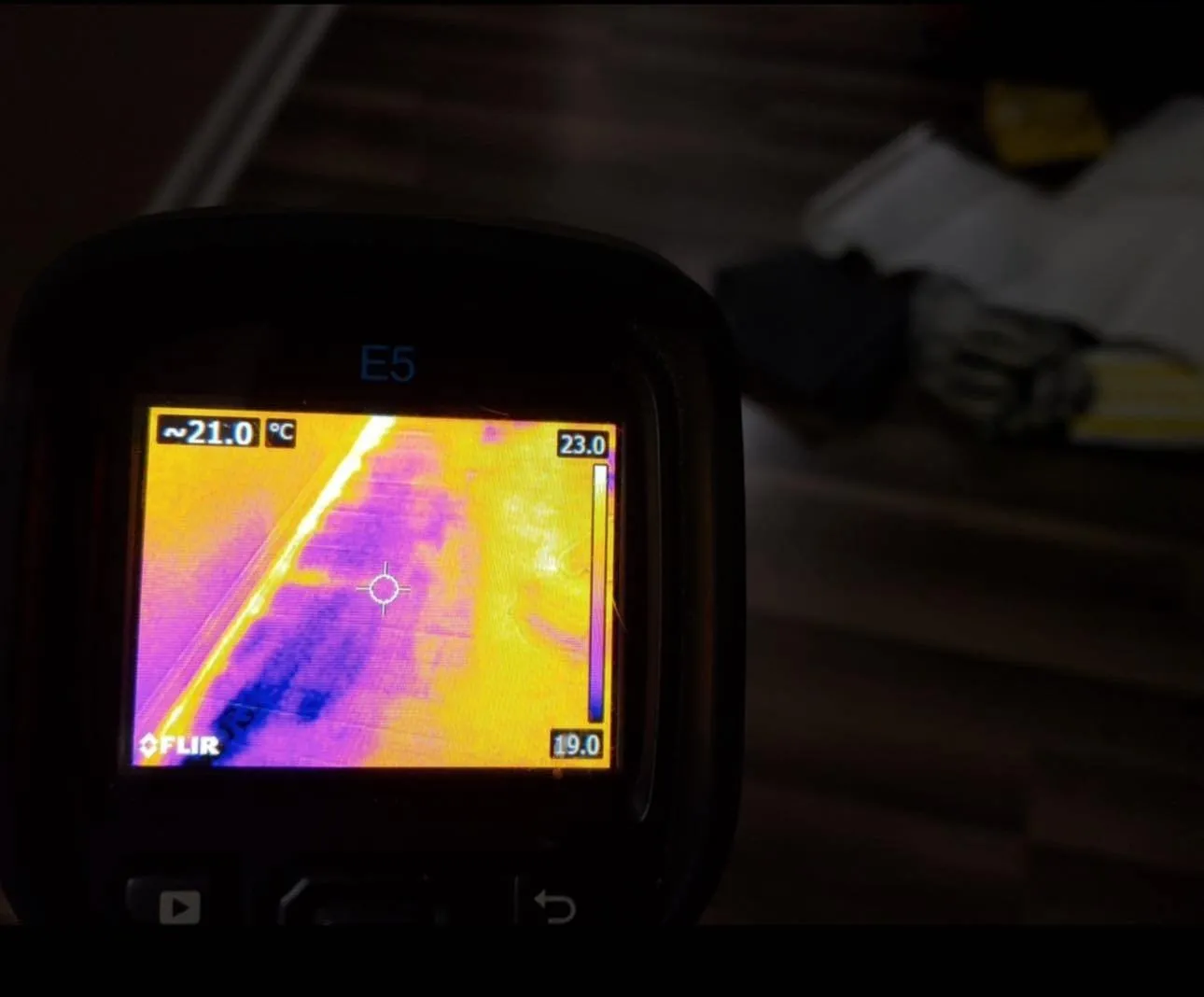
We find the moisture you can't see
New Indian Land builds hide their moisture well — tight envelopes, quiet slab leaks, condensation on ductwork. Thermal imaging and moisture meters map every damp cavity before anyone opens a wall.
What Mold Removal Costs in Indian Land
Typical Carolinas ranges to help you plan — not a quote. Your exact price comes in writing after the free inspection, before any work starts.
| Single small area (under 100 sq ft) — closet, one bathroom wall | $600–$1,500 |
|---|---|
| Bathroom or laundry room, mold behind tile or drywall | $1,200–$3,500 |
| Crawl space remediation and treatment | $2,500–$8,000 |
| Multi-room or HVAC-involved remediation | $6,000–$15,000 |
| Large-scale job with structural or slab repair | $10,000–$30,000 |
| Mold inspection with moisture mapping | Free |
| Lab air-quality or surface sampling (when needed) | $300–$600 |
These are typical ranges, not a quote, and they include the rebuild scope rather than leaving it to a second contractor. In Indian Land the biggest variable is usually whether the HVAC system is involved, since that turns a one-room job into a whole-house air-quality job. Insurance generally covers mold following a sudden covered event such as a slab leak or a water heater failure, and generally excludes mold from humidity or construction defects. Financing is available.
What actually moves the price in Indian Land
Affected square footage sets the baseline — pricing follows how much material comes out and goes back, not the size of the visible stain. Containment complexity is second, and in a tight modern home with a central return it is often higher than the visible damage suggests, because the air path has to be isolated properly. Whether the moisture source needs its own repair is third: remediating a wall cavity is one number, and correcting the slab leak, the duct insulation, or the ventilation that caused it is another. We price them separately so you can see exactly what you are buying.
Why one contractor costs less than three
Most remediation companies in Indian Land stop at the tear-out. You are then left holding an open wall and hiring a drywall contractor, a painter, and a flooring installer, each with their own schedule, markup, and warranty — and each blaming the other when something does not line up. We do the remediation and the rebuild with one crew and one project manager. That is usually cheaper in total and always simpler, and it is written into the scope you get after the free inspection.
Free Mold Inspection in Indian Land
In a newer Indian Land home, the mold is almost never where the smell is. The free inspection finds where it actually is and what is feeding it, before you spend anything on fixing the wrong wall.
- We check where mold hides in newer builds — closets on exterior walls, around registers and the air handler, ceilings under attic ductwork, and slab areas with a history of warm spots
- Moisture meters and thermal imaging find damp behind walls and under floors, with no demolition
- We check ventilation and humidity, because in a tight house that is often the entire cause
- You get a written scope and a firm price before any work begins — remediation and rebuild together
- Lab air-quality testing available when health concerns or a claim call for it
- Financing available, so a healthy home fits your budget
Boots on the Ground Across Indian Land
Our IICRC-certified mold crews work across Indian Land and the Lancaster County panhandle, including:
- Sun City Carolina Lakes
- Bridgemill
- Cheswick
- Lancaster Crossings
- Panhandle corridor
- Doby's Bridge
- Pleasant Road
What Indian Land Homeowners Say
Real reviews from homeowners and property managers across Indian Land, Fort Mill, and York County.
- Water Damage
I spoke with the guys from CPR about several water issues at my home and knew right away I was dealing with professionals. They put my mind at ease and immediately started brainstorming to solve my issues. I could not recommend them more!
- Water Removal
This team was very professional and did a thorough job with water removal from our house. Got the job done and done well. They are the very best!
- Insurance Handled
Water line leak. Insurance tried to deny it, but Carolina Pro Restoration refused to stop mitigation and kept communicating with the desk manager and supervisor. End result: mitigation completed and reconstruction flawless!
Indian Land Mold Removal FAQs
Straight answers for Indian Land and Lancaster County homeowners.
-
My Indian Land home is only six years old. How can it already have mold?
Easily, and it is the most common call we get here. Homes built fast during the Lancaster County growth boom often carry construction-phase moisture — framing that got rained on before the roof went on, drywall hung over a damp slab, a shower pan installed slightly wrong. Modern builds are also sealed tight, so once moisture is in an assembly it cannot dry itself out the way an older, leakier house would. Age is not protection. Ventilation and moisture control are. -
Why is there mold around my vents and ductwork?
Two causes, and often both. An oversized HVAC system short-cycles — it reaches the thermostat setpoint fast, shuts off before it has removed humidity from the air, and leaves the house cold and clammy at around 65% relative humidity, which is above the roughly 60% threshold where mold grows on its own. Separately, poorly insulated duct runs in a hot attic sweat, and that condensation drips into the ceiling assembly below. If the system has been circulating spores, duct cleaning is part of the fix rather than the whole of it. -
Do you rebuild after mold removal, or do I need a second contractor?
We rebuild. That is the main difference between us and most remediation companies working Indian Land — they remove the contaminated material and leave, and you are left hiring a drywall contractor, then a painter, then a flooring installer, and coordinating three schedules yourself. We do remediation and reconstruction with one crew and one project manager, so the wall goes back the way it was and one company stands behind all of it. -
How much does mold removal cost in Indian Land, SC?
Most Indian Land jobs land between $600 and $8,000. A single small area such as a closet or one bathroom wall runs $600 to $1,500. A bathroom or laundry room with mold behind tile or drywall runs $1,200 to $3,500. Crawl space remediation runs $2,500 to $8,000. Multi-room or HVAC-involved work runs $6,000 to $15,000, and large jobs with structural or slab repair can reach $30,000. The inspection is free; lab sampling, when needed, is $300 to $600. -
Is mold covered under my builder's warranty?
Sometimes, and it is worth checking before you pay for anything. Most builder warranties cover workmanship for a limited period and structural defects for longer, so if the mold traces back to a defect — a shower pan that leaks, a bath fan vented into the attic instead of outside, flashing that was never installed — you may have a claim. Warranties almost never cover mold attributed to homeowner humidity or maintenance. Our inspection documents the actual moisture source with photos and readings, which is the evidence that decides which category yours falls into. -
How do I tell the difference between mold and mildew?
Mildew is a surface fungus — flat, usually white or grey, and it wipes off hard surfaces like tile grout and shower doors without leaving damage behind. Mold grows into the material rather than sitting on it, is usually fuzzy or slimy, and comes in black, green, or brown. The practical test: if it wipes away and does not return, it was mildew and a ventilation problem. If it returns, spreads, or the surface underneath is soft or stained, it is mold with a moisture source, and cleaning it does nothing. Request a free inspection and we will tell you which you have.
Still have a question? Our team is on call 24/7.
Call Now: (980) 277-3700Related Services in Indian Land
Mold is a moisture problem. These are the services that solve the cause, not just the symptom.
-
Water Damage Restoration in Indian Land
Slab leaks and appliance failures. We extract, dry, and rebuild.
Learn more -
Air Duct Cleaning
When the HVAC system has been spreading spores through the house.
Learn more -
Crawl Space Encapsulation
Seal a damp crawl space so clay soil stops feeding mold.
Learn more -
Waterproofing
Stop water at the foundation before it reaches the framing.
Learn more
Your Local Mold Removal Team in Indian Land
We are not a distant call center. We are locally owned and based in Fort Mill — 3650 Centre Circle, Suite I, just minutes from Indian Land.
Mold Inspections and Removal Across the Panhandle
We cover all of Indian Land and the Lancaster County panhandle for mold inspection, testing, removal, and the rebuild afterward.
Mold Removal by Town
Carolina Pro Restoration LLC
3650 Centre Cir Ste I, Fort Mill, SC 29715 (980) 277-3700Mold in a Newer Indian Land Home? Start With the Free Inspection.
Request a Free Indian Land Mold Inspection
Tell us what you are seeing or smelling and our crew will call you back fast. No cost, no pressure — and if there is work to do, we rebuild what we remove.
24/7 Emergency Response (980) 277-3700- Free mold inspection — no cost, no pressure
- IICRC-certified remediation crews
- Containment, negative air, and HEPA scrubbing on every job
- We fix the moisture source and rebuild what we remove
Request a Free Mold Inspection
No cost, no pressure. We'll get right back to you.