
Water Soaks In
Water wicks into drywall about an inch an hour. Carpet pad soaks up many times its weight. Particleboard swells and falls apart on contact.

Water wicks into drywall about an inch an hour. Carpet pad soaks up many times its weight. Particleboard swells and falls apart on contact.
Drywall gets soft and sags. Wood floors cup and buckle as water comes up from below. Laminate splits at the seams, and metal parts start to rust.
Mold takes hold on anything damp. It grows behind walls and under floors where the air is still. Cleanup costs jump at this point.
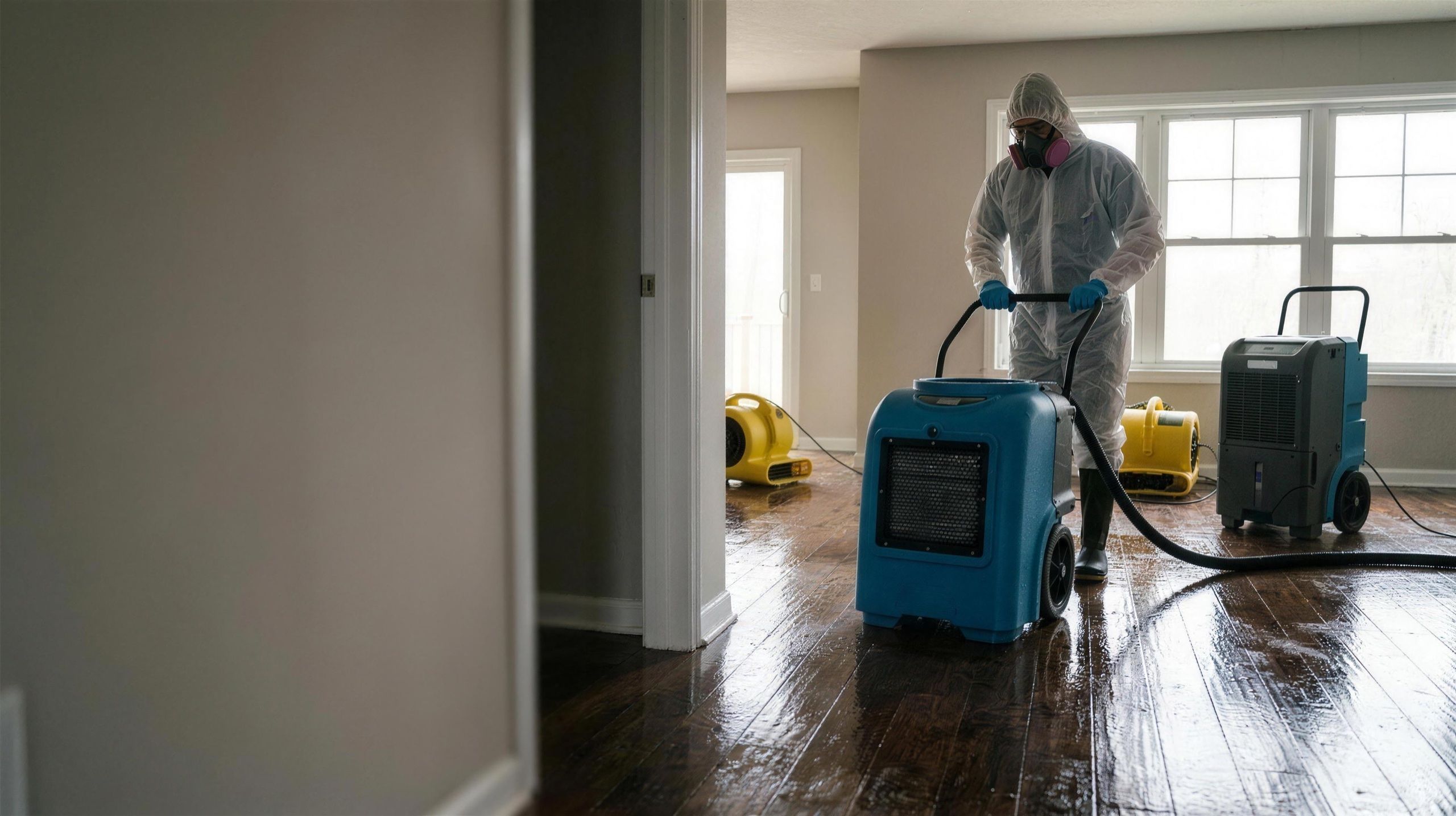
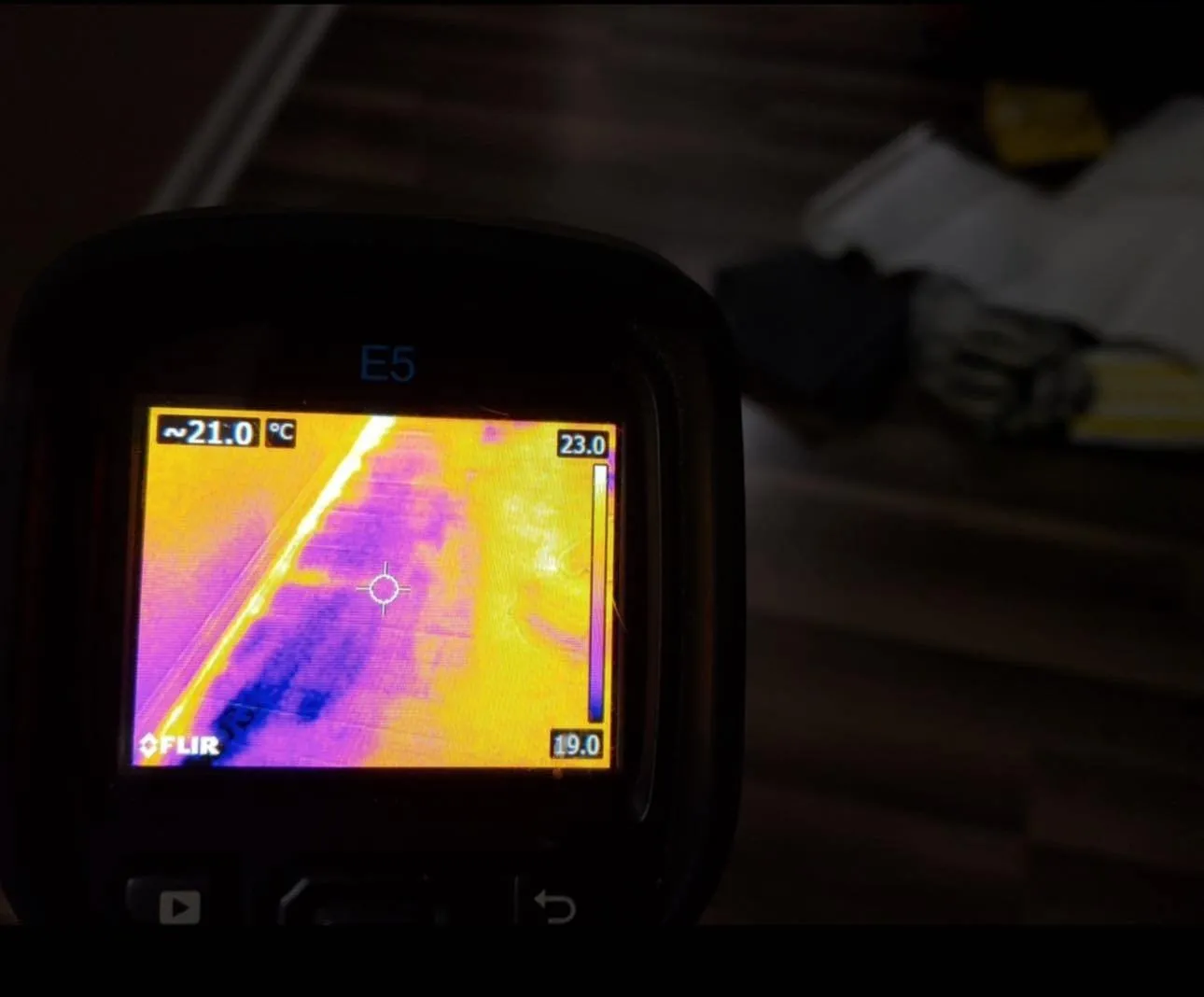
Our pumps pull out the standing water. Big dehumidifiers and fans dry every wet spot we find with thermal cameras. An antimicrobial spray stops mold before it can spread.
A burst pipe can dump hundreds of gallons in minutes. We pull out the water, strip the wet materials, and dry the structure before mold starts. Most policies cover this — and we handle the claim for you.
Get help now →Appliance leaks flood kitchens, laundry rooms, and basements with no warning. Water soaks into cabinets, subfloors, and walls fast. We pull out what's wet, dry the cavity, and rebuild it — cabinets, flooring, drywall, all of it.
Get help now →Heavy rain and storms push water in through doors, windows, and the foundation. We pump it out, set up full drying gear, and protect your belongings while the structure dries.
Learn more →Sewage is a biohazard — it carries bacteria and viruses. We remove the waste in full protective gear, sanitize every surface, spray antimicrobial, and replace anything that can't be saved.
Learn more →A slow roof leak can soak insulation and drywall for weeks before you see the stain. We find the full extent with thermal cameras, dry it out, and replace damaged ceilings, insulation, and paint.
Get help now →Standing water under your home attacks the foundation, the floor joists, and anything stored down there. We pump it out, run dehumidifiers in tight spaces, and repair the damage before it spreads.
Learn more →Before we pull out a single gallon, we stop the water. If it's a burst pipe, we shut the supply. If it's a roof leak, we tarp it. Stopping the source keeps the area from re-flooding while we dry it.
We scan the walls, floors, and ceilings with thermal cameras and moisture meters to map exactly where the water went. That map guides where we place the gear — and it gives your adjuster the proof they need to approve the claim.
We use truck-mounted extractors that move over 200 gallons an hour, then set commercial dehumidifiers and fans based on the moisture map. Every wet room gets the right airflow and drying — not guesswork.
We come back every day to log the moisture readings. Those daily logs, plus time-stamped photos, give your insurance company the proof they need to process the claim without delays or denials.
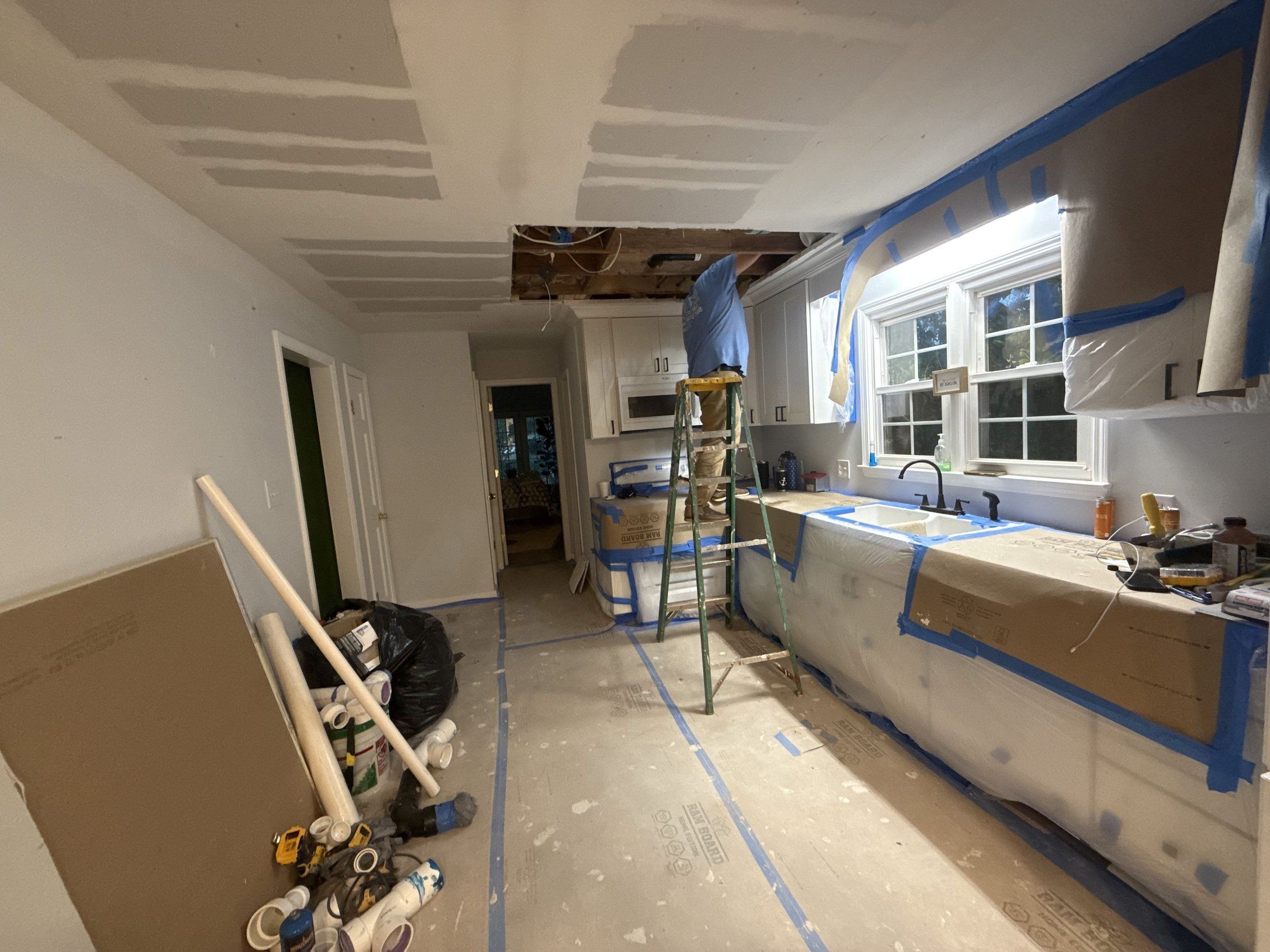
Once the structure hits target dryness, we remove what's damaged and rebuild it. Drywall, paint, trim, cabinets, flooring, subfloors — our own crew does all of it. We take final readings to confirm it's dry before we close the job.
Clean water comes from a safe source and isn't a health risk at first. But if it sits more than 48 hours without proper drying, bacteria grow and it turns into grey water. Fast cleanup still matters.
Grey water is dirty and can make you sick if you touch it or swallow it. Carpet pad and other soft materials that soak it up have to be removed right away. Left for 48 hours, it becomes black water.
Black water holds sewage, bacteria, and harmful chemicals. It needs full protective gear, safe disposal, antimicrobial treatment, and removal of everything soft it touched. Don't try to clean it yourself.
Why this matters: The water category decides your insurance coverage, what we can save, and the safety steps we follow. We test and label the water when we arrive, so you know what you're dealing with — and your claim is documented right from day one.
| Others | CPR | |
|---|---|---|
| Emergency water extraction | ||
| Structural drying with daily monitoring | Sometimes | |
| Drywall, paint, trim & flooring rebuild | ||
| IICRC certified technicians | Sometimes | |
| Thermal imaging on every job | ||
| Xactimate estimates for insurance | Sometimes | |
| One dedicated project manager | ||
| Licensed in SC and NC | Sometimes |
This team was very professional and did a thorough job with water removal from our house. Got the job done and done well. They are the very best!
Zach came over to my house to repair all damage better than new. He was prompt, clean, and professional. I highly recommend them!
The crew was professional and on top of everything. I was really happy that they worked with my insurance company, and everything was handled with ease.
Plain answers to the questions homeowners ask most about cleanup, drying, rebuild, and insurance.
Category 1 is clean water from a safe source, like a burst supply line. Category 2 (grey water) is dirty, such as a washing machine overflow or a failed sump pump. Category 3 (black water) is sewage, floodwater, or any water that has sat more than 48 hours. The category decides what we can save, the safety steps we follow, and how your claim is documented.
Sometimes. It depends on how long the water sat and whether the boards have cupped or buckled. If we start drying in the first 24 hours and the subfloor is still sound, we can often dry the wood in place with mats and dehumidifiers. Once it is back to a normal moisture level, we re-check it. If the warping is permanent, we replace only the damaged boards so the repair blends in.
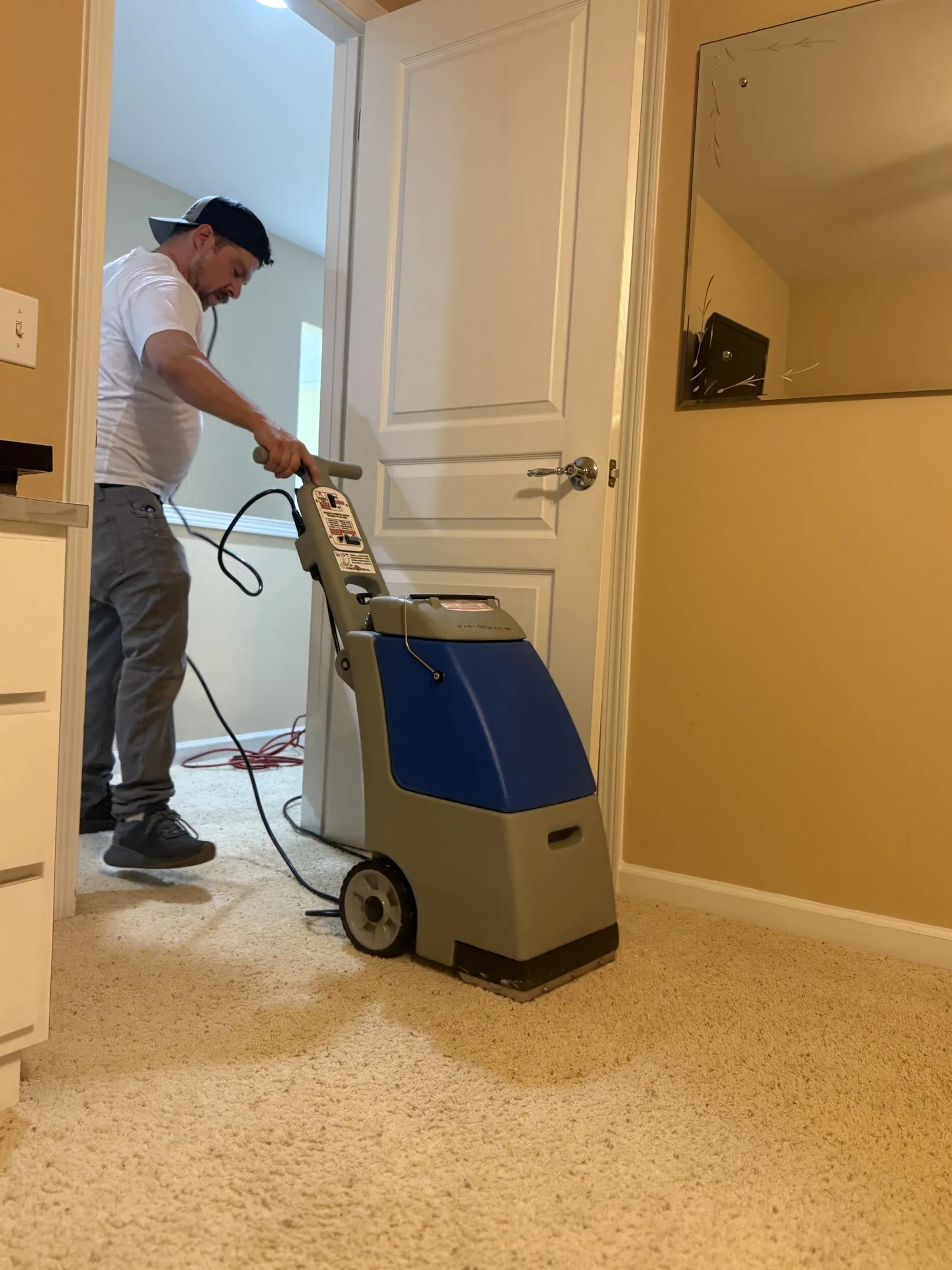
Truck-mounted extractors for fast water removal, weighted tools for carpet and pad, low-grain dehumidifiers, high-speed air movers, thermal cameras to find hidden water, and moisture meters to track drying each day. It is all commercial-grade gear, not rental-store units.
Speed. We start pulling out water within an hour of your call. Once the standing water is gone, we spray an EPA-registered antimicrobial on the framing and subfloor, then run dehumidifiers to keep humidity under 50 percent. We log readings daily, and if anything cannot be dried in time, we remove it. Not sure if you already have a hidden problem? See our guide to the 7 signs of hidden water damage Fort Mill and Rock Hill homeowners most often miss.
Xactimate is the pricing software almost every adjuster uses. When we write the estimate in that same software, the line items match and the claim moves faster. We build it on site with current local pricing, attach the daily logs and photos, and send it straight to your adjuster, which cuts out the back-and-forth that stalls most claims.
If the damage is sudden and accidental, like a burst pipe, an appliance failure, or a storm, your homeowners policy almost always covers it. Filing makes sense once the repairs pass your deductible, which they usually do once drywall and flooring are involved. We give you a free on-site assessment with a written scope so you can see the cost before you decide. If you file, we handle every step of the claim.
We measure the moisture every day at several points: framing, subfloor, drywall, and concrete. It is done when every reading is back to the normal level for that material, usually within a point or two of the dry areas in your home. You get a final drying report with every reading before we start the rebuild.
Mitigation is the emergency part: pulling out the water, removing what cannot be saved, drying the structure, and treating for mold. Restoration is the rebuild: new drywall, paint, flooring, cabinets, and trim. Most companies only do mitigation and hand you off to a general contractor for the rebuild. We do both with one crew and one project manager, which keeps the job on schedule.
Our trucks reach most of York County and south Charlotte in under an hour.
A burst or frozen pipe is one of the most common causes of water damage.
Learn more →When the water is contaminated, we handle the safe, sanitized cleanup.
Learn more →Water heads for the lowest level of your home. We pump it out and dry it.
Learn more →Water left too long grows mold. We remove it and stop it returning.
Learn more →Locally owned and Fort Mill based. 24/7 emergency response across the Carolinas metro.