7 Signs You Have Hidden Water Damage in Your Fort Mill or Rock Hill Home
Fort Mill homeowners often miss these 7 warning signs of hidden water damage. Carolina Pro Restoration explains what to look for and when to call.
Water damage isn't always obvious. A burst pipe flooding your living room is hard to miss. But most water damage in Fort Mill and Rock Hill homes builds up slowly — behind walls, under floors, and inside crawlspaces — long before you see anything wrong.
By the time you notice, the damage is usually much worse than it had to be.
Here are 7 signs to watch for. If you spot any of these, don't wait.
1. Brown or Yellow Stains on Your Ceiling or Walls
Water stains are the most common sign homeowners call us about. They show up as brown or yellowish rings on drywall — usually on ceilings below a bathroom, around windows, or along exterior walls.
The stain itself is dried mineral residue left behind after water soaked in and dried out. That means by the time you see the ring, water has already been sitting in that drywall for a while.
A stain doesn't always mean there's an active leak right now. But it does mean water got there at some point. If you press on the area and it feels soft or spongy, the drywall has been saturated more than once. That's a problem worth checking.
2. Floors That Buckle, Warp, or Feel Spongy Underfoot
Wood floors and laminate are very sensitive to moisture. When water gets underneath them — from a slow leak, a crawlspace moisture problem, or a spill that wasn't dried quickly — the boards swell and push against each other. You'll notice them starting to bow up in the middle or gap at the edges.
In Fort Mill homes with crawlspace foundations — especially in Regent Park, Springfield, and Baxter Village — ground moisture wicks up through the subfloor and causes this problem without any plumbing leak at all. York County's red clay soil holds water for days after rain. If your crawlspace isn't properly sealed, that moisture goes straight into your floors.
Step across your floors and pay attention. Soft or bouncy spots in hardwood or vinyl plank floors almost always mean the subfloor underneath has gotten wet.
3. A Musty Smell That Doesn't Go Away
Mold has a very specific smell. It's earthy and damp — kind of like a wet basement or an old book. If you notice that smell in a room and can't figure out where it's coming from, there's a good chance mold is growing somewhere you can't see.
Mold starts growing within 24 to 48 hours after moisture builds up. It grows inside wall cavities, under flooring, behind baseboards, and in crawlspaces — places you'd never think to look.
A musty smell that keeps coming back after you clean is a red flag. Spraying air freshener doesn't fix it. The only fix is finding the moisture source and removing the mold properly .
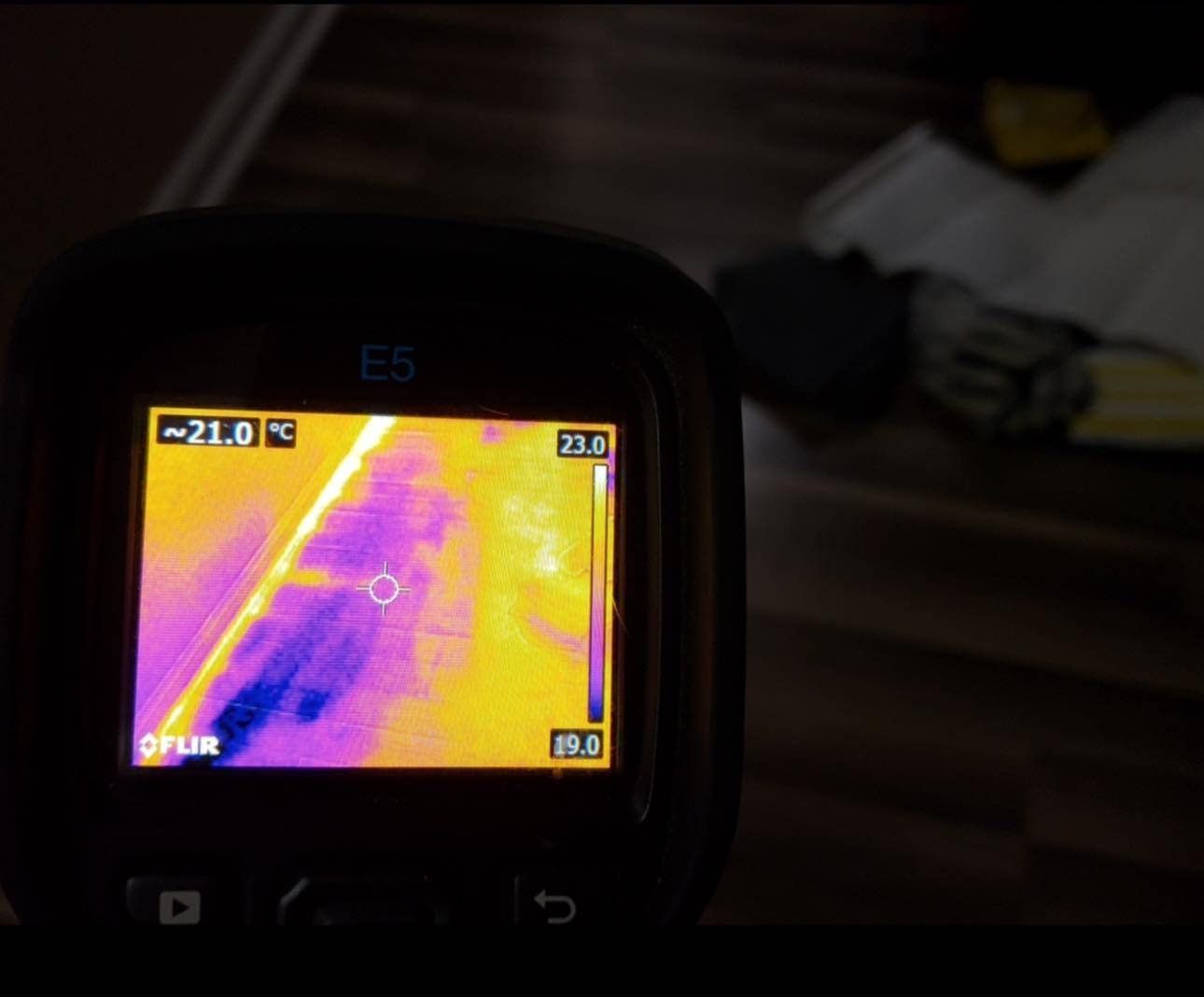
We use FLIR thermal imaging cameras to find moisture hidden behind walls and under floors without tearing anything out. If you're getting that smell in your home, call us and we'll come take a look — no charge for the inspection.
4. Peeling Paint or Bubbling Wallpaper
Paint and wallpaper bond to drywall through a chemical and mechanical grip. When water soaks into the drywall from behind, it breaks that bond. The paint starts to bubble up, crack, or peel away from the surface.
This is very common around windows, along exterior walls, and near bathrooms. In older Fort Mill homes closer to downtown — houses built in the 1970s through 1990s — we often find that the issue is an aging window seal or a slow leak behind the shower wall.
If the peeling is only in one spot, especially near a water source, that's where we'd look first.
5. Your Water Bill Jumped for No Reason
If your water usage hasn't changed but your bill went up, water is going somewhere it shouldn't be.
A small pinhole leak in a supply line inside your wall can waste thousands of gallons a month. You'll never hear it or see it — but your water company measures it. A toilet that runs constantly is another common culprit.
Pull up your last three months of water bills and compare them. If you see a steady climb with no explanation, call a plumber and have your lines checked. If there's active water damage behind the wall, call us — we'll document everything your insurance needs.
Homes in Baxter Village and Regent Park built between 2001 and 2008 used Dura-PEX plumbing that's known for developing pinhole leaks at the fittings. If your home is in that age range, a rising water bill is worth taking seriously.
6. Rust Around Fixtures or Dark Spots Under Sinks
Open your cabinet under the kitchen and bathroom sinks right now. Look at the pipes and the floor of the cabinet.
Any rust on the pipes, soft spots in the cabinet floor, or dark water stains means there has been dripping or pooling under there. This is one of the most overlooked spots in any home because people rarely look inside those cabinets closely.
Small drips under sinks seem minor. But over months, that moisture soaks into the subfloor and works its way into the framing below. By the time the cabinet floor feels soft, the damage underneath it is usually significant.
Same goes for around your toilet base. If the caulk is cracked or there's any rust or discoloration where the toilet meets the floor, the wax seal may be failing and water may be seeping into the subfloor every time you flush.
7. Visible Mold Growth — Even a Small Spot
If you can see mold — even a small patch — treat it seriously. Visible mold is almost always the tip of a much larger problem hiding behind the surface.
Mold on grout or caulk in a shower is common and usually surface-level. But mold on drywall, on baseboards, or in a corner near the floor often means the wall cavity behind it is also affected. A small spot on the outside can mean a large colony on the inside.
Do not use bleach to clean mold on drywall. Bleach kills surface mold but doesn't penetrate the material, and it doesn't fix the moisture problem causing it. The mold comes right back.
If you see mold in your home, call a professional . We'll test the air, find the moisture source, and remove the mold the right way — with containment, HEPA filtration, and antimicrobial treatment so it doesn't come back.
What to Do If You Spot Any of These Signs
Don't wait and hope it gets better. Water damage gets worse every day it goes untreated. What starts as a small leak behind a wall turns into rotted framing, ruined insulation, and a mold problem that costs three times as much to fix.
If you see any of these warning signs in your home, call Carolina Pro Restoration. We serve Fort Mill, Rock Hill, Indian Land, Tega Cay, Charlotte, Pineville, Waxhaw, and the surrounding areas 24 hours a day, 7 days a week.
We'll come out, inspect the home with thermal imaging, and tell you exactly what's going on — no charge for the inspection.
Call us anytime at 980-277-3700.
Carolina Pro Restoration LLC is a water damage restoration company serving Fort Mill SC, Rock Hill, Indian Land, Tega Cay, and the greater Charlotte area. We specialize in water damage restoration, mold remediation, crawlspace encapsulation, sewage cleanup, and full property rebuild. IICRC certified. Available 24/7. Direct insurance billing through Xactimate.
Official Carolina Pro Restoration Blog
Water Damage in Charlotte NC: What to Do in the First 24 Hours
Water Damage Restoration in Matthews NC: What Homeowners Need to Know
How to File a Water Damage Insurance Claim in South Carolina
Dealing With Water Damage Right Now?
Our Fort Mill team answers 24/7 and can be on site fast. One call, one crew, start to finish.