Water Damage Restoration in Matthews NC: What Homeowners Need to Know
Dealing with water damage in Matthews NC? Learn what to do in the first hour, what restoration costs, and how Carolina Pro Restoration responds 24/7 across Mecklenburg County.
Matthews is one of Mecklenburg County's most established suburbs. Homes here range from 1970s ranch-styles near downtown to newer construction in communities like Fullwood, Sardis Woods, and Weddington Chase. That mix of housing ages means the water damage risks vary significantly from one street to the next — and what causes a loss in a 1985 home on Plantation Road is different from what causes one in a 2010 build off Potter Road.
Carolina Pro Restoration responds to water damage calls throughout Matthews and the surrounding Mecklenburg County area 24 hours a day. This guide covers what causes most water damage losses we see in Matthews homes, what the restoration process looks like, and what you should do in the first hour if something goes wrong.
What Causes Water Damage in Matthews Homes
Matthews sits in the McAlpine Creek watershed. That matters because low-lying sections of the town — particularly neighborhoods near McAlpine Creek itself and its tributary branches — are more susceptible to yard saturation and crawlspace moisture intrusion during heavy rain events than homeowners often expect. The creek has a significant drainage basin, and sustained rainfall in the area upstream concentrates runoff through residential areas quickly.
Commercial development along Independence Boulevard and the surrounding retail corridors has also altered natural drainage patterns over the past two decades. Impervious surfaces — parking lots, roads, rooftops — concentrate stormwater that used to soak into the ground and route it toward residential areas. Neighborhoods that drained well in the 1990s now see crawlspace moisture or yard ponding after storms that wouldn't have caused problems before surrounding development filled in.
For older homes in Matthews — particularly those built before 1995 — the most common causes of water damage we see are aging supply line failures, cast iron drain line deterioration or root intrusion, and water heater failures. Cast iron drain lines installed in the 1970s and 1980s are now 40 to 50 years old. They corrode from the inside, crack, and eventually fail — often without warning. A slow cast iron drain failure can allow sewage to back up into the lowest fixture in the home, which is almost always a basement or first-floor bathroom.
In newer Matthews construction, the more common culprits are appliance supply line failures — particularly braided stainless lines to washing machines and refrigerators that fail at the fitting — and HVAC condensate drain overflows. A clogged condensate drain line during peak summer cooling season can overflow the drain pan and saturate the ceiling or wall below the air handler before anyone notices.
The First Hour After a Water Event
What you do in the first 60 minutes after discovering water damage has more impact on the final cost and scope of restoration than almost anything else. Water migrates fast — laterally through subfloor material, into wall cavities through baseboards, and into adjacent rooms through flooring gaps. Every hour it runs unchecked expands the affected area.
Stop the source first. Locate and shut off the water supply valve at the affected fixture, or shut off the home's main supply valve if you can't isolate the source. If the event involves the HVAC system, shut the unit off at the thermostat. If there's any risk of electrical contact with standing water, cut power to the affected area at the breaker panel before entering.
Call a restoration company immediately — before calling your insurance company. Most policies allow emergency mitigation to begin without prior adjuster approval, and waiting for approval before extracting water will cost far more in additional damage than any coverage dispute is worth. Our line at 980-277-3700 is answered 24 hours a day. We serve Matthews and all of Mecklenburg County.
Document before cleanup. Take photographs and video of standing water, the source, and all affected materials before anything gets moved or cleaned up. This documentation is essential for your insurance claim. Don't throw anything away until it has been photographed and documented.
Move contents if you can do so safely. Furniture, rugs, and personal items that can be relocated out of the wet area should be moved — wet contents that sit in contact with wet flooring extend the moisture exposure and can be damaged beyond salvage if left in place.
What the Restoration Process Looks Like
Professional water damage restoration follows a structured process defined by the IICRC S500 standard. Understanding what each phase involves helps you know what to expect and how to evaluate whether the company you're working with is doing the job correctly.
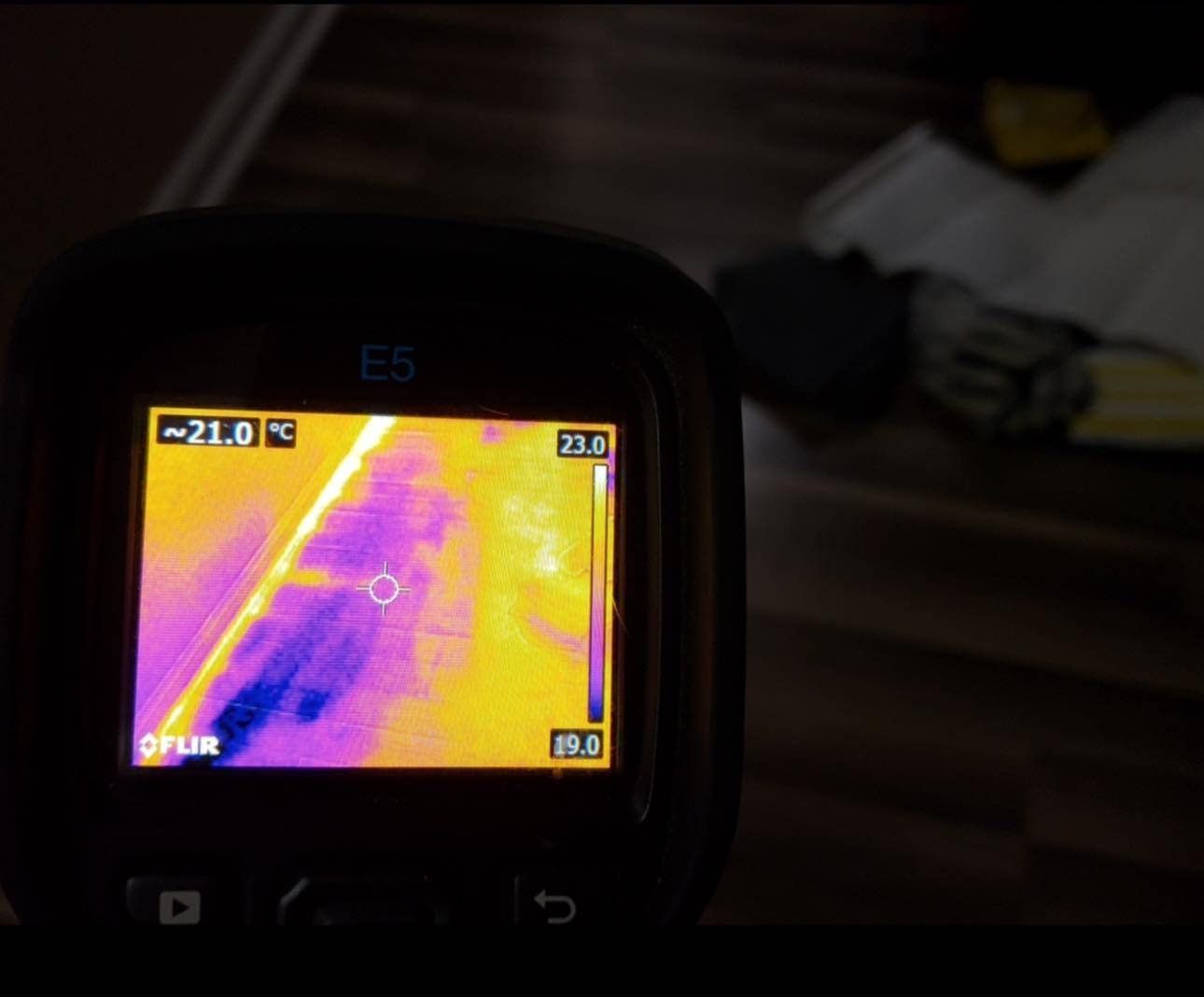
Assessment and moisture mapping. Before any equipment is placed, a certified technician documents the full scope of damage — moisture readings in walls, floors, and ceilings using calibrated meters, affected square footage, material types, and the source. We use Xactimate, the same estimating software insurance adjusters use, so our documentation lines up with the claim from the start.
Water extraction. Truck-mounted or portable extractors remove standing water from hard surfaces and pull trapped moisture from carpet and pad. Fast extraction limits lateral migration — the water that moves sideways through subfloor and wall assemblies before it's visible. A loss caught within two hours looks very different from the same loss discovered a day later.
Controlled demolition. Wet drywall, insulation, and flooring that can't be dried in place gets removed. This is often what surprises homeowners — cutting sections of wall and pulling up flooring looks like the damage is getting worse. It's not. Leaving wet materials sealed in wall cavities is how mold establishes within 24 to 48 hours. We remove only what's necessary and document everything for the insurance scope.
Structural drying. Commercial dehumidifiers and air movers run continuously — typically 24 hours a day — until moisture readings in structural materials return to baseline. This usually takes three to five days for a standard loss. We take daily moisture readings and log them, giving you a complete drying record that supports the insurance file.
Antimicrobial treatment and reconstruction. Once the structure is dry, affected surfaces are treated with EPA-registered antimicrobials. Then reconstruction begins — new drywall, insulation, flooring, paint, and finish work to return the space to pre-loss condition. We handle both mitigation and full rebuild in-house, so there's no gap between phases and no need to find a separate contractor for repairs.
Water Damage Categories and Why They Matter in Matthews
The IICRC classifies water damage into three categories based on contamination level. This affects how the work is done, what materials can be saved, and how the insurance claim is documented — and it's worth understanding before you sign anything with a restoration company.
Category 1 — Clean water originates from a sanitary source: supply lines, faucets, water heaters. Materials can often be dried in place if the loss is addressed quickly. Most appliance supply line failures and water heater losses in Matthews fall here.
Category 2 — Gray water contains significant contamination — washing machine or dishwasher overflows, sump pump failures, toilet overflows without solid waste. Porous materials saturated by Category 2 water generally need to be removed rather than dried.
Category 3 — Black water is grossly contaminated — sewage backups, flooding from outside the home, or any standing water that has been present long enough for microbial growth. All porous materials in contact with Category 3 water are removed. This is the category most relevant to Matthews homes with aging cast iron drain lines, where a line failure can result in sewage backup. See our sewage cleanup service page for detail on how we handle these events.
Categories can escalate with time. A clean water loss from a supply line that isn't discovered for several days becomes a Category 3 situation due to microbial growth in standing water. This is the single biggest cost driver in residential water damage claims in Matthews and across Mecklenburg County.
What Water Damage Restoration Costs in Matthews
Cost ranges vary by category, scope, and materials. Here's what we typically see in the Matthews and Mecklenburg County market:
Minor losses — single room, Category 1, caught early: $2,000 to $5,000 for mitigation, plus $1,500 to $4,000 for reconstruction depending on finish materials.
Mid-range losses — multiple rooms or Category 2, standard finish: $5,000 to $15,000 total for mitigation and reconstruction combined.
Large-scale losses — whole-floor events, Category 3, or losses discovered late: $15,000 to $30,000 and above. These almost always involve insurance and Xactimate-based documentation throughout.
The most important cost variable is how fast the loss is discovered and mitigation begins. A supply line failure caught within two hours and a supply line failure found three days later are entirely different scope and cost scenarios — even if the source is identical. For older Matthews homes, we also recommend addressing waterproofing and drainage vulnerabilities proactively to reduce the risk of future losses.
Frequently Asked Questions
Do you serve Matthews NC? Yes. We respond throughout Matthews and all of Mecklenburg County 24 hours a day. Call 980-277-3700 for immediate response.
How quickly can you respond to a water damage call in Matthews? We aim for response within 60 minutes for active water events in the Mecklenburg County area. Call us directly at 980-277-3700 — don't submit a web form for an active event.
Does homeowners insurance cover water damage in Matthews? Most standard homeowners policies cover sudden and accidental water damage — burst pipes, appliance failures, and similar events. They typically exclude gradual leaks, maintenance neglect, and flooding from outside the home. We document every loss with Xactimate and work directly with your adjuster throughout the claim process.
Can I stay in my home during restoration? For contained losses in one area, usually yes. For large-scale events, Category 3 contamination, or HVAC system involvement, temporary displacement may be necessary. Your homeowners policy typically covers additional living expenses when displacement is required.
Do you handle both the mitigation and the rebuild? Yes — we handle water extraction, structural drying, controlled demolition, and full reconstruction under one roof. One project manager, one point of contact from start to finish.
We serve Fort Mill, Rock Hill, Indian Land, Tega Cay, Charlotte, Matthews, Pineville, Waxhaw, and the surrounding areas 24 hours a day, 7 days a week.
Carolina Pro Restoration LLC is a water damage restoration company serving Fort Mill SC, Rock Hill, Indian Land, Tega Cay, and the greater Charlotte area. We specialize in water damage restoration, mold remediation, crawlspace encapsulation, sewage cleanup, and full property rebuild. IICRC certified. Available 24/7. Direct insurance billing through Xactimate.
Official Carolina Pro Restoration Blog
Water Damage in Charlotte NC: What to Do in the First 24 Hours
How to File a Water Damage Insurance Claim in South Carolina
7 Signs You Have Hidden Water Damage in Your Fort Mill or Rock Hill Home
Dealing With Water Damage Right Now?
Our Fort Mill team answers 24/7 and can be on site fast. One call, one crew, start to finish.