Water Damage in Charlotte NC: What to Do in the First 24 Hours
Water damage in Charlotte NC spreads fast — mold can start in 24 hours. Here's what to do first, what restoration costs, and why one contractor handling everything matters.

Water damage in a Charlotte home can go from a small leak to a major problem in less than a day. Mold starts growing within 24 to 48 hours. Drywall soaks through in minutes. Hardwood floors buckle before you even notice the water underneath. If you're dealing with water damage right now — or you just found it — here's exactly what to do, what it'll cost, and how to get your home back to normal.
What Should You Do in the First Hour After Water Damage?
The first hour matters more than most people think. Water moves sideways through drywall at about an inch per hour. It wicks up baseboards and into wall cavities where you can't see it. What looks like a wet spot on the floor is usually much worse behind the walls.
Here's what to do right now. Shut off the water source if it's a pipe or appliance. If you can't find it, shut off the main. Move furniture, rugs, and anything you care about off wet floors. Don't use your home vacuum — household vacuums aren't built for water and you'll ruin the motor or shock yourself.
Call a restoration company, not just a plumber. A plumber fixes the pipe. A restoration company extracts the water, dries the structure, and prevents mold. If you wait until tomorrow, you're giving moisture 24 hours to spread into places you'll never reach with towels.
Key takeaway: The first hour sets the trajectory. Fast action usually means drying only. Delayed action usually means demo and rebuild.
Why Does Charlotte Get So Much Water Damage?
Charlotte sits in the Piedmont region with a humid subtropical climate. That means hot summers with intense afternoon thunderstorms that can dump 2 to 3 inches of rain per hour. The city averages about 43 inches of rainfall a year — well above the national average.
But weather is only part of it. Charlotte's rapid growth over the past 15 years means a lot of new construction went up fast. Some of those neighborhoods in Ballantyne, Steele Creek, and South End have drainage systems that weren't sized for the storm loads they're actually getting. We've responded to homes in the Rea Road corridor where the grading pushes water straight toward the foundation every time it rains hard.
Older neighborhoods like Dilworth, Plaza Midwood, and NoDa have their own problems. Aging galvanized pipes, original cast iron sewer lines, and root-damaged clay pipes that back up during heavy rain. Our crew pulled a cast iron drain line from a 1940s bungalow in Plaza Midwood last fall — it was 80% blocked with scale and roots. The homeowner had been dealing with slow drains for years before it finally burst.
Key takeaway: Charlotte's climate, rapid growth, and mix of old and new housing stock make water damage more common here than in most cities.
How Much Does Water Damage Restoration Cost in Charlotte?
This is the question everyone asks first. The honest answer is it depends on how much water, how long it sat, and what materials are affected. But here are real ranges we see on Charlotte jobs.
A straightforward water extraction and dry-out — say a burst washing machine line that flooded a laundry room and adjacent hallway — usually runs $2,500 to $5,000. That covers extraction, commercial dehumidifiers, air movers, moisture monitoring over 3 to 5 days, and antimicrobial treatment.
If the water sat for a day or more, or if it reached the walls and subfloor, you're looking at $5,000 to $15,000. That includes demo of damaged drywall, baseboard removal, potential subfloor replacement, and full dry-out. If mold has started, add remediation costs on top.
A major event — like a second-floor bathroom supply line that ran overnight and flooded the floor below — can hit $20,000 to $50,000+. That's full reconstruction territory: new drywall, new flooring, new paint, possibly new cabinetry. This is where having one contractor who handles both the mitigation and the rebuild saves you real money and time. We don't hand you off to a general contractor halfway through — we do the extraction, the drying, the demo, the rebuild, and the final walkthrough. One crew, one insurance claim, one point of contact from day one to move-back-in day.
Key takeaway: Early response keeps costs in the $2,500–$5,000 range. Delayed response pushes jobs into the $15,000–$50,000+ range.
Does Homeowners Insurance Cover Water Damage in North Carolina?
Most standard homeowner policies in North Carolina cover sudden and accidental water damage. That means a burst pipe, a failed appliance line, or an overflowing toilet is usually covered. Your policy likely covers the water extraction, structural drying, mold prevention, and the rebuild.
What's usually NOT covered: gradual leaks you should've caught, flood damage from rising water (that requires separate flood insurance through FEMA's NFIP), and sewer backups unless you added that rider to your policy. If you're in a flood-prone area near Sugar Creek, Little Sugar Creek, Briar Creek, or McAlpine Creek, check whether you have the flood rider. A lot of Charlotte homeowners assume they're covered and find out they're not.
We work directly with insurance companies using Xactimate — the same estimating software adjusters use. That means our estimate and the adjuster's estimate speak the same language, which speeds up approvals and avoids the back-and-forth that delays your project. For a step-by-step guide on the claims process, read our insurance claim guide.
Key takeaway: Sudden water damage is usually covered. Floods and gradual leaks usually aren't. Check your policy before you need it.
Dealing with water damage in your Charlotte home right now? We respond in under an hour across Mecklenburg County — extraction through full rebuild, one contractor. Call 980-277-3700 or request an inspection.
What Does the Restoration Process Look Like Start to Finish?
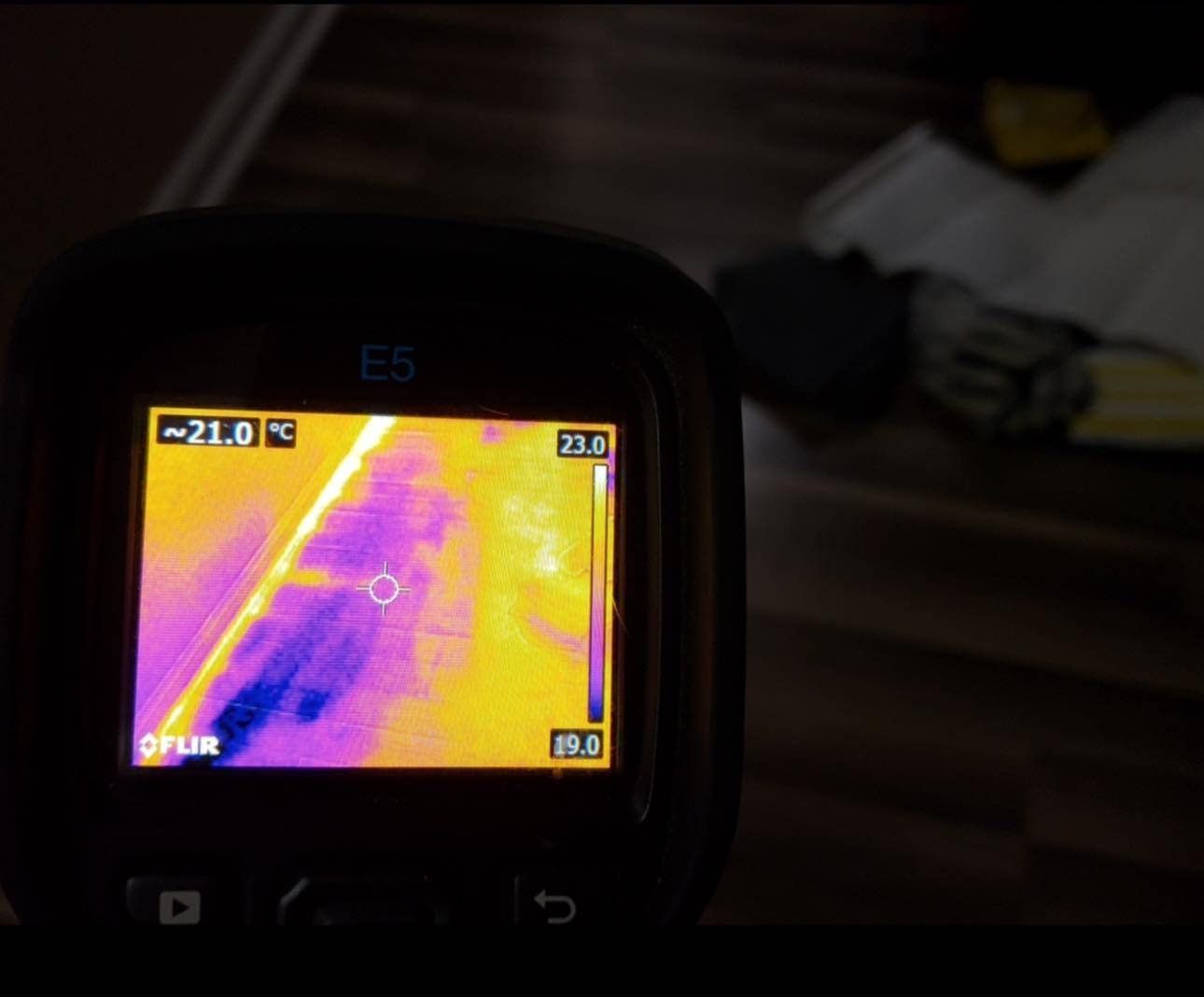
Here's what happens when we show up to a Charlotte water damage job. First, we do a full inspection with moisture meters and thermal cameras. Water hides behind walls, under flooring, and in ceiling cavities. You can't see it, but the equipment can. We map every wet surface so nothing gets missed.
Next, extraction. Commercial-grade pumps and extractors pull standing water fast. Then we set up drying equipment — industrial dehumidifiers and air movers positioned based on the moisture map. This phase usually takes 3 to 5 days with daily monitoring.
Once everything reads dry, we move into the rebuild phase. Demo of damaged drywall, baseboard, and flooring. Then reconstruction — new drywall, tape and mud, paint, new flooring (we install hardwood, LVP, and tile through our flooring division), and trim work. Most restoration companies stop after the drying and hand you off to a GC. We don't. You deal with one company from the emergency call through the final walkthrough.
Key takeaway: Restoration isn't just water removal. It's inspection, extraction, drying, demo, rebuild, and final inspection — and we handle all of it.
Which Charlotte Neighborhoods See the Most Water Damage?
We respond across all of Mecklenburg County, but certain areas keep showing up. Steele Creek and the Berewick area deal with stormwater drainage problems — rapid development outpaced the infrastructure. Ballantyne has a mix of 15-to-20-year-old homes where supply lines and water heaters are hitting the end of their lifespan.
University City and the NoDa area have older housing stock with original plumbing that's overdue for replacement. South End and Uptown condos get hit with supply line failures and HVAC condensation issues — we've dried out more South End condos than we can count. And anywhere near Little Sugar Creek or Briar Creek sees basement and crawl space flooding after heavy rain.
If you're in Pineville, Matthews, or Mint Hill, you're in our primary response zone too. We dispatch from Fort Mill, which puts us in most Charlotte neighborhoods in 30 to 45 minutes.
Key takeaway: Charlotte's mix of rapid new construction and aging housing stock means every neighborhood has water damage risks — just different ones.
Frequently Asked Questions
How quickly can you respond to water damage in Charlotte?
We dispatch from our Fort Mill headquarters and reach most Charlotte neighborhoods in 30 to 45 minutes. Our emergency line at 980-277-3700 is staffed 24/7, including nights, weekends, and holidays.
Can you handle both the water removal and the rebuild?
Yes — that's what sets us apart from most restoration companies. We handle everything from emergency extraction through full reconstruction. Drywall, flooring, paint, trim, cabinetry — all one crew, one insurance claim, one point of contact.
How long does water damage restoration take in Charlotte?
Drying takes 3 to 5 days for most jobs. If you need reconstruction — new drywall, flooring, paint — add 1 to 3 weeks depending on the scope. We start the rebuild as soon as everything reads dry, so there's no gap between drying and construction.
Do you work with my insurance company?
We work with all major carriers in North Carolina. We use Xactimate to write estimates in the same format your adjuster uses, which speeds up approvals and avoids disputes. We also handle all the documentation and communication so you don't have to.
What if I find mold after water damage?
Mold can start colonizing in 24 to 48 hours. If we catch it early during the drying process, we treat it with antimicrobials as part of the restoration. If it's already spread, we do full mold remediation — containment, HEPA filtration, removal, and clearance testing — before starting the rebuild.
Carolina Pro Restoration serves Fort Mill, Rock Hill, Charlotte, Indian Land, Tega Cay, Pineville, Waxhaw, Ballantyne, and surrounding areas. Call 980-277-3700 — 24/7 emergency dispatch.
Carolina Pro Restoration is a licensed, IICRC-certified restoration contractor serving Fort Mill SC and the greater Charlotte metro. We specialize in water damage restoration, mold removal, crawlspace encapsulation, sewage cleanup, flooring, and full rebuild. License #70177448.
Official Carolina Pro Restoration Blog
Water Damage Restoration in Matthews NC: What Homeowners Need to Know
How to File a Water Damage Insurance Claim in South Carolina
7 Signs You Have Hidden Water Damage in Your Fort Mill or Rock Hill Home
Dealing With Water Damage Right Now?
Our Fort Mill team answers 24/7 and can be on site fast. One call, one crew, start to finish.