
Home Waterproofing in Fort Mill and Charlotte: What It Actually Involves

Mateo Alvarez • December 15, 2025

Waterproofing is one of the most misunderstood services in the home improvement industry. Homeowners hear the word and think of a single product — a spray, a coating, a membrane — that makes their home immune to water. The reality is more practical than that, and more important.

Waterproofing is a system, not a product. It's the combination of drainage, grading, foundation management, and crawlspace or basement sealing that works together to keep water from entering your home and damaging its structure. In the Fort Mill and Charlotte area — where clay soil, heavy summer storms, and aging drainage infrastructure all work against homeowners — getting this system right is one of the most valuable investments you can make.

At Carolina Pro Restoration, we handle waterproofing across York County and Mecklenburg County. We also handle the water damage restoration that follows when waterproofing fails or was never done properly. This guide explains what waterproofing actually involves, what the most common failure points are in this region, and how to approach it correctly.

Why Fort Mill and Charlotte Homes Need Waterproofing Attention

The greater Charlotte metro sits on the Piedmont, a region characterized by clay-heavy soils that don't drain water well. When it rains — and York County and Mecklenburg County average 44 to 47 inches of rainfall per year — that water doesn't soak in quickly. It pools, runs off, and finds the path of least resistance. In residential areas, that path often leads to the lowest point of a property, which is frequently the foundation perimeter or crawlspace.

The topography varies significantly across the metro. Fort Mill and Indian Land have rolling terrain that creates natural drainage toward low-lying lots. Understanding how Fort Mill's seasonal weather patterns and humidity cycles affect homes year-round is essential context for understanding why moisture intrusion is such a persistent problem here. Some neighborhoods in Rock Hill sit in natural drainage basins that concentrate runoff from surrounding streets and properties. Pineville and the south Charlotte suburbs have seen their natural drainage patterns altered significantly by two decades of commercial and residential development. And Tega Cay, on the Lake Wylie peninsula, sits on a high water table that pushes moisture toward foundations from below rather than from above.

Each of these situations calls for a different waterproofing approach. There is no universal solution that works for every home in the region. This is why we always start with an assessment — understanding what's specifically happening at your property before recommending anything.

The Four Components of a Complete Waterproofing System

Effective waterproofing addresses water from four directions — from above (roof and surface runoff), from the sides (lateral ground pressure), from below (rising groundwater), and from inside (condensation and humidity). Most homeowners only think about one or two of these. A complete system addresses all four.

Surface drainage and grading. This is the first line of defense and the most often overlooked. Your lot should slope away from your foundation at a minimum of six inches of drop over the first ten feet. Downspouts should extend at least six feet from the foundation before releasing water. Drainage inlets and swales should direct surface runoff away from the home. When grading settles and reverses over time — which happens in almost every home in the Charlotte area after five to ten years — water that was once directed away starts flowing toward the foundation instead. Correcting grade is often the cheapest and most effective waterproofing step available, and it's frequently skipped because it's not as visible as other solutions. This grade reversal issue is especially common in Indian Land new construction homes , where lots are graded during building but shift within three to seven years.

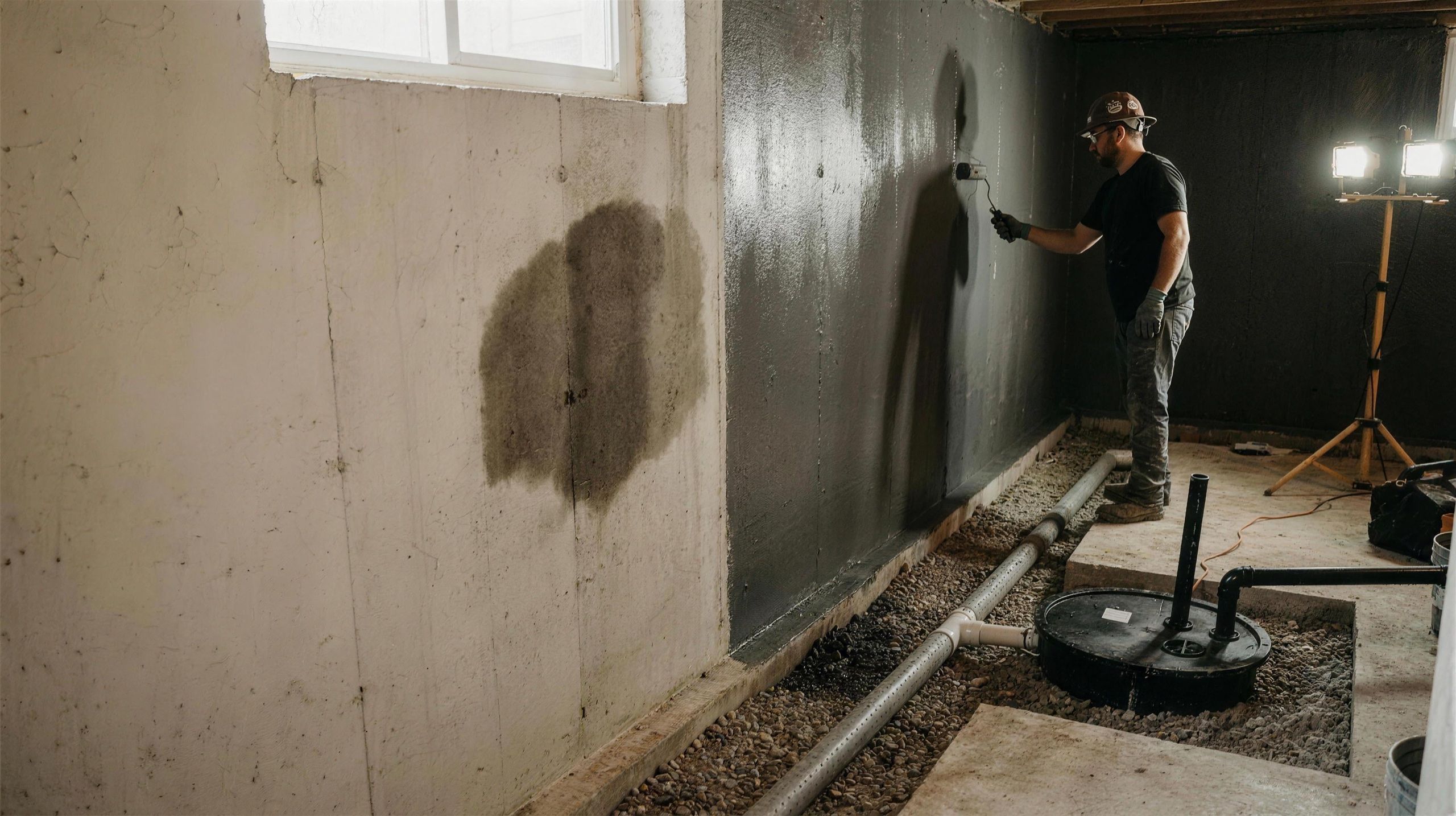
Foundation and exterior waterproofing. Exterior waterproofing involves applying waterproof coatings or membranes to the outside of foundation walls and installing perimeter drainage systems — French drains, drain tile, or perforated pipe — that intercept groundwater before it reaches the foundation. This is the most comprehensive waterproofing approach, and it's also the most invasive and expensive because it typically requires excavating around the foundation perimeter. For homes with significant lateral water pressure — especially those on lower lots or near drainage channels — exterior waterproofing is the most effective long-term solution.

Interior drainage systems. Interior waterproofing doesn't stop water from entering — it manages water after it gets in, directing it to a sump pump before it can cause damage. A perimeter drain channel installed along the inside of the foundation wall captures seeping water and channels it to a collection pit. A sump pump then removes it from the home. Interior systems are less expensive than exterior waterproofing and are often appropriate when exterior excavation isn't practical. They're particularly common in homes with basements and in crawlspace homes where perimeter drainage is needed to manage seasonal moisture.

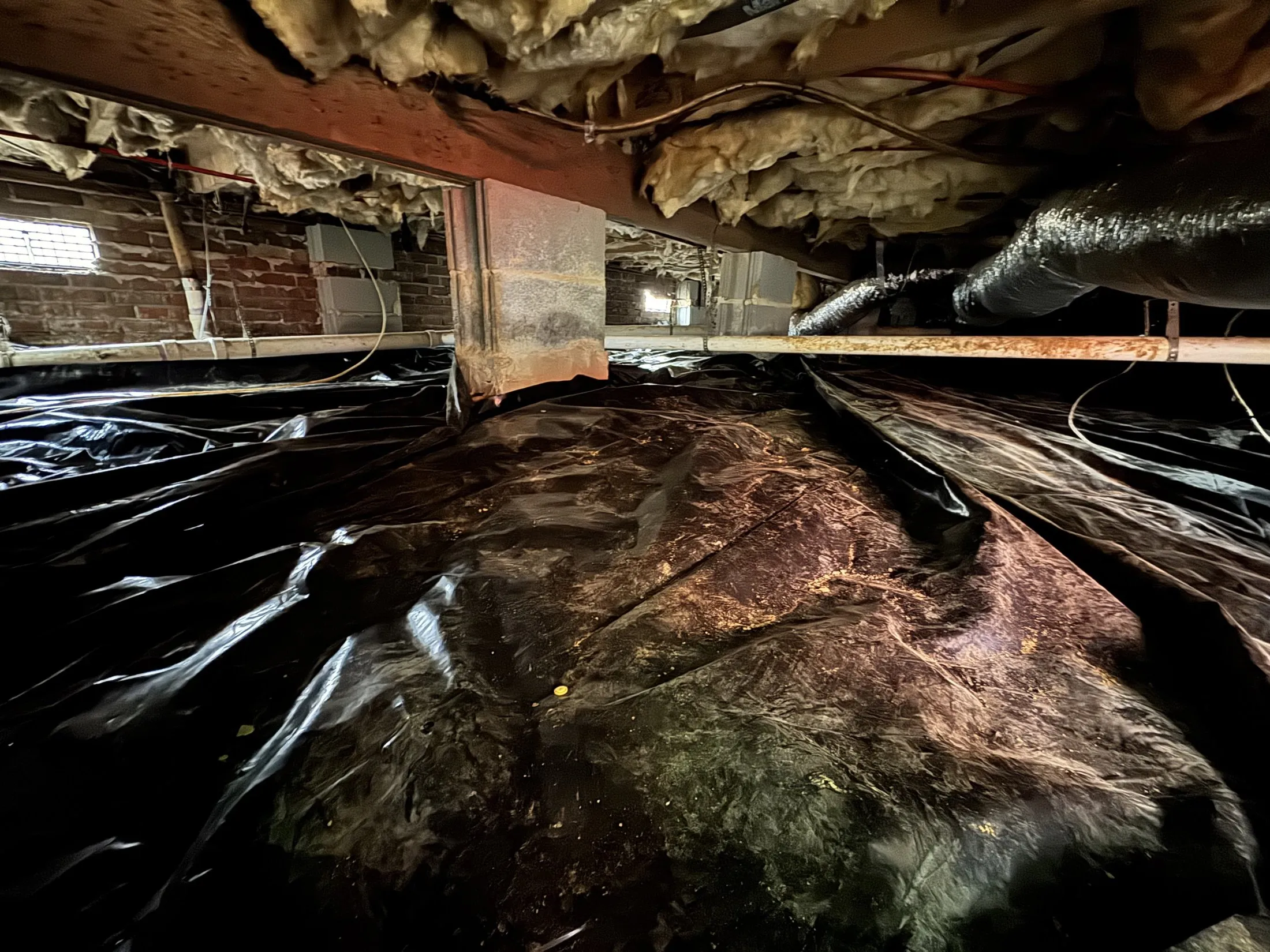
Crawlspace encapsulation. For the majority of Fort Mill and Charlotte area homes, which are built on crawlspace foundations rather than basements or slabs, crawlspace encapsulation is the most critical waterproofing component. A properly encapsulated crawlspace uses a heavy-duty liner — 12-mil polyethylene or thicker — sealed to the walls and all penetrations, with closed foundation vents and a dehumidifier maintaining humidity below 50 percent year-round. This system keeps ground moisture, seasonal humidity, and incidental water from saturating the wood structure above. Learn more about our crawlspace encapsulation services here.

The Most Common Waterproofing Failures We See

After responding to hundreds of water damage and moisture intrusion calls across York County and Mecklenburg County, we see the same failure patterns repeatedly. Understanding them helps homeowners know where to focus attention.

Downspouts that terminate too close to the foundation. This is the single most common contributing factor we find. A downspout that deposits water six inches from the foundation is directing every rainstorm toward your crawlspace. The fix costs less than $50 in materials. The damage from ignoring it over five or ten years costs thousands. Check every downspout on your home and extend any that aren't carrying water at least six feet away — ideally ten feet.

Window wells and basement egress windows without drainage. In homes with below-grade windows, window wells fill with water during heavy rain and become a direct pathway for water to enter through the window frame or foundation wall. Window wells need drainage — either a gravel bed connected to a drain pipe or a window well cover that deflects rain — to prevent this.

Sump pumps without battery backup. The most common time a sump pump is needed is during a heavy storm — exactly when power outages are most likely. A sump pump without a battery backup system will fail the moment you need it most. We recommend a battery backup system on every sump pump in the Charlotte metro. The cost is $200 to $400. The cost of a flooded crawlspace or basement is many times that.

Vented crawlspaces in a humid climate. Older building codes required foundation vents to allow crawlspace air circulation. Research over the past two decades has demonstrated clearly that vented crawlspaces in humid climates like the Carolinas perform worse than sealed ones — the vents pull in humid outdoor air that condenses on cooler surfaces inside the crawlspace and creates exactly the moisture conditions they were supposed to prevent. If your home has a vented crawlspace, encapsulation will outperform ventilation for moisture control in this climate every time.

Cracks in foundation walls left unaddressed. Hairline cracks in poured concrete or block foundations are common and often don't indicate structural problems. But they are water entry points. Over time, water moving through a crack carries dissolved minerals that expand the crack from the inside. What was a hairline crack becomes a significant gap. Foundation crack injection — filling the crack from inside with hydraulic cement or polyurethane foam — is a straightforward repair that stops water entry and prevents further deterioration.

What to Expect from a Professional Waterproofing Assessment

A legitimate waterproofing assessment begins with understanding your specific situation — not with a sales pitch for a particular product or system. When we assess a home for waterproofing, we look at the lot grade and drainage patterns, the crawlspace or basement conditions, the foundation for cracks or seepage signs, the gutter and downspout system, and the soil conditions around the perimeter.

We also look at the history of the home. Has there been water intrusion before? Where? Under what weather conditions? A home that takes on water only during sustained heavy rain has a different problem than one that has standing water in the crawlspace after any rain event. The answer shapes the solution.

Be cautious of any waterproofing company that arrives and immediately recommends the most expensive interior drainage system without first assessing whether simpler surface drainage corrections might solve the problem. We've assessed homes where the entire moisture issue in the crawlspace was caused by two downspouts that weren't extended — a $50 fix that prevented what could have been a $5,000 to $8,000 interior drainage installation.

We provide written assessments after every inspection, along with a clear explanation of what we found, what's causing the issue, and what we recommend — ranked from most to least invasive and from least to most expensive. The decision is yours. Our job is to make sure you have accurate information to make it. Request a free waterproofing assessment here.

Waterproofing as Part of a Larger Moisture Strategy

Waterproofing doesn't exist in isolation. In the Fort Mill and Charlotte market, we almost always discuss crawlspace waterproofing in the context of crawlspace encapsulation , and we discuss foundation drainage in the context of what the drainage connects to downstream. A French drain that redirects water to a low spot in the yard that's already saturated just moves the problem. A sump pump that discharges near the foundation defeats the purpose.

We also connect waterproofing conversations to mold remediation when moisture intrusion has already resulted in mold growth on framing or subfloor material. Waterproofing the crawlspace without first remediating existing mold means you're sealing in the problem. The correct sequence is remediate first, then encapsulate and waterproof.

If you've had water damage in your home that was caused by a drainage or moisture issue rather than a plumbing failure, waterproofing is part of making sure it doesn't happen again. We handle both sides of that — the restoration after the event and the prevention before the next one. Call us at 980-277-3700 or request an inspection online.

Frequently Asked Questions

What's the difference between waterproofing and crawlspace encapsulation?
Crawlspace encapsulation is a type of waterproofing — specifically, it addresses moisture entering through the ground and foundation walls of a crawlspace. Full waterproofing may also include exterior drainage systems, grade correction, sump pump installation, and foundation crack repair. Encapsulation is usually the most important component for crawlspace homes in the Fort Mill and Charlotte area.

How do I know if my home needs waterproofing?
Signs include a musty smell in the home or crawlspace, visible mold or efflorescence (white chalky deposits) on foundation walls, soft spots in flooring over the crawlspace, water stains on foundation walls, standing water in the crawlspace after rain, or higher-than-expected energy bills caused by saturated insulation. Any of these warrants a professional assessment.

Does waterproofing add value to my home?
Yes, meaningfully. A properly encapsulated crawlspace and functional exterior drainage system protect the structural integrity of the home and prevent the mold and wood rot that reduce home values significantly. In the Fort Mill and Charlotte market, buyers and home inspectors flag moisture issues routinely. Addressing them proactively is both a maintenance investment and a value protection strategy.

How long does waterproofing last?
A quality crawlspace encapsulation system with a heavy-duty liner and properly maintained dehumidifier will last 20 to 25 years or more. Exterior drainage systems have similar lifespans when properly installed. The key is periodic maintenance — checking the liner for damage, cleaning the dehumidifier, testing the sump pump annually, and clearing drainage inlets before storm season.

How fast can you respond for a waterproofing assessment in Fort Mill or Charlotte?
We schedule assessments across York County and Mecklenburg County and can usually accommodate inspections within a few days. For active water intrusion, we respond 24 hours a day at 980-277-3700. For non-emergency assessments, request one here.


We serve Fort Mill, Rock Hill, Indian Land, Tega Cay, Charlotte, Pineville, Waxhaw, and the surrounding areas 24 hours a day, 7 days a week.

Carolina Pro Restoration LLC is a water damage restoration company serving Fort Mill SC, Rock Hill, Indian Land, Tega Cay, and the greater Charlotte area. We specialize in water damage restoration , mold remediation , crawlspace encapsulation , sewage cleanup , and full property rebuild. IICRC certified. Available 24/7. Direct insurance billing through Xactimate.

You might also like

Official Carolina Pro Restoration Blog

Water damaged residential living room in Charlotte NC with warped flooring and restoration equipment
By Mateo Alvarez April 2, 2026
Water damage in Charlotte NC spreads fast — mold can start in 24 hours. Here's what to do first, what restoration costs, and why one contractor handling everything matters.
Water damage restoration technician responding to a flooded home in Matthews NC
By Mateo Alvarez March 18, 2026
Dealing with water damage in Matthews NC? Learn what to do in the first hour, what restoration costs, and how Carolina Pro Restoration responds 24/7 across Mecklenburg County.
Professional crawlspace dehumidifier installed in a clean encapsulated crawlspace in Fort Mill SC
By Mateo Alvarez March 18, 2026
Find the best crawl space dehumidifier for your Fort Mill or Charlotte home. Learn sizing, installation, and why the right unit matters for moisture control in the Carolinas.