Indian Land New Construction: Water Damage Risks Builders Don't Warn You About
New construction homes in Indian Land SC have water damage risks most buyers don't expect. Learn what causes them in Mill Creek, Brayden, and Ballantyne South — and how to catch them early.
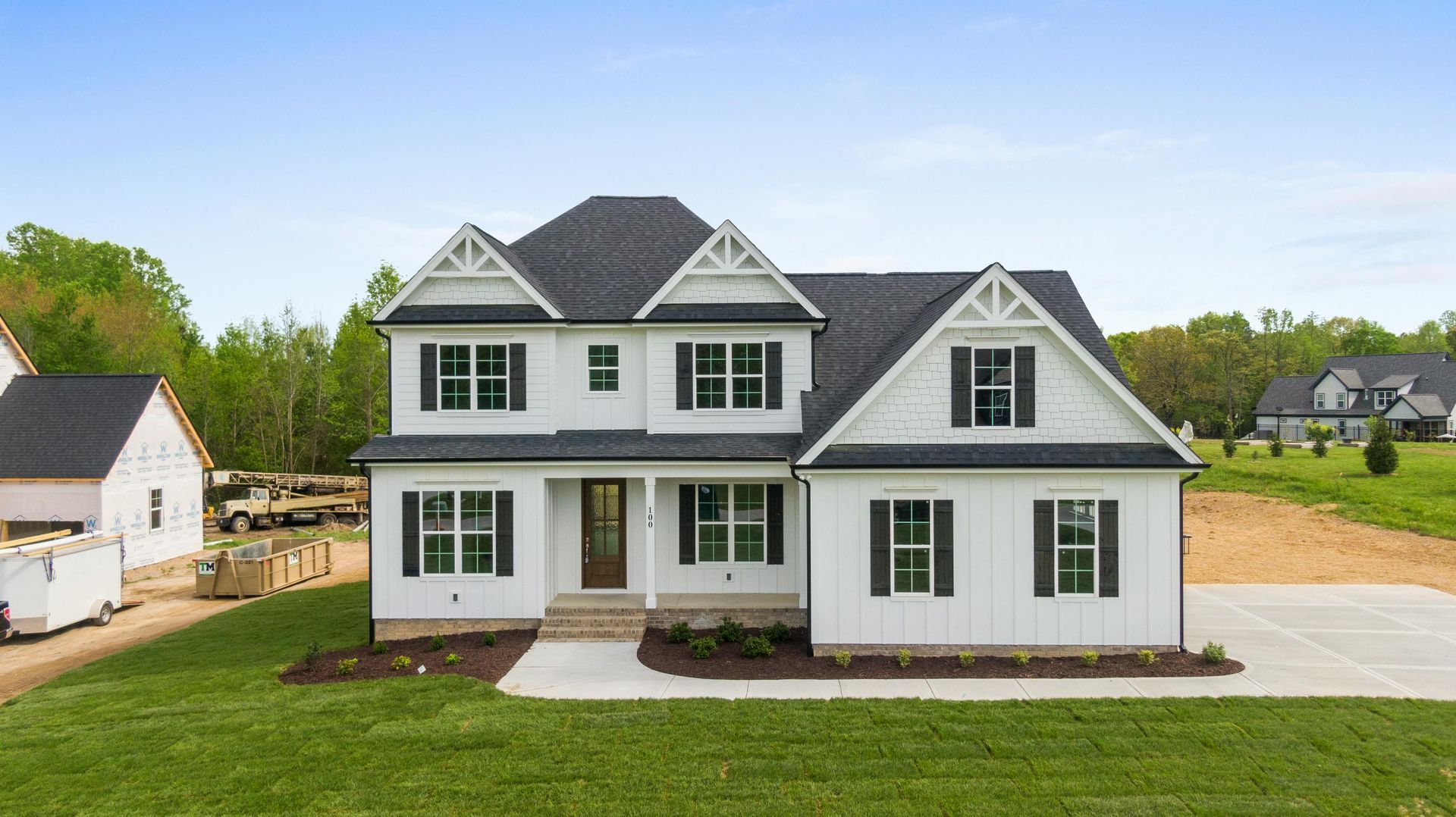
Indian Land is one of the fastest-growing areas in the entire Southeast. Lancaster County has added thousands of new homes over the past decade. Communities like Mill Creek, Brayden, Ballantyne South, Knightsbridge, and the newer phases along Doby's Bridge Road have brought families from across the Charlotte metro looking for more space, newer homes, and lower South Carolina property taxes.
New construction sounds like a safe bet. Fresh materials. Modern plumbing. Builder warranties. What could go wrong?
A lot, actually — and most of it involves water. At Carolina Pro Restoration, we respond to water damage calls in Indian Land's newer neighborhoods every month. The problems we see aren't caused by old pipes or failing vapor barriers. They're caused by grading issues, drainage design decisions, construction runoff, and PEX plumbing failures that most new homeowners never see coming. This post explains what they are, why they happen, and what you can do before they become expensive repairs.
The Grading Problem Nobody Talks About
When a new home is built, the lot gets graded during construction to direct stormwater away from the foundation. On paper, this looks good. In practice, it often goes wrong within the first three to seven years — and sometimes sooner.
Here's why. Grading is done when the soil is freshly disturbed and loose. After the builder moves on, that soil settles. It compresses. Mulch gets added to landscaping beds and builds up over time. Downspout extensions get bumped or removed during lawn care. The result is that the grade that was supposed to push water away from your foundation gradually reverses. Water that used to flow away from the house now flows toward it.
We've done crawlspace work in Indian Land homes that were less than five years old. In every case, the homeowner assumed new construction meant no moisture issues. What we found was significant moisture intrusion in the crawlspace — sometimes early wood rot on the floor joists — caused entirely by a reversed grade on one side of the house combined with a downspout that was six inches too short.
Both of those problems are cheap and easy to fix. The wood rot and mold remediation that follows ignoring them for two or three years is not. Walk around your home during or immediately after a heavy rain. Watch where the water goes. If it pools against your foundation or runs toward the house anywhere, fix it now. Add soil to reestablish a positive grade, extend your downspouts to carry water at least six feet from the foundation, and make sure landscaping mulch isn't building up against the siding.
Construction Phase Runoff: Your Neighbor's Problem Becomes Yours
Indian Land's growth didn't happen all at once. Most of the large communities were built in phases over five to ten years — and some are still adding phases today. That means established homeowners in early phases are often living next to active construction sites where grading, clearing, and utility trenching is still ongoing.
Active construction sites generate enormous amounts of runoff. When land gets cleared of vegetation, there's nothing left to slow down rainfall or help it soak in. Water runs off bare dirt and construction debris fast — much faster than it would from a finished yard. That runoff goes somewhere. Often, it goes directly into finished sections of the same community.
We've responded to crawlspace and basement flooding calls in Indian Land homes where the cause was runoff from an adjacent construction phase. The water came from cleared land next door, ran along the property line, and found its way under the foundation. The homeowner had no idea the construction site was involved. They thought it was just a drainage issue on their lot.
If your home borders an active construction phase, pay close attention during and after heavy storms. If you see muddy water coming from the construction side of your property line, document it with photos and timestamps. Report it to your HOA and to Lancaster County. Developers are required to have approved stormwater management plans and erosion controls in place — but those controls don't always work as designed, especially during heavy rain. Your documentation matters if the issue escalates.
In the meantime, a French drain or perimeter drainage system on the affected side of your property can intercept runoff before it reaches your foundation. It's a proactive investment that costs far less than a water damage restoration job.
PEX Plumbing: Better Than Copper — Until It Isn't
Almost every new home built in Indian Land over the past 15 years uses PEX tubing for supply lines. PEX — cross-linked polyethylene — replaced copper as the standard because it's flexible, cheaper to install, and generally more freeze-resistant than rigid pipe. For the most part, it performs well.
But PEX has failure points that homeowners and even some contractors don't know well because the material is still relatively young in widespread residential use. The most common failure mode we see in Indian Land new construction is at the fittings — specifically crimp and clamp fittings that connect PEX runs to fixtures, shutoff valves, and manifolds.
These fittings are installed by hand during construction. When they're installed correctly, they hold for decades. When the crimp ring isn't seated properly, or when the fitting goes in at a slight angle, the connection is under constant stress. Over time — sometimes two years, sometimes eight — that fitting begins to weep. A slow drip behind a wall or under a cabinet. By the time you see a stain or smell something musty, the fitting may have been weeping for months.
The other PEX failure we see is at the manifold — the central distribution point where all the supply lines originate. Manifolds are often located in utility closets, crawlspaces, or garages. A fitting failure at the manifold can release a significant volume of water fast. We've responded to Indian Land homes where a manifold fitting let go overnight and ran for six to eight hours before the homeowner woke up to water on the floor.
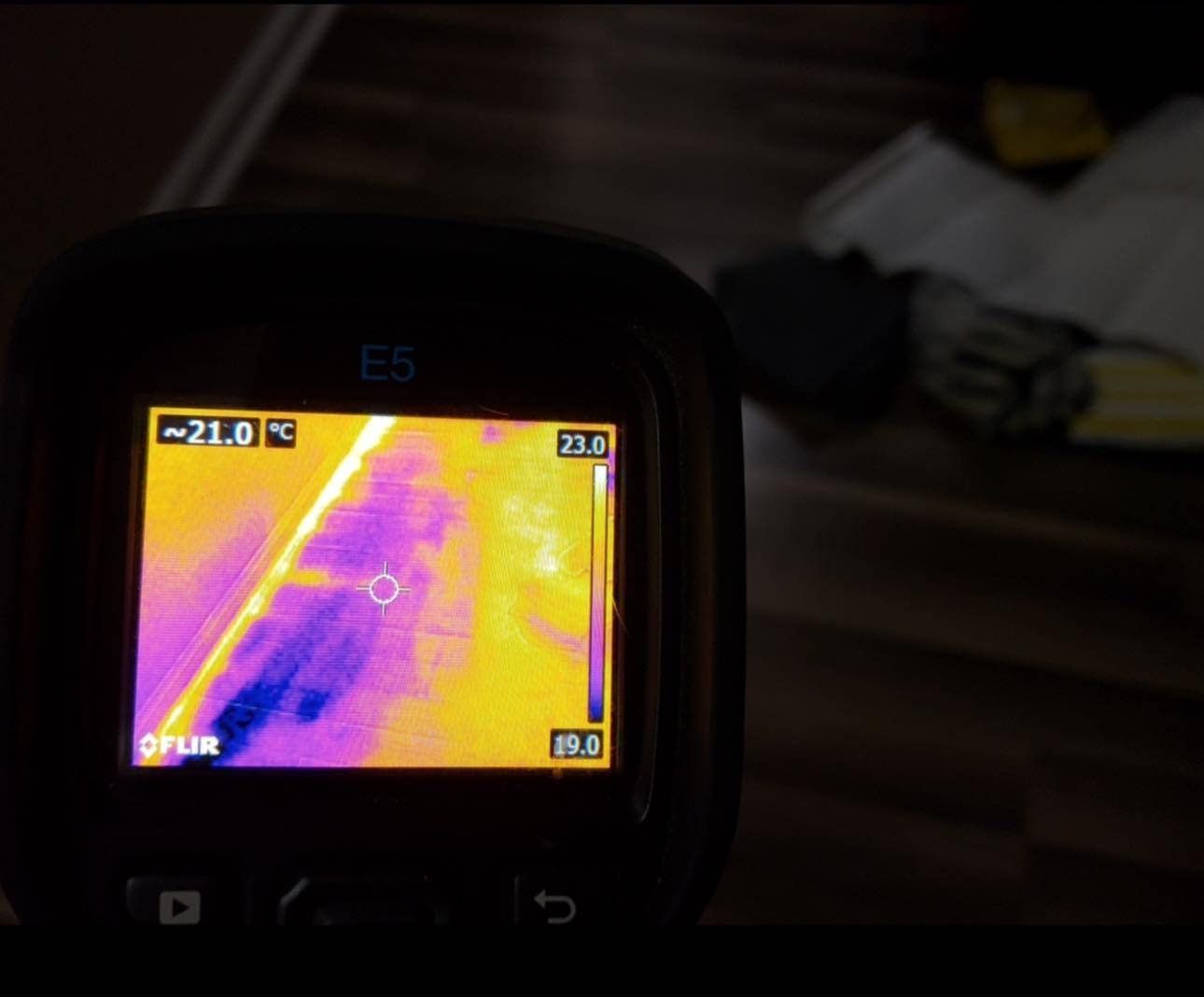
Know where your water main shutoff is. Know where your manifold is located. If you hear running water when everything is off, or if your water bill spikes unexpectedly, act immediately. Don't wait to see if it resolves. Call us at 980-277-3700 — we can be on-site within 60 minutes and identify the source with thermal cameras before tearing into walls.
Crawlspace Design in New Construction: What Builders Do and Don't Do
Most new homes in Indian Land are built with crawlspaces rather than slab foundations. Crawlspaces are standard in the Carolinas because the soil conditions and climate make them practical. But how a crawlspace is built and sealed varies significantly between builders — and the difference matters a lot for long-term moisture performance.
South Carolina's residential building code requires a vapor barrier in crawlspaces — but the code minimum is a 6-mil polyethylene sheet laid on the ground. That's a starting point, not a solution. A code-minimum vapor barrier doesn't seal at the walls, doesn't address humidity entering through foundation vents, and degrades significantly within five to ten years in the humid Carolina climate.
Many production builders in Indian Land install exactly the code minimum and move on. The result is a crawlspace that performs adequately in year one but begins accumulating moisture problems by year three to five. Humidity gets in through foundation vents during summer. It condenses on the floor joists and subfloor above. Over time, that moisture feeds mold growth and begins degrading the wood.
The fix is crawlspace encapsulation — a sealed system with a heavy-duty liner covering both the ground and the walls, sealed at all seams and penetrations, combined with a dehumidifier to maintain humidity below 50 percent year-round. This is the standard we recommend for every Indian Land crawlspace home, regardless of age. If your builder installed the code minimum, upgrading to a full encapsulation system is one of the highest-value improvements you can make to a new construction home in this climate.
What to Do If You Suspect Water Damage in a New Construction Home
The builder warranty is a common source of confusion for new construction homeowners dealing with water issues. Most production builders offer a one-year workmanship warranty and a ten-year structural warranty. Water damage caused by grading failures, PEX fitting leaks, or inadequate crawlspace sealing can fall under either — or neither, depending on how the damage is documented and when it's discovered.
If you suspect a water issue in a home under builder warranty, document everything before calling the builder. Take photos. Note the date and conditions — was it after a storm? Is it ongoing? Having documentation protects you if the builder disputes the claim or argues the damage was caused by something outside their work.
Whether or not you're in warranty, call us for an independent inspection. We use thermal cameras and moisture meters to identify exactly where moisture is entering and how far it has spread — without tearing into walls unnecessarily. That documentation gives you leverage with the builder if warranty repairs are needed, and it gives you a clear picture of what you're dealing with if the warranty has expired.
Call us at 980-277-3700 or request an inspection online. We're based in Fort Mill, about 20 minutes from most of Indian Land, and we run crews 24 hours a day.
Frequently Asked Questions
My Indian Land home is only 4 years old. Can it really have water damage already? Yes. We find moisture intrusion in crawlspaces of homes that are two to five years old regularly in Indian Land. The most common causes are grade reversal as soil settles, short downspouts, construction runoff from adjacent phases, and code-minimum vapor barriers that aren't performing. Age is not protection from water damage in this climate.
What's the difference between a code-minimum crawlspace vapor barrier and full encapsulation? A code-minimum barrier is a 6-mil poly sheet on the ground. It doesn't seal at walls, doesn't address humidity from vents, and degrades over time. Full encapsulation uses a 12-mil or heavier liner sealed to the walls, closed foundation vents, and a dehumidifier. The encapsulated system actively controls humidity. The code-minimum system does not. In Indian Land's climate, the difference in moisture performance is significant.
How do I know if my PEX plumbing has a slow leak? Check your water meter when all fixtures are off. If the meter dial is moving, you have an active leak somewhere. Other signs include a musty smell that won't go away, a water bill that's higher than expected, soft spots in flooring, or stains on ceilings below bathrooms. Call us for a thermal camera inspection — we can locate the source without opening walls.
Can construction runoff from the next phase of my community flood my home? Yes, and we see it regularly in Indian Land. Cleared land generates runoff much faster than finished lots. If your home borders an active construction phase and you're seeing new drainage issues after storms, that's likely contributing. Document it, report it to your HOA and Lancaster County, and consider a perimeter French drain as a preventive measure.
How fast can Carolina Pro Restoration respond to Indian Land? Our shop is in Fort Mill, about 20 minutes from most of Indian Land. We dispatch crews 24 hours a day, 7 days a week. Call 980-277-3700 for immediate response.
We serve Fort Mill, Rock Hill, Indian Land, Tega Cay, Charlotte, Pineville, Waxhaw, and the surrounding areas 24 hours a day, 7 days a week.
Carolina Pro Restoration LLC is a water damage restoration company serving Fort Mill SC, Rock Hill, Indian Land, Tega Cay, and the greater Charlotte area. We specialize in water damage restoration, mold remediation, crawlspace encapsulation, sewage cleanup, and full property rebuild. IICRC certified. Available 24/7. Direct insurance billing through Xactimate.
Official Carolina Pro Restoration Blog
Water Damage in Charlotte NC: What to Do in the First 24 Hours
Water Damage Restoration in Matthews NC: What Homeowners Need to Know
How to File a Water Damage Insurance Claim in South Carolina
Dealing With Water Damage Right Now?
Our Fort Mill team answers 24/7 and can be on site fast. One call, one crew, start to finish.