Pineville NC Water Damage: What Border Properties Face That Other Homes Don't
Pineville NC homeowners near the Charlotte border face unique water damage risks. Learn why rapid development, aging infrastructure, and dual-jurisdiction issues create problems — and how to fix them.
Pineville sits at the southern edge of Mecklenburg County, pressed up against the South Carolina state line and the sprawling southern suburbs of Charlotte. That location makes it one of the most convenient places to live in the greater Charlotte metro. It also makes it one of the more complicated places to own a home when water damage happens.
At Carolina Pro Restoration, we serve both sides of the state line. Our shop is in Fort Mill, about 15 minutes from most of Pineville. We respond to water damage calls in Pineville and the surrounding Mecklenburg County communities regularly. What we see in Pineville is a specific combination of risks that comes directly from its geography — rapid commercial and residential development pushing against older neighborhoods, drainage systems that were built for a smaller population, and the complications that come with living near a state border when insurance and jurisdiction get involved.
Here's what Pineville homeowners need to know.
Why Pineville's Location Creates Unique Water Damage Risk
Pineville is hemmed in on multiple sides. To the north and east, Charlotte has been expanding south along I-485 and South Boulevard for the past 20 years. Ballantyne, Steele Creek, and the commercial corridors along Pineville-Matthews Road have added enormous amounts of impervious surface — rooftops, parking lots, roads — to the watershed that drains through and around Pineville.
Water doesn't respect city limits. When rain falls on a new distribution center or a new apartment complex north of Pineville, that runoff eventually moves south and southwest. Pineville and its surrounding neighborhoods sit in the path of that runoff. Drainage infrastructure that was designed for a much smaller area is now handling significantly more volume than it was built for. During heavy storms, that mismatch shows up as flooded streets, overwhelmed storm drains, and water pushing against foundations in neighborhoods that may never have had flooding issues before.
Pineville itself is also older than many of the surrounding communities. Much of the housing stock along Park Road, Pineville-Matthews Road, and the neighborhoods near Carolina Place Mall dates to the 1970s, 1980s, and early 1990s. Those homes have aging plumbing, original gutters, and crawlspaces that were sealed with vapor barriers that are now 30 to 40 years old — or that were never properly sealed at all.
The State Line Complication: Insurance and Jurisdiction
Pineville is in North Carolina. Fort Mill, Indian Land, and Tega Cay are in South Carolina — sometimes less than a mile away. For most things, that line doesn't matter much. For water damage, it can matter a lot.
Homeowners insurance policies are regulated at the state level. North Carolina and South Carolina have different requirements for what insurers must cover, different processes for filing complaints, and different standards for how claims must be handled. If you bought your policy without thinking carefully about your proximity to the state line — or if you moved from South Carolina and kept a carrier that's less familiar with North Carolina requirements — you may find that your coverage has gaps you didn't expect.
This comes up most often in two situations. First, when flooding is involved. Standard homeowners policies in both states exclude flooding from external sources — that requires separate flood insurance through the National Flood Insurance Program or a private carrier. But what counts as "flooding" versus "water damage from a storm" can be interpreted differently by different adjusters. If you're in a Pineville neighborhood that experienced drainage-related water intrusion during a heavy storm, how that claim gets categorized matters enormously.
Second, when contractors are involved. North Carolina does not license water damage restoration or mold remediation as their own trades, so there is no state card to check for that work — which makes certification the credential that actually matters. Ask any contractor for IICRC certification and proof of insurance, and confirm both with the issuing bodies. We are IICRC certified for water restoration and mold remediation, licensed in South Carolina (#70177448), and insured for the work we do on both sides of the line. We work in Pineville, Fort Mill, Rock Hill, Indian Land, and across the greater Charlotte metro. Contact us to verify our credentials before you need them.
Older Neighborhoods Near Carolina Place: What to Watch For
The neighborhoods within a mile or two of Carolina Place Mall — including Carriage Downs, Pineville Estates, and the streets along Old Pineville Road — are some of the older residential areas in southern Mecklenburg County. These homes have specific water damage risks that go with their age.
Copper and galvanized plumbing. Homes built before 1990 often have supply lines that are now 35 to 50 years old. Copper corrodes internally over time. Galvanized steel pipes rust from the inside out and can develop partial blockages that increase pressure on joints. We respond to pinhole leaks and joint failures in these neighborhoods regularly. The first sign is usually a water stain on a ceiling or a soft spot in the floor — by which point the leak has typically been running inside a wall for weeks.
Original crawlspace vapor barriers. Many of Pineville's older homes have crawlspaces with original polyethylene vapor barriers that were installed when the house was built. After 30 to 40 years, those barriers are torn, degraded, and full of gaps. They're no longer keeping ground moisture out. We find active moisture intrusion, wood rot, and mold in these crawlspaces routinely. A crawlspace inspection is the first step — it takes about an hour and gives you a clear picture of what's happening under your home.
Sewer lines with root intrusion. The mature trees that make older Pineville neighborhoods attractive also send roots toward water. Those roots find sewer lines and drainage pipes. Over decades, they crack and infiltrate the pipe, causing partial blockages that get worse each year. The warning signs are slow drains, gurgling toilets, and — if you wait too long — sewage backing up into the lowest fixtures in the house. A camera inspection of your main sewer line can identify root intrusion before it becomes a sewage cleanup emergency.
New Development Runoff: How It Affects Established Pineville Homes
The I-485 corridor and the areas north of Pineville have seen significant commercial and residential development over the past decade. Every new building, parking lot, and road that goes in removes natural ground that used to absorb rain. That water now runs off faster and in greater volumes into the existing drainage network.
Pineville's stormwater system — including the drainage channels and detention ponds managed by Mecklenburg County — was sized for conditions that no longer exist. During significant storm events, those systems get overwhelmed. We've responded to basement and crawlspace flooding in Pineville homes where the cause was stormwater backup from a system that simply couldn't keep up with the volume of runoff coming from nearby development.
If you've noticed new water issues in your Pineville home over the past five years — wet crawlspace after storms that never used to cause problems, water at your foundation line, or pooling in low areas of your yard — development-related drainage changes may be contributing. Documenting the issue and reporting it to Mecklenburg County Stormwater Services is worth doing. In the meantime, improving your own drainage — extending downspouts, correcting lot grade, and considering a French drain — can significantly reduce your exposure.
What to Do If You Have Water Damage in Pineville
The steps are the same whether your water damage comes from a burst pipe, a flooded crawlspace, or storm-related intrusion. Act fast — mold can start growing within 48 hours of moisture exposure. Every hour you wait increases the scope of the damage and the cost of the repair.
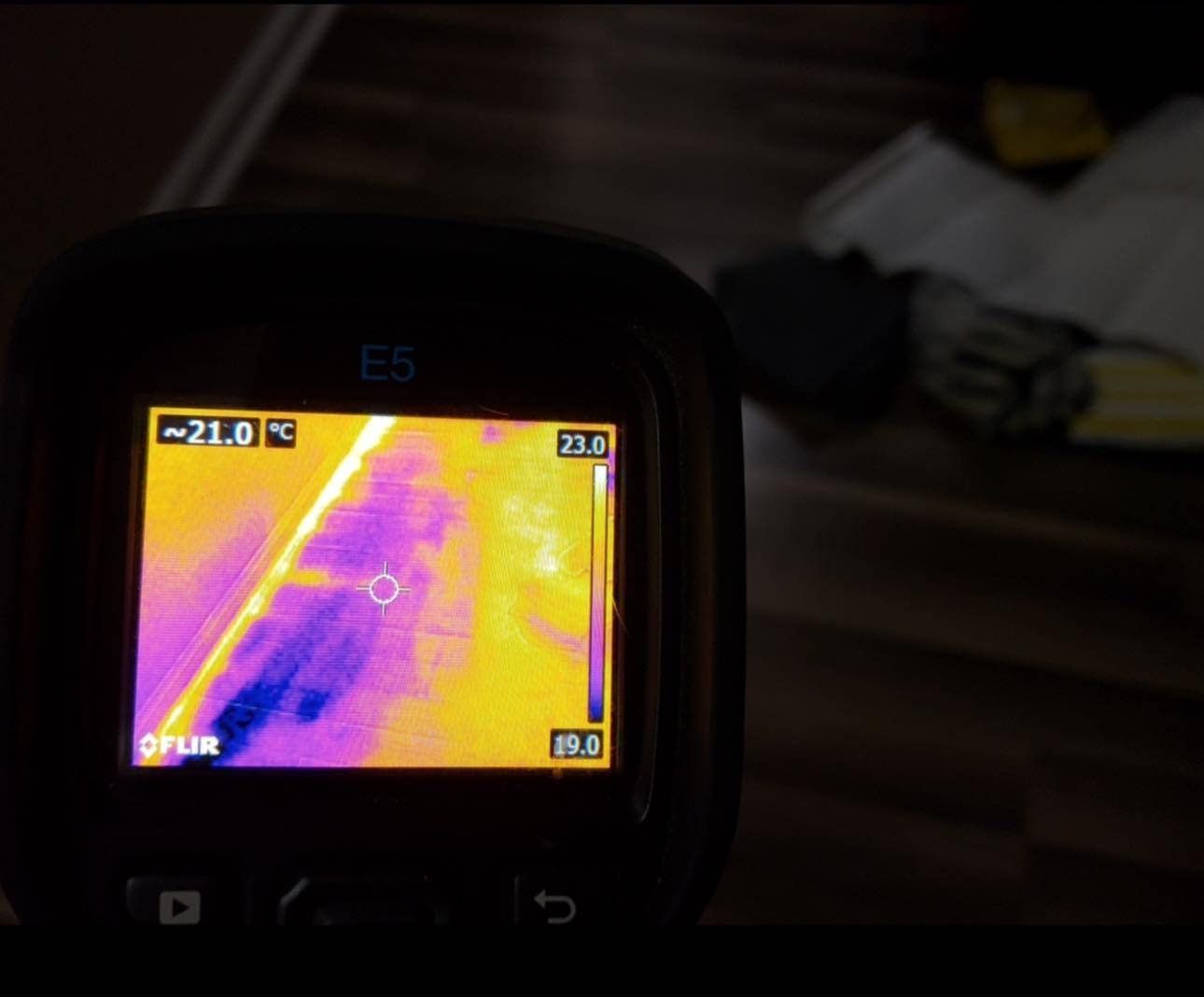
If water is actively coming in, shut off your main water supply first. Then call us at 980-277-3700. We dispatch crews 24 hours a day, 7 days a week. Our goal is on-site within 60 minutes. We bring truck-mounted extractors, thermal cameras, and moisture meters. We document everything your insurance company needs — in Xactimate, the same software your adjuster uses — and we bill insurance directly.
If you suspect a slow leak or moisture problem but don't have active flooding, schedule an inspection. We check crawlspaces, walls, and subfloors with thermal imaging without tearing anything open first. If there's a problem, we show you exactly where it is and what's causing it before you commit to any repair. Request an inspection here.
Frequently Asked Questions
Why does my Pineville home flood when nearby areas don't? Pineville sits downstream from significant development along the I-485 corridor. New rooftops, roads, and parking lots generate runoff that the original drainage system wasn't designed to handle. Low-lying properties and those near drainage channels are most vulnerable. A site assessment can identify whether your specific property is affected by drainage capacity issues versus a localized problem at the home.
Does it matter that I'm in North Carolina if my contractor is based in South Carolina? What matters is credentials and insurance, not the state line. North Carolina does not license water damage restoration or mold remediation as separate trades, so there is no NC restoration licence to ask for. Verify IICRC certification and proof of insurance instead. Carolina Pro Restoration is IICRC certified, licensed in South Carolina (#70177448), and insured for the work we do in both states.
My Pineville home was built in 1985. What are my biggest water damage risks? Aging copper supply lines, a deteriorated crawlspace vapor barrier, sewer lines with root intrusion, and original gutters that may be pulling away from the roofline. A crawlspace inspection and a plumbing camera inspection are the two highest-value preventive steps for a home that age.
What's the difference between flood damage and water damage for insurance purposes? Standard homeowners policies cover sudden and accidental water damage — burst pipes, appliance failures, storm-related water intrusion through the roof or walls. They do not cover flooding from external sources like rising creeks or overflowing storm drains. That requires separate flood insurance. The distinction matters in Pineville because some storm-related water intrusion can be ambiguous — we work with adjusters to document the source accurately so your claim gets categorized correctly.
How quickly can Carolina Pro Restoration respond to a Pineville emergency? Our shop is in Fort Mill, about 15 minutes from most of Pineville. We run crews 24/7. Call 980-277-3700 for immediate dispatch.
We serve Fort Mill, Rock Hill, Indian Land, Tega Cay, Charlotte, Pineville, Waxhaw, and the surrounding areas 24 hours a day, 7 days a week.
Carolina Pro Restoration LLC is a water damage restoration company serving Fort Mill SC, Rock Hill, Indian Land, Tega Cay, and the greater Charlotte area. We specialize in water damage restoration, mold remediation, crawlspace encapsulation, sewage cleanup, and full property rebuild. IICRC certified. Available 24/7. Direct insurance billing through Xactimate.
Official Carolina Pro Restoration Blog
Water Damage in Charlotte NC: What to Do in the First 24 Hours
Water Damage Restoration in Matthews NC: What Homeowners Need to Know
How to File a Water Damage Insurance Claim in South Carolina
Dealing With Water Damage Right Now?
Our Fort Mill team answers 24/7 and can be on site fast. One call, one crew, start to finish.