How to Choose a Mold Remediation Company in Fort Mill and Charlotte
Finding mold in your home is stressful. The next step — choosing who to call — shouldn't make it worse. But the mold remediation industry has a real problem with unqualified contractors, inflated scopes of work, and companies that treat mold cleanup as a quick revenue opportunity rather than a health and safety issue.
In the Fort Mill and Charlotte area, we've responded to homes where another company's work made the problem worse. Mold disturbed without proper containment, moisture sources left unaddressed, surface treatments applied over active growth. These aren't rare situations — they're common enough that we keep seeing them.
This guide tells you exactly what to look for, what to ask, and what should disqualify a company before you sign anything.
Start with Licensing — It's Not Optional
North Carolina and South Carolina both have licensing requirements for mold remediation work, but they differ in important ways.
In North Carolina, mold remediation contractors must hold a General Contractor license with a Mold Remediation specialty, issued by the NC Licensing Board for General Contractors. Working without this license in North Carolina is illegal. If a company is based in South Carolina and comes to do mold work in your Pineville, Waxhaw, or Charlotte-area home, verify that they hold North Carolina credentials — not just South Carolina ones.
In South Carolina, mold remediation doesn't require a specific state-level license, but contractors doing reconstruction work as part of remediation — replacing drywall, flooring, framing — must hold a South Carolina Contractor's License. Ask to see the license number and verify it through the state licensing board before signing anything.
Beyond state licensing, look for IICRC certification. The Institute of Inspection, Cleaning and Restoration Certification sets the industry standard for mold remediation — the S520 Standard. An IICRC-certified firm has technicians who have completed formal training in mold assessment, containment, and remediation procedures. This isn't a guarantee of quality, but it's a meaningful baseline. We are IICRC certified. Learn more about our credentials here.
The Moisture Source Must Be Identified First
This is the single most important thing to understand about mold remediation: removing mold without finding and fixing the moisture source is not remediation. It's temporary cosmetic treatment. The mold will return — usually within weeks — because the conditions that caused it haven't changed.
Any reputable company will begin with an assessment that identifies where the moisture is coming from. Is it a plumbing leak? Ground moisture in the crawlspace? Condensation from an HVAC issue? Poor exterior drainage pushing water against the foundation? Each of these has a different fix, and none of them goes away because you cleaned the visible mold off the surface.
HVAC-related mold is particularly common in Fort Mill homes — humidity-loaded air cycling through ductwork creates ideal conditions for growth at evaporator coils and condensate drains. If you're seeing symptoms like musty air from vents or unexplained allergy flare-ups, read our post on 5 signs your Fort Mill home's air ducts may be making you sick before assuming the mold problem is limited to surfaces you can see.
Be very cautious of any company that gives you a remediation quote without first identifying the moisture source. That quote is for treating symptoms, not solving the problem. When we assess a mold situation, we always identify the source first — and we won't quote remediation without also addressing what caused it. A moisture problem that isn't fixed will cost you far more in the long run.
What the Remediation Process Should Actually Look Like
The EPA and IICRC S520 standard define how mold remediation should be conducted. If a company's process deviates significantly from this, that's a problem.
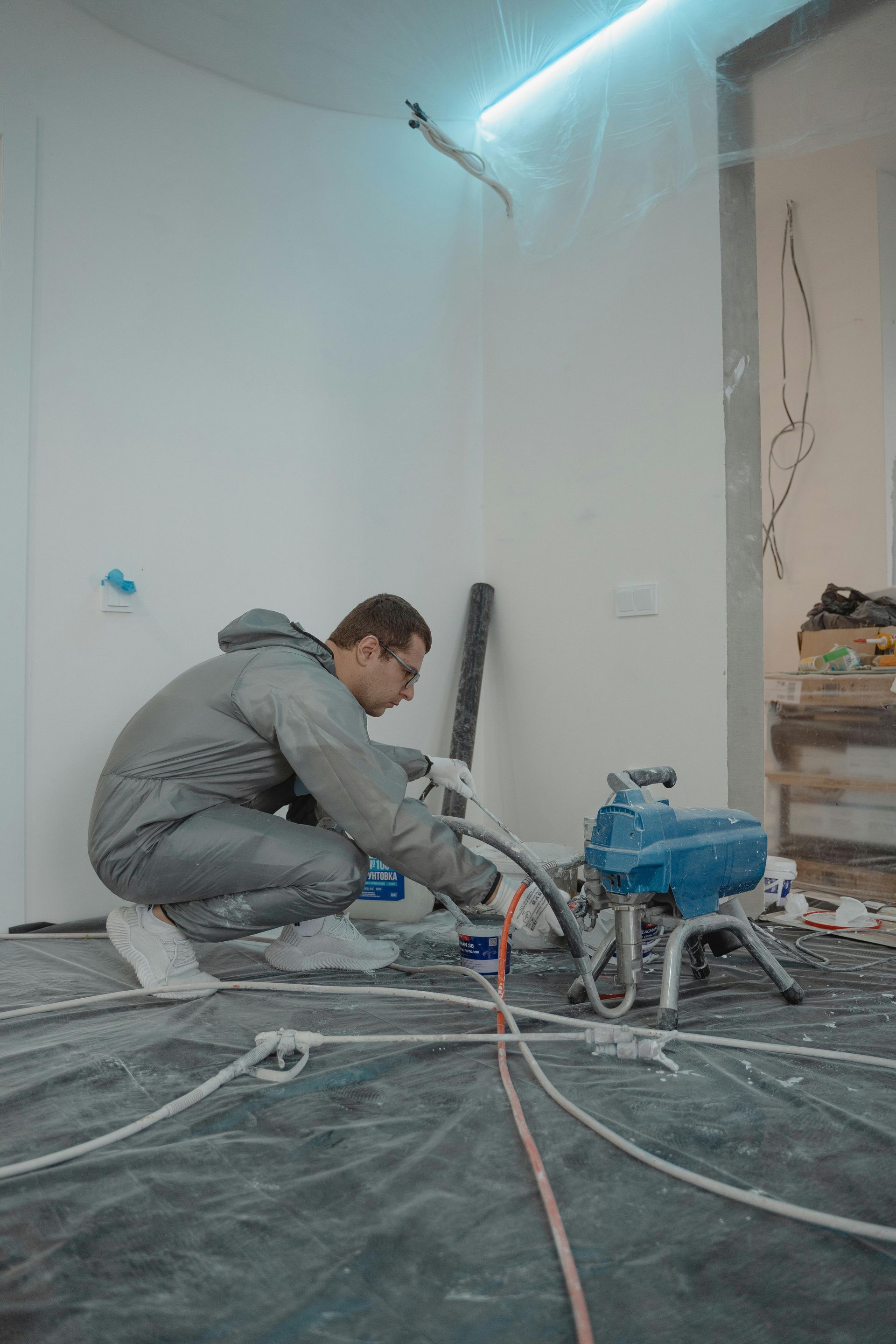
Containment before disturbance. Before any mold is disturbed, the work area must be contained with poly sheeting and negative air pressure to prevent spores from spreading to unaffected areas. A company that starts removing moldy drywall without establishing containment first is actively spreading the problem through the house.
Personal protective equipment. Technicians working in a mold-affected area should be wearing N-95 respirators at minimum, eye protection, and disposable coveralls. If a crew shows up in regular work clothes with no respiratory protection, leave.
Physical removal, not just treatment. Mold grows into porous materials — drywall, wood framing, insulation. You cannot kill mold on a porous surface with a spray treatment and call it done. The affected material must be physically removed. Any company that tells you they can treat mold in place on drywall without removing it is not following industry standards.
HEPA air filtration during work. Negative air machines with HEPA filters should run throughout the remediation to capture airborne spores. This protects both the technicians and the rest of the home.
Post-remediation verification. After the work is complete, the remediated area should be visually inspected and, in significant cases, air tested or surface sampled to confirm mold levels have returned to normal. A company that won't offer any verification of their work isn't confident in it.
Red Flags to Walk Away From
A quote over the phone or without a site visit. There is no legitimate way to quote mold remediation without seeing the affected area in person. Mold extent, the materials involved, the access required, and the moisture source all affect scope and cost. A phone quote is a guess at best and a lowball designed to get you to commit at worst.
Scare tactics about health risks. Mold is a genuine concern — especially for people with allergies, asthma, or compromised immune systems. But not every mold situation is a catastrophic health emergency. A company that manufactures panic to drive you to a quick decision is using your stress as a sales tool. Take the time to get a second opinion.
No discussion of the moisture source. If a company's proposal doesn't mention what caused the mold or how that will be addressed, ask directly. If they don't have a clear answer, find someone else.
Extremely low bids. Proper containment, HEPA filtration equipment, PPE, physical removal, and post-remediation verification have real costs. A bid that's dramatically lower than others usually means one or more of those steps is being skipped.
Pressure to decide immediately. A legitimate company will give you time to review a proposal and get other quotes. "This deal is only good today" is a sales tactic, not a professional practice.
Questions to Ask Before You Hire
"Are you licensed to do mold remediation work in this state?" The answer should be yes with a specific license number. Verify it.
"Are your technicians IICRC certified?" Ask specifically for S520 certification. A company that doesn't know what S520 is hasn't trained to the industry standard.
"How will you identify and address the moisture source?" This should be part of every proposal. If it's not, ask why not.
"What containment will you use during the work?" The answer should include poly sheeting, negative air pressure, and HEPA filtration.
"Will you physically remove affected materials or treat them in place?" The answer for porous materials like drywall and insulation should always be removal.
"What verification will you provide that the remediation was successful?" A good company will offer visual inspection at minimum and air testing for significant jobs.
"Do you also handle the rebuild after remediation?" This matters because if the company only does remediation, you'll need to find a separate contractor for repairs. We handle both — mold remediation and full reconstruction with one team and one project manager.
What We Do Differently in Fort Mill and Charlotte
We've built our mold remediation process around the S520 standard and what we've learned responding to hundreds of jobs across York County and the greater Charlotte metro. Every job starts with a full moisture assessment. We don't quote remediation without identifying the source. We establish proper containment before any material is disturbed. We remove affected material — we don't spray and pray. And we handle the rebuild, so you're not left with a gutted wall and no contractor to close it back up.
We're also licensed in both North Carolina and South Carolina. We work in Fort Mill, Rock Hill, Indian Land, Tega Cay, Pineville, Waxhaw, Charlotte, and the surrounding communities. Our crews are available 24 hours a day. Call us at 980-277-3700 for a free inspection, or request one online here.
Frequently Asked Questions
How do I know if I have a mold problem that needs professional remediation?
Visible mold growth larger than 10 square feet, a persistent musty smell without a visible source, mold in the HVAC system or ductwork, or mold following a water damage event are all situations that warrant professional assessment. Smaller surface mold on non-porous materials — like tile grout — can sometimes be cleaned by homeowners. When in doubt, have it assessed. Our inspections are free.
Does homeowners insurance cover mold remediation?
It depends on the cause. If mold resulted from a covered water damage event — a burst pipe, a storm, an appliance failure — many policies will cover remediation as part of the water damage claim. If mold resulted from a gradual moisture problem or neglected maintenance, coverage is typically excluded. We work with your insurance company and document the mold source in a way that supports your claim.
How long does mold remediation take?
A contained mold situation in one area of the home — a bathroom, a crawlspace section, one wall — typically takes one to three days for remediation. Larger or more complex situations can take longer. Reconstruction after remediation adds additional time. We give realistic timelines after the initial assessment, not estimates designed to win the job.
Can I stay in my home during mold remediation?
For small, well-contained jobs, usually yes. For large-scale remediation involving significant mold in living areas or HVAC contamination, temporary relocation may be advisable — especially for household members with respiratory conditions. We'll give you an honest recommendation based on what we find.
What's the difference between mold inspection and mold remediation?
Inspection involves assessing the presence, extent, and likely source of mold — using visual inspection, moisture meters, and sometimes air or surface sampling. Remediation is the physical removal and treatment of mold. Some companies recommend getting an independent inspection before remediation so you have an objective baseline and can verify the work afterward with the same inspector. We support this approach for larger jobs.
We serve Fort Mill, Rock Hill, Indian Land, Tega Cay, Charlotte, Pineville, Waxhaw, and the surrounding areas 24 hours a day, 7 days a week.
Carolina Pro Restoration LLC is a water damage restoration company serving Fort Mill SC, Rock Hill, Indian Land, Tega Cay, and the greater Charlotte area. We specialize in water damage restoration , mold remediation , crawlspace encapsulation , sewage cleanup , and full property rebuild. IICRC certified. Available 24/7. Direct insurance billing through Xactimate.
You might also like
Official Carolina Pro Restoration Blog