

🚨 24/7 Emergency Dispatch — Fort Mill
Fort Mill's Trusted 24/7 Water Damage Restoration Team
Crews on the ground in 25-35 minutes across Fort Mill, Tega Cay, and southern Charlotte. We handle the water removal, structural drying, mold prevention, and full rebuild — start to finish with one dedicated project manager. Direct insurance billing through Xactimate.
- Top-Rated in Fort Mill
- 25-35 Min Response
- Licensed, Insured & IICRC
- Direct Insurance Billing
24/7 Water Damage Restoration in Fort Mill, SC
Got water where it shouldn't be? We're Carolina Pro Restoration, and we're about 25 to 35 minutes from anywhere in Fort Mill. Our crew shows up with truck-mounted extractors, commercial dehumidifiers, and FLIR thermal imaging cameras — everything needed to stop the damage and start drying your home the same hour you call. We answer the phone 24 hours a day, 7 days a week, including holidays. Call 980-277-3700 and we'll dispatch a team right away.
Fort Mill sits in York County, South Carolina, where homes deal with around 44 inches of rain per year. That's more than the national average, and it keeps our phones ringing. We handle burst pipes, hot water heater failures, washing machine overflows, toilet supply line breaks, sewage backups, and storm flooding throughout Fort Mill and nearby Tega Cay, Indian Land, and Rock Hill.
Why Fort Mill Homes Are at Risk
Many Fort Mill neighborhoods were built in the early 2000s during the housing boom. Subdivisions like Baxter Village, Regent Park, and Springfield used Dura-PEX plumbing that has a history of pinhole leaks and fitting failures after 15 to 20 years. If your home was built between 2001 and 2010, your plumbing is entering the failure window right now. We see multiple calls per month from these neighborhoods for supply line failures behind walls and under slab foundations.
Fort Mill also sits near Sugar Creek and tributary streams that rise fast during heavy rain events. Hurricane Helene in 2024 pushed water into homes along low-lying streets and caused significant crawlspace flooding in older neighborhoods closer to downtown. The clay-heavy soil in York County doesn't drain well, which means even moderate rain can pool around foundations and seep into basements and crawlspaces.
Fort Mill Neighborhoods We Serve
We respond to water damage calls across all of Fort Mill, including:
- Baxter Village
- Regent Park
- Springfield
- Kingsley
- Massey
- Catawba Plantation
- Sutton Hall
- Downtown Fort Mill
What Happens When You Call Us
Our IICRC-certified crew arrives within 25 to 35 minutes, identifies every wet area with thermal cameras, extracts the water, and sets up a full drying system. We treat all affected surfaces with antimicrobial solution to prevent mold before it starts. See our full restoration process → If mold has already taken hold, see our mold removal in Fort Mill service.
Sewage Cleanup & Basement Flooding in Fort Mill
Not all water damage is clean water. When a sewer line backs up or a septic system fails, you're dealing with a Category 3 event — contaminated water that needs the right protective gear and antimicrobial treatment, not a mop. Our sewage cleanup crew handles the extraction, removes anything porous the sewage touched, and disinfects the space before drying — full sewage damage cleanup, start to finish. We also do basement flood cleanup throughout Fort Mill, from finished basements that take on water during storms to crawlspaces that fill once the clay soil stops draining. Call 980-277-3700 any hour and we'll be there in 25 to 35 minutes.
Insurance & Xactimate Documentation
We write every estimate in Xactimate, take all damage photos, send daily moisture reports, and bill your insurance directly — on covered work you pay your deductible and nothing beyond it. Learn more about how we work →
Common Water Damage Problems in Fort Mill Neighborhoods
Baxter Village — Dura-PEX Plumbing Failures
Baxter Village was built between 2001 and 2008. Many of these homes used Dura-PEX piping, which is known for developing pinhole leaks at the fittings. Homeowners in Baxter frequently call us for water damage behind walls that went unnoticed for days. If you see a drop in water pressure or a warm spot on a wall, call us at 980-277-3700 before the damage spreads into the subfloor.
Regent Park & Springfield — Crawlspace Moisture
Homes in Regent Park and Springfield sit on crawlspace foundations over York County's red clay soil. After heavy rain, that clay holds water against the foundation for days. We regularly pull wet insulation and treat mold growth in crawlspaces throughout these neighborhoods. If you smell must or dampness in your home, there's a good chance moisture is building underneath. Our team uses thermal imaging to check without tearing anything out.
Tego & Riverwalk — Storm Drainage Issues
The newer sections along Tego and Riverwalk sit lower in the terrain and rely on stormwater retention ponds. During heavy rainfall events — especially back-to-back storms — those ponds overflow and water backs into yards, garages, and ground-level living spaces. Hurricane Helene in 2024 exposed this problem across several streets. We respond to flood damage calls in these areas with truck-mounted pumps that can remove thousands of gallons per hour.
Downtown Fort Mill — Aging Pipes in Pre-2000 Homes
Homes closer to downtown Fort Mill were built in the 1960s through 1990s with galvanized steel or copper plumbing that corrodes from the inside over time. We see burst pipes, slow slab leaks, and water heater failures in this area regularly. Rusty water when you first turn on the faucet is the warning sign. If a pipe lets go, shut off your main valve and call us immediately — we can be there in under 30 minutes.
We Handle Your Insurance — You Handle Your Family
Dealing with water damage is stressful enough without fighting your insurance company. We use Xactimate, the same estimating software your adjuster uses, so your claim moves fast with no surprises.
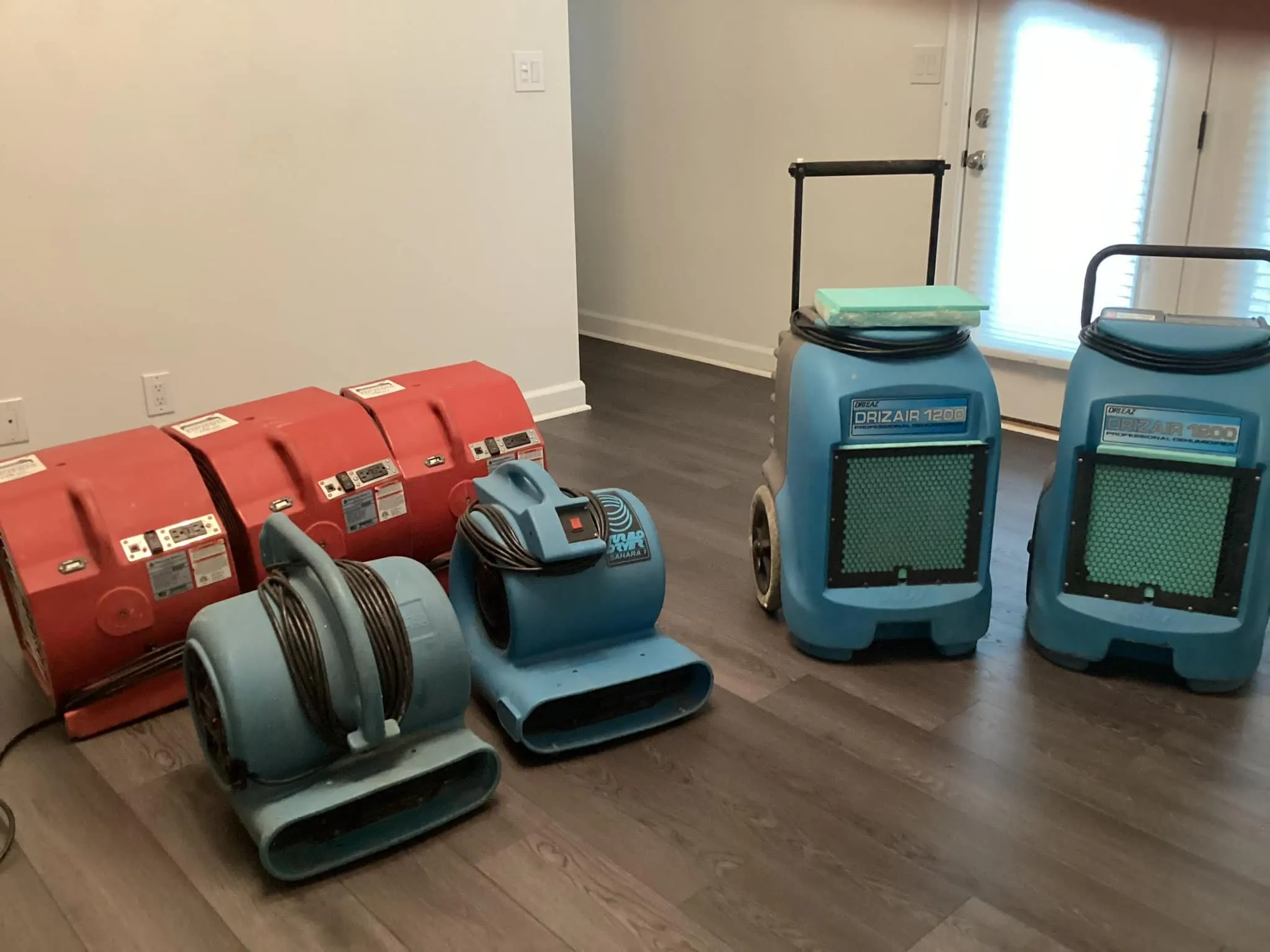
Fort Mill's own water-damage crew
We're headquartered in Fort Mill, and our trucks roll out with commercial air movers and dehumidifiers to dry your home fast — then our own crew rebuilds everything we remove.
What Fort Mill Homeowners Say
Real reviews from homeowners and property managers in Fort Mill, Tega Cay, and the surrounding area.
- Mold Removal
I'm in Fort Mill and found Carolina Pro Restoration online after noticing a moldy smell in my house. Zach came out, explained everything clearly, and the team got the job done fast. They cleaned up great too. Highly recommend them!
- Basement Flooding
Lauren and her team handled our flooded basement like champs. They hauled out ruined furniture, set up industrial fans, and even helped us file the insurance claim. They sanitized everything afterward — no weird smells, no lingering dampness. Highly recommended to Fort Mill folks!
- Mold Removal
Working with CPR has been great. Willie is very knowledgeable and honest, and they were out to our home fast. Would recommend them for your mold removal and restoration needs.
Fort Mill Water Damage FAQs
Answers for Fort Mill, Tega Cay, and York County homeowners.
-
How fast can you get to my house in Fort Mill?
Our crew is typically at your door in 25 to 35 minutes. Our shop is at 3650 Centre Circle in Fort Mill, and we keep trucks running through Fort Mill, Tega Cay, and Indian Land around the clock. Call 980-277-3700 any time — we answer 24/7. -
My home in Baxter Village has Dura-PEX plumbing. Should I be worried?
Yes — Dura-PEX fittings installed between 2001 and 2008 are known to develop pinhole leaks. We get calls from Baxter Village, Regent Park, and Springfield every month for supply line failures behind walls. Watch for low water pressure, warm spots on walls, or a spike in your water bill. If a fitting fails, shut off your main valve and call us immediately. We can extract the water, dry the structure, and rebuild the damaged areas. -
Will mold grow after water damage in my Fort Mill home?
Mold can start growing within 48 hours in Fort Mill's humid climate, especially in crawlspaces over York County's clay soil. That is why fast water removal and professional drying are critical. We treat surfaces with antimicrobial solution during every job. If mold is already present, we contain the area, remove it safely, and clean the air with HEPA scrubbers. Learn more about our mold removal process. -
Does Fort Mill flood during heavy rain?
Parts of Fort Mill are flood-prone, especially areas near Sugar Creek and its tributaries. York County receives about 44 inches of rain per year, and the clay-heavy soil does not drain well. Crawlspaces and basements in low-lying neighborhoods near downtown and along creek corridors are at the highest risk. Hurricane Helene in 2024 caused significant crawlspace flooding in several Fort Mill neighborhoods. Learn about our flood damage services. -
What Fort Mill neighborhoods do you respond to most?
We respond to water damage calls throughout Fort Mill, but the neighborhoods we serve most frequently include Baxter Village, Regent Park, Springfield, Kingsley, Massey, Catawba Plantation, Sutton Hall, and the older homes near downtown Fort Mill and Tom Hall Street. We also cover Tega Cay, Indian Land, and Rock Hill. -
Is crawlspace flooding common in Fort Mill?
Yes. Fort Mill sits on clay-heavy York County soil that does not absorb water well. During heavy rain, water pools around foundations and seeps into crawlspaces and basements. Homes near Sugar Creek and its tributaries are especially at risk. We pump standing water, set commercial dehumidifiers in tight spaces, treat with antimicrobial solution, and repair structural damage including floor joists and subfloor. See our basement and crawlspace services. -
Do you also serve Tega Cay, Indian Land, and Rock Hill?
Yes. We are based in Fort Mill and respond across all of York County. Tega Cay, Indian Land, and Rock Hill are all within our core service area with typical response times under 40 minutes. We also serve Charlotte, Pineville, Ballantyne, and Clover. -
Will my insurance cover water damage from a burst pipe in Fort Mill?
In most cases, yes. Homeowners insurance typically covers water damage from sudden and accidental events like burst pipes, supply line failures, and appliance leaks. Flood damage from rising water usually requires a separate flood policy. We write the estimate in Xactimate, document everything with photos and daily moisture readings, and bill your insurance directly, so on covered work you pay your deductible and nothing beyond it. See how we handle the insurance process.
Still have a question? Our team is on call 24/7.
Call Now: (980) 277-3700Your Local Water Damage Team in Fort Mill
We are not a distant call center. We are locally owned and based right here in Fort Mill — 3650 Centre Circle, Suite I.
Fast Response Across York County
Our trucks reach all of Fort Mill and surrounding cities in under 35 minutes. The rest of York County and south Charlotte metro in under an hour.
We Proudly Serve
- Fort Mill, SC
- Tega Cay, SC
- Rock Hill, SC
- Indian Land, SC
- Clover, SC
- York, SC
- Charlotte, NC
- Pineville, NC
Carolina Pro Restoration LLC
3650 Centre Cir Ste I, Fort Mill, SC 29715 (980) 277-3700Water Damage in Fort Mill Right Now? We Are Ready.
Request a Free Fort Mill Inspection
Fill out this short form and our Fort Mill crew will call you back fast. For emergencies, call us directly — we pick up 24/7.
24/7 Emergency Response (980) 277-3700- We answer 24/7 and respond fast
- Free on-site assessment
- We bill your insurance directly
- IICRC certified, SC licensed & insured
- One crew from cleanup to rebuild
Request a Free Assessment
No cost, no pressure. We'll get right back to you.