Why Tega Cay Homes on the Lake Wylie Peninsula Get Water Damage Faster Than You Think
Tega Cay sits on Lake Wylie with a high water table, aging pipes, and new construction runoff. Learn why peninsula homes face water damage risks year-round.
Living on the Lake Wylie peninsula sounds great until water shows up where it shouldn't.
Tega Cay is one of the most popular communities in York County. People move here for the lake, the golf course, the schools, and the small-town feel. But the same things that make Tega Cay a great place to live also make it one of the more water-damage-prone areas we serve.
We're Carolina Pro Restoration. Our shop is about 20 minutes from Tega Cay, and we respond to water damage calls on the peninsula every month. Here's what Tega Cay homeowners need to know about why their homes are at risk — and what to watch for.
The Water Table Sits Close to the Surface
Tega Cay is surrounded by Lake Wylie on three sides. That means the water table under the peninsula sits higher than it does in most of York County. When it rains hard, that groundwater rises. It pushes against foundations. It seeps through cracks in crawlspace walls. It pools under vapor barriers and soaks into floor joists.
Most homeowners never see this happening. The first sign is usually a musty smell, soft spots in the floor, or mold growing on the underside of the subfloor. By the time you notice those things, moisture has been building for weeks or months.
If your home sits in a low spot near the lake or along one of Tega Cay's creek tributaries, your crawlspace is especially at risk after heavy rain. York County gets around 47 inches of rain per year. That's a lot of water pushing against a peninsula with nowhere to drain except back into the lake — slowly.
Older Tega Cay Homes Have Aging Pipes
Tega Cay was first developed in the 1970s. Many of the original homes along Tega Cay Drive, Molokai Drive, and the streets near the golf course still have copper or galvanized steel plumbing. That pipe is now over 40 years old.
Copper corrodes from the inside out. You can't see it happening. One day the pipe looks fine from the outside. The next day you have a pinhole leak spraying water behind a wall. Galvanized steel is even worse — it rusts, narrows, and eventually fails at the joints.
We get calls from these older Tega Cay neighborhoods for supply line leaks, water heater connection failures, and slab leaks under the foundation. The damage is usually hidden behind drywall or under flooring for days before anyone notices. By then, the water has soaked into the framing , and mold can start growing within 48 hours.
If your Tega Cay home was built before 1990, ask a plumber to inspect your supply lines. A small leak behind a wall can turn into a full water damage restoration job fast.
New Construction Is Changing How Water Moves
Tega Cay isn't just older homes. New subdivisions like Windhaven and River Falls have added hundreds of homes over the past few years. That new construction changes how water moves across the peninsula.
In 2020, WCNC reported that families living next to the Windhaven subdivision — built by Lennar — were dealing with flooding from construction runoff. Muddy water was pouring off the cleared land and into existing yards during heavy rain. The builder said it was temporary, but the homeowners affected were left dealing with standing water, eroded yards, and mud flowing toward their foundations.
This is a pattern we see across growing communities. When developers clear land and add rooftops, driveways, and roads, that rainwater has fewer places to soak in. It runs off faster and concentrates in low spots — often next to existing homes. If you live in an older Tega Cay neighborhood next to new construction, pay attention to where water flows during the next big storm. If it's pooling near your foundation or running toward your crawlspace, you have a problem that will get worse over time.
What the Lake Does to Crawlspaces
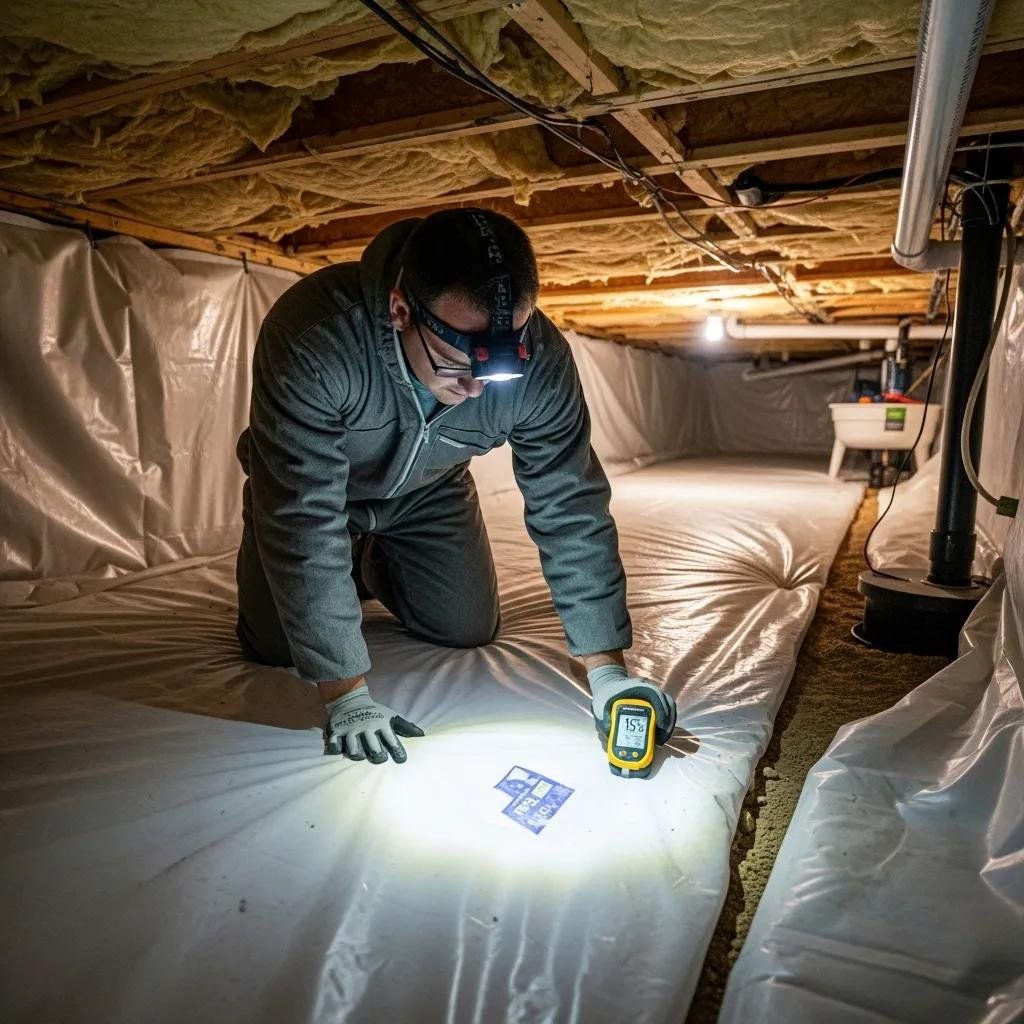
Most homes in Tega Cay have crawlspaces, not basements. On a peninsula surrounded by Lake Wylie, that crawlspace sits on top of soil that stays damp most of the year. Even in summer, the humidity under the house can stay above 70 percent — which is the level where mold starts growing on wood.
Without proper encapsulation — a sealed vapor barrier, a dehumidifier, and a drainage system — that moisture soaks into your floor joists, subfloor, and insulation. Over time it causes wood rot, sagging floors, and mold colonies that spread behind walls and into your HVAC system.
We've pulled back insulation in Tega Cay crawlspaces and found active mold growth on the joists that the homeowner had no idea was there. The only sign was a musty smell that wouldn't go away. If that sounds familiar, a crawlspace inspection is the first step.
What Tega Cay Homeowners Should Watch For
You don't need to wait for a pipe to burst or a flood to hit. The earlier you catch water problems, the less damage they cause and the less the repair costs. Here's what to keep an eye on:
A musty or earthy smell that comes and goes — especially in rooms on the ground floor or near the crawlspace access.
Water stains on ceilings or walls that don't match a known leak.
Baseboards that feel soft or look warped.
Paint bubbling on interior walls.
A sudden spike in your water bill with no change in usage.
Humidity inside the house that stays high even with the AC running.
Standing water or dampness in the crawlspace after rain.
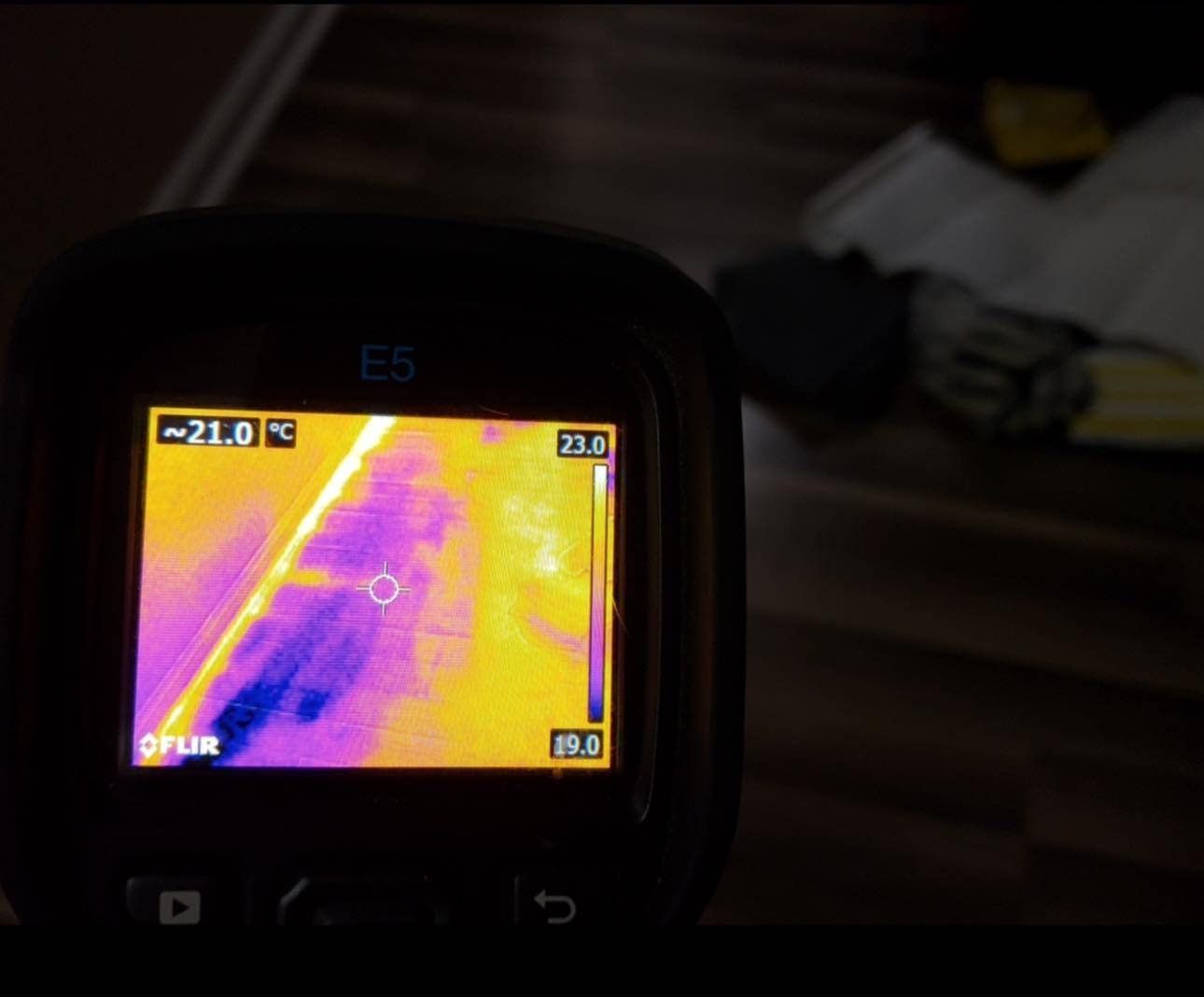
If you see any of these, call us at 980-277-3700 . We'll come out, check the crawlspace and the interior with thermal cameras and moisture meters, and tell you exactly what's going on. If there's a problem, we handle the water removal, structural drying, mold prevention, and the full rebuild with one team from start to finish.
We're 20 Minutes from Tega Cay
Our shop is at 3650 Centre Circle in Fort Mill . We keep trucks running through Tega Cay, Indian Land , and Rock Hill around the clock. When you call 980-277-3700 , our crew can be at your door in about 20 to 30 minutes — 24 hours a day, 7 days a week, holidays included.
We write every estimate in Xactimate, document everything with photos and daily moisture readings, and bill your insurance directly. On covered work you pay your deductible and nothing beyond it.
If you live in Tega Cay and your home is over 30 years old, near the lake, or next to new construction — don't wait for a leak to tell you something's wrong.
Official Carolina Pro Restoration Blog
Water Damage in Charlotte NC: What to Do in the First 24 Hours
Water Damage Restoration in Matthews NC: What Homeowners Need to Know
How to File a Water Damage Insurance Claim in South Carolina
Dealing With Water Damage Right Now?
Our Fort Mill team answers 24/7 and can be on site fast. One call, one crew, start to finish.