
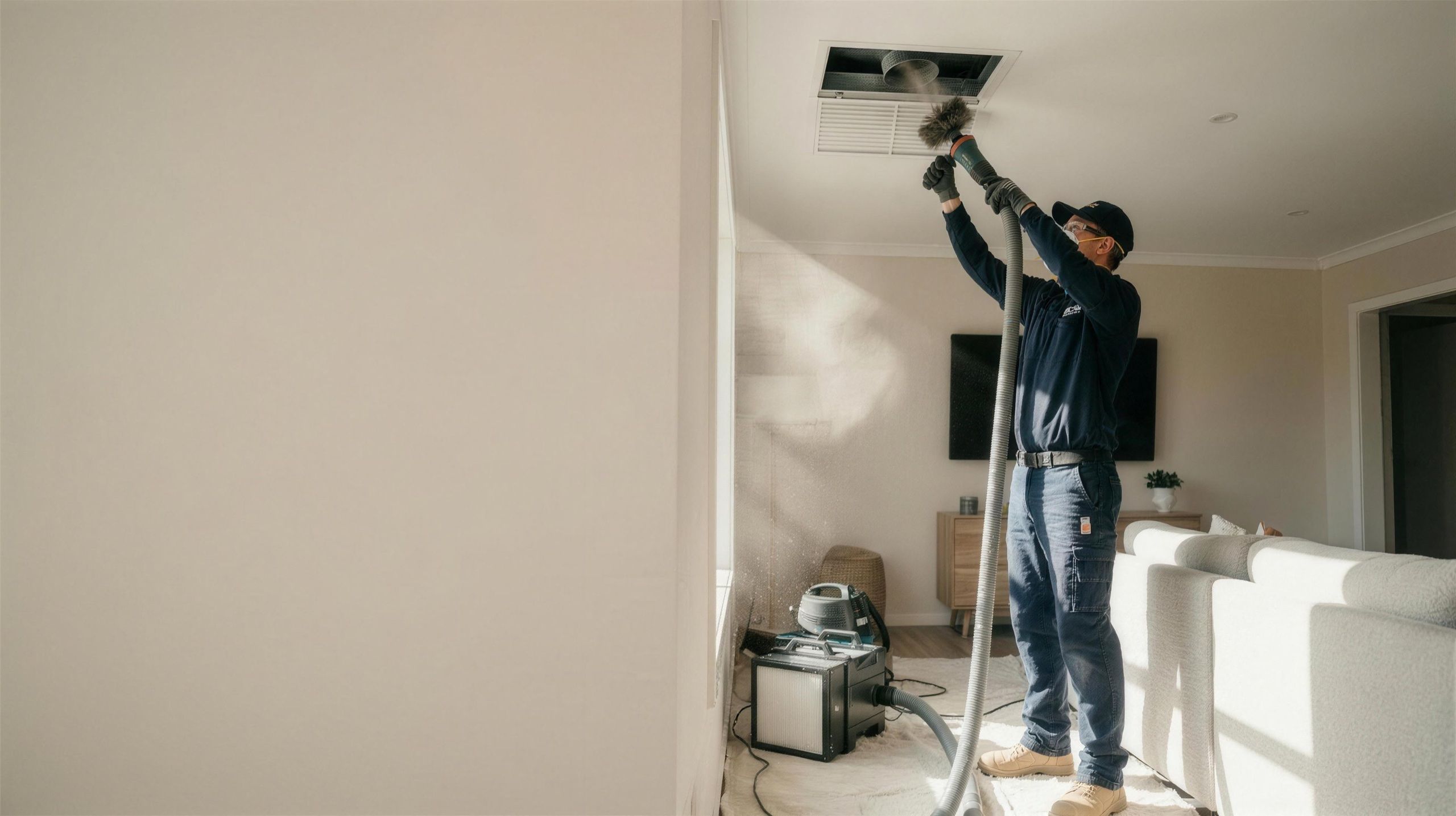
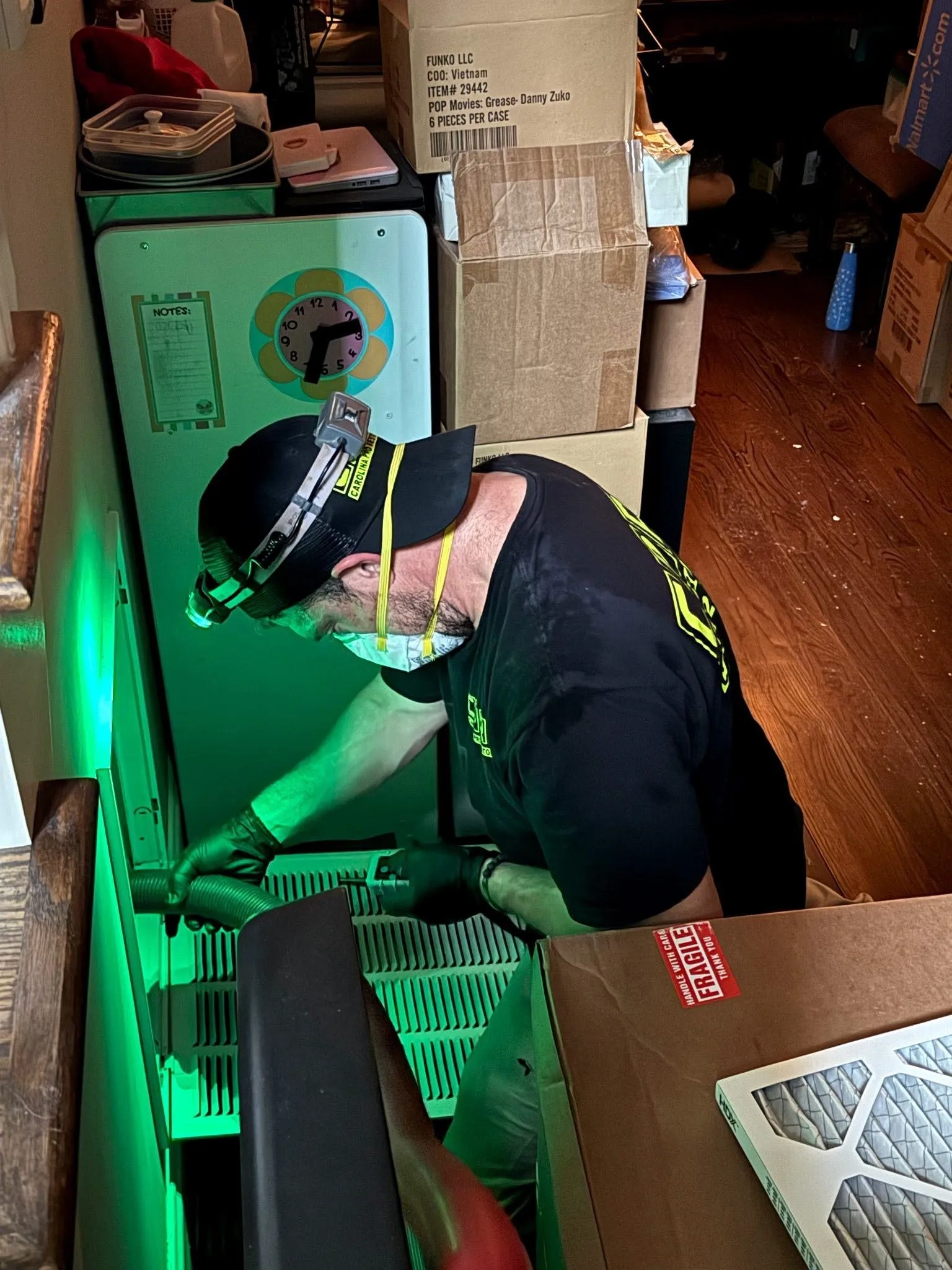
5 Signs Your Fort Mill Home's Air Ducts Are Making You Sick
Your HVAC system runs constantly — pulling air from every corner of your home, conditioning it, and pushing it back through the same ducts day after day. In most Fort Mill homes, those ducts were installed during construction and haven't been inspected since. Over time, what moves through them isn't just conditioned air.
Fort Mill sits at an elevation and humidity level that puts particular stress on HVAC systems. Summer humidity regularly exceeds 70 percent. Crawlspace air — often laden with ground moisture and mold spores — gets drawn into return ducts. Condensate drain lines clog seasonally. The result is a delivery system that can actively worsen your indoor air quality rather than improve it. Here are the five signs we see most often when a home's air ducts are contributing to health problems.
Sign 1: Symptoms That Improve When You Leave the House
This is the pattern that most clearly points to an indoor air quality problem rather than a seasonal allergy or illness. If someone in your household experiences headaches, fatigue, nasal congestion, eye irritation, or respiratory symptoms that consistently improve after a few hours away from home — and return when they come back — the home's air is the most likely culprit.
Mold spores, dust mite allergens, and volatile organic compounds (VOCs) from off-gassing materials can all accumulate in duct systems and recirculate continuously. The body reacts to chronic low-level exposure differently than to a single acute exposure, which is why these symptoms are often misattributed to colds, stress, or general fatigue.
Understanding how Fort Mill's humidity and seasonal weather patterns affect indoor air quality year-round is important context here — homes in this climate are particularly vulnerable because humid outdoor air pulls in through every gap in the building envelope, and duct systems distribute whatever enters.
Sign 2: Visible Dust or Dark Buildup Around Vents
Look at the supply vents in your home — the registers on the floor, wall, or ceiling where conditioned air comes out. If you see dark gray or black residue around the edges of the vent cover, that's a flag. Some dust accumulation is normal. A dark, oily-looking ring that builds up quickly after cleaning is not.
That dark residue is often a combination of dust, particulates, and in some cases mold growth at the vent face. Mold at a supply vent face means spores are being actively blown into the room every time the system runs. It also typically means there's a moisture issue somewhere upstream — either at the evaporator coil, in the duct run itself, or in the return plenum.
Wipe the vent cover with a damp white cloth. If the residue is black and doesn't look like typical gray household dust, have the system inspected before the next cooling season starts.
Sign 3: Musty Smell When the System First Turns On
A brief musty or moldy smell when the air conditioning first starts up — especially after the system has been off for a period — is one of the most consistent indicators of mold growth in the air handler or ductwork. The smell typically fades after a few minutes as the air circulation dilutes it, which is why it often gets dismissed. It shouldn't be.
The most common location for this growth is the evaporator coil — the cooling coil inside the air handler unit — and the condensate drain pan beneath it. These surfaces operate at low temperatures and collect moisture from the air they're conditioning. When the system shuts off and that moisture sits in a warm, enclosed space, mold grows. The next time the system starts, the airstream moves through that growth and distributes spores throughout the duct system.
A musty startup smell in a Fort Mill home is worth taking seriously. Between the region's high humidity load and the frequency of extended HVAC operation in summer, coil contamination is one of the most common indoor air quality issues we see. Our mold remediation team can assess whether the contamination is limited to the coil or has spread into the duct runs.
Sign 4: Uneven Temperatures Between Rooms
A room that's noticeably warmer or cooler than the rest of the house — even when the system is running and all vents appear open — often points to a ductwork problem. The most common cause in Fort Mill crawlspace homes is a disconnected or collapsed flex duct section.
Flex duct — the insulated, flexible tubing that runs from the main trunk line to individual room vents in most residential systems — can separate at fittings, sag and restrict airflow, or develop holes over time. When this happens under the house in a crawlspace, conditioned air is being dumped into the crawlspace rather than delivered to the room above. This wastes energy and, more importantly, creates the humidity conditions in the crawlspace that promote mold growth on floor joists and subfloor material.
A disconnected return duct in the crawlspace is worse. Instead of pulling return air from inside the home, the system pulls air directly from the crawlspace — including any mold spores, soil gases, or moisture present — and distributes it throughout the house. This is a significant indoor air quality issue that won't be resolved by duct cleaning alone. The disconnect has to be found and repaired first.
Sign 5: Increased Dust Despite Regular Cleaning
If your home accumulates visible dust on surfaces within a day or two of cleaning — particularly on horizontal surfaces near supply vents — and this seems disproportionate to normal household activity, the duct system may be distributing fine particulates rather than filtering them.
This can happen when return air filters are the wrong size or rating, when the filter bypass around a loose filter frame is significant, or when ductwork has gaps or unsealed joints that pull unfiltered air from attic or crawlspace spaces. The HVAC system is essentially vacuuming attic insulation fibers, crawlspace particulates, or outdoor pollutants into the living space.
The fix isn't more frequent cleaning. It's identifying where the infiltration is occurring and sealing or correcting it. In older Fort Mill homes — particularly those built before 2005 — duct sealing is frequently inadequate by current standards, and the degradation of original mastic or tape sealant has created gaps that weren't there at installation.
What to Do Next
If you recognize two or more of these signs in your home, the right next step is a professional inspection — not an immediate duct cleaning. Cleaning ducts that have mold growth without addressing the moisture source first just redistributes the problem. An inspection identifies whether you're dealing with contamination, a mechanical issue, or a combination.
We assess HVAC-related indoor air quality issues as part of our mold inspection process. If we find active mold in the air handler or duct runs, we'll tell you exactly what's there and what it would take to remediate it properly — not just clean the surface of it. If the issue is moisture-related and points to crawlspace conditions, we can address that side of the problem too through crawlspace encapsulation.
Call us at 980-277-3700 for a free inspection, or request one online here.
Frequently Asked Questions
Is duct cleaning enough to solve an indoor air quality problem?
Usually not on its own. Duct cleaning removes accumulated dust and debris from duct surfaces, but it doesn't address moisture sources, evaporator coil contamination, or duct leakage. If mold is present in the system, cleaning without remediation can aerosolize spores. Start with an inspection to understand what you're actually dealing with.
How often should ducts be inspected in a Fort Mill home?
We recommend a visual inspection every three to five years for homes without known issues, and annually for homes with prior moisture intrusion, mold history, or HVAC performance concerns. Crawlspace homes warrant more frequent attention due to the proximity of ground moisture to return air pathways.
Can mold in ducts cause health problems?
Yes — particularly for household members with asthma, allergies, or compromised immune systems. Mold spore inhalation can trigger respiratory symptoms, eye irritation, and fatigue. The severity depends on the mold species, the spore concentration, and the duration of exposure. If someone in your home has unexplained respiratory symptoms, it's worth having the air quality assessed.
What's the difference between duct cleaning and mold remediation in HVAC?
Duct cleaning is a mechanical process — vacuuming and brushing duct surfaces to remove accumulated debris. Mold remediation in an HVAC context involves identifying and removing mold growth, treating affected surfaces with EPA-registered antimicrobials, addressing the moisture source that allowed growth, and verifying the results. These are different scopes of work requiring different processes.
Will replacing my air filter fix the problem?
A better filter improves particulate capture but won't address mold in the system, disconnected ductwork, or moisture at the coil. Filter upgrades are a maintenance practice, not a remediation strategy. If you have active contamination in the duct system, a higher-MERV filter may actually restrict airflow and worsen conditions at the coil.
We serve Fort Mill, Rock Hill, Indian Land, Tega Cay, Charlotte, Pineville, Waxhaw, and the surrounding areas 24 hours a day, 7 days a week.
Carolina Pro Restoration LLC is a water damage restoration company serving Fort Mill SC, Rock Hill, Indian Land, Tega Cay, and the greater Charlotte area. We specialize in water damage restoration , mold remediation , crawlspace encapsulation , sewage cleanup , and full property rebuild. IICRC certified. Available 24/7. Direct insurance billing through Xactimate.


